Like an iceberg, 1999 cont., more on “the Avalanche”

Like an iceberg, 1999 cont., more on “the Avalanche”

In May 1999, I was back in the Nunavik community of Kangiqsualujjuaq — this time to cover a three-week-long coroner’s inquest into the avalanche that  took place there on Jan. 1.

The inquest, which took place in a small hall, the only community space left after the avalanche destroyed the school gym, ran all day long before a judge, lawyers representing some of parties, community members and me, the only journalist present.

Maggie Emudluk, mayor of Kangiqsualujjuaq, with coroner Jacques Bérubé (PHOTO BY JANGE GEORGE)

Maggie Emudluk, mayor of Kangiqsualujjuaq, with coroner Jacques Bérubé at the May, 1999 inquest. (PHOTO BY JANGE GEORGE)

At night, after the daily inquest proceedings wind down, while writing my articles about what people said, I felt sad.

The weekends — two of them —  were long, and, while the weather is perfect for heading out on the land and I squeezed in a snowmobile  ride or two with a friend, I had to catch up on my work while the sun is shining.

One evening, when I watch a film made about Maori in New Zealand, called “Once Were Warriors,” about the devastation suffered by indigenous people on the other side of the world, I couldn’t stop sobbing in the apartment of a teacher that I had rented for the duration of the inquest.
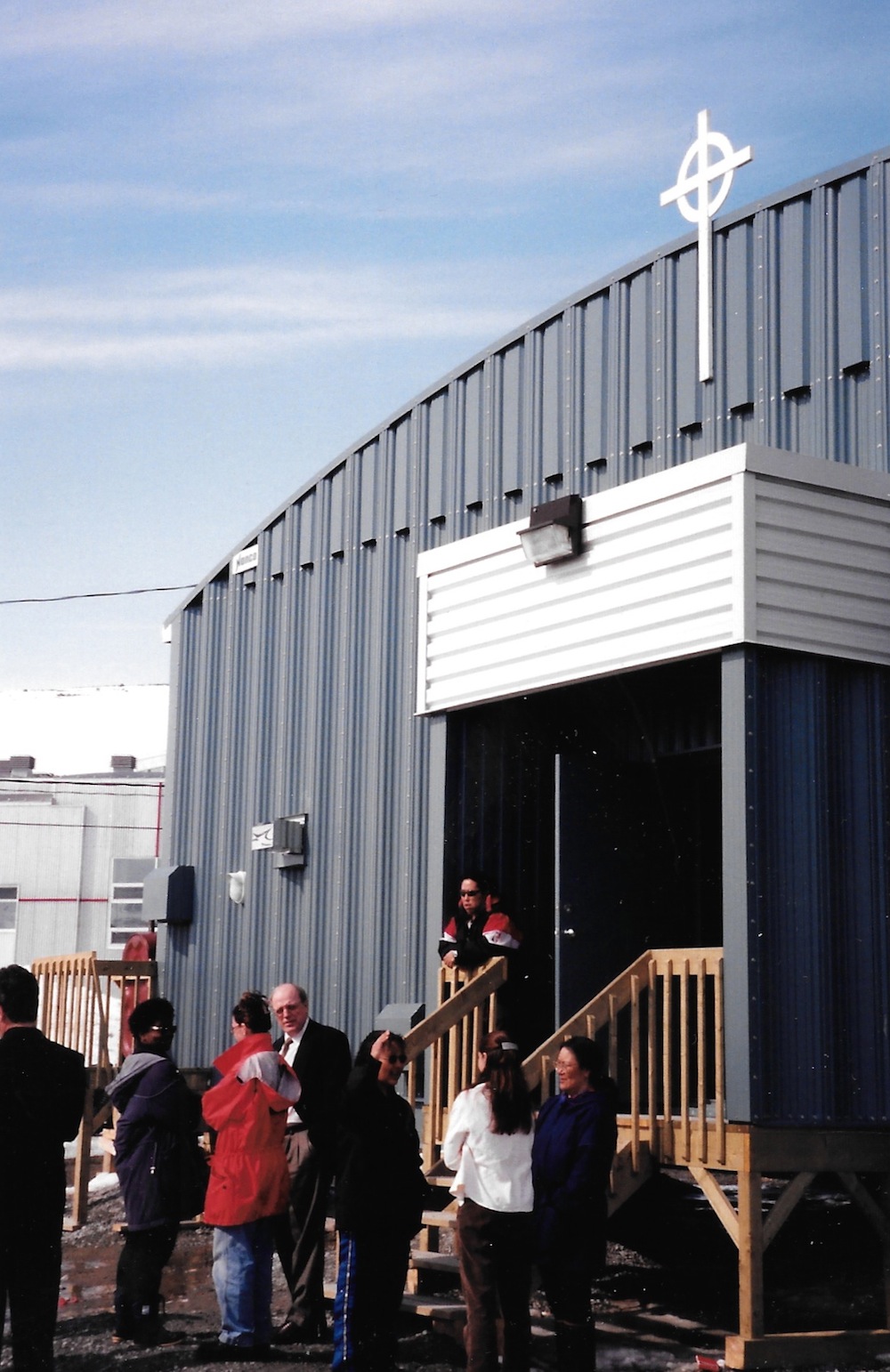
A break during the coroner's inquest in Kangiqsualujjuaq held in May 1999. (PHOTO BY JANE GEORGE)

A break during the coroner’s inquest in Kangiqsualujjuaq held in May 1999. (PHOTO BY JANE GEORGE)

I was immersed in human tragedy, while my editors at the Nunatsiaq News in Iqaluit were still buoyed from the celebrations around the creation of Nunavut on April 1, 1999, which I ended up covering from Ottawa.

Even so, hearing the testimonies at the inquest left me uplifted by the bravery of those who survived or who helped others to survive.

That’s because after the Jan. 1 avalanche, panic quickly gave way to action. At the coroner’s inquest, we learned that the electrical system was still functioning, and those who weren’t buried in snow stood in a brightly lit space that was suddenly a place of horror instead of a party.

Two of Sophie Keelan’s daughters were buried when the avalanche hit the gym at 1:40 a.m. Snow smashed her seven-year-old daughter on to the floor of the gym where she lay trapped until an elder dug her out. Her daughter was weak when she finally emerged, wet and cold, from the snow.

As Keelan rushed back home from the gym with the chilled young girl on her snowmobile, she tried to blow warm air towards her small face. After her daughter was safe and warm at home, Keelan returned to the gym to help.

There, she would end up performing cardio-pulmonary resuscitation on other avalanche victims, some of whom were not as lucky as her daughter.

“I worked for 19 and a half hours,” she told the inquest. “All night, all day.”

Here you can see how close the school (far right) was located to the avalanche-prone slope in Kangiqsualujjuaq. (PHOTO BY JANE GEORGE)

Here you can see how close the school (far right) was located to the avalanche-prone slope in Kangiqsualujjuaq. (PHOTO BY JANE GEORGE)

After freeing herself from the snow, Christina Baron began to dig with her hands to help get others out, but the powdery stuff quickly congealed into a concrete-hard layer. She couldn’t find a shovel, so she grabbed a piece of wood and started digging. Baron had last seen her older daughter as she was walking across the gym to take her baby home.

“She started walking towards the door, and just as they went away from where I was sitting, the avalanche occurred,” Baron said.

The two were buried in snow. Before they were rescued, the baby had died in the amautik hood. Baron later took her granddaughter back to her house, away from the chaotic gym, in a truck.

“Holding that dead baby was very hard for me,” she said.

Ken Jararuse was under the snow for about 30 minutes. A piece of wood behind some climbing bars in the gym saved his life, because it kept snow from smothering him. When Jararuse was finally released from the snow, he tried to make sense of what he saw around him.

“It was scary,” Jararuse said. “It was terrible. We didn’t know what to do. It was very cold. I wasn’t dressed for the situation. I was dressed for a New Year’s Eve party.”

The gymnasium at Satuumavik School in Kangiqsualujjuaq has already been torn down three months after the avalanche. (PHOTO BY JANE GEORGE)

The gymnasium at Satuumavik School in Kangiqsualujjuaq has already been torn down three months after the avalanche. (PHOTO BY JANE GEORGE)

He learned that his niece had been killed by the force of the snow-slide. Although he was weak and could barely lift his arms, Jararuse later pitched in by digging behind the school, to look for those who were still buried there.

“Anybody and everybody who was able to help did,” he said.

When the avalanche buried Adamie Annanack in the snow, shortly after he stepped into the gym that night, he could feel people walking on top on him. He couldn’t see or move, but he could hear noises.

“Some of the people under the snow never stopped yelling,” Annanack said at the inquest.

As soon as he was rescued, by someone who his hand sticking up toward the surface, he began to dig, too.

“Everyone was helping each other,” he said.

Many buildings in the avalanche zone in Kangiqsualujjuaq, SEEN HERE IN MAY, 1999, would be removed. (PHOTO BY JANE GEORGE)

Many buildings in the avalanche zone in Kangiqsualujjuaq, seen here in May 1999, would be removed. (PHOTO BY JANE GEORGE)

For many, just surviving the avalanche took all their force. David Emudluk was outside the back of the school, helping a friend repair a snowmobile when the avalanche hit. He was thrown through a window of the school where he ended up half buried in snow and pinned under a snowmobile.

Emudluk was also injured, but he managed somehow to crawl out and over the snow that filled the classroom. Unable to walk due to an ankle wound, he dragged himself down the corridor, where finally he found help.

For three hours after avalanche half buried her in snow, Harriet Etok had no idea whether or not all her children were safe. At around 4:30 a.m. she finally learned that searchers had located her last missing child, daughter Betty, four.

Betty was dead. She had been instantly killed when the avalanche rammed a metal door into her small body. Earlier that evening, as she stood at the back entrance of the school’s gym to have a smoke, Harriet had heard the avalanche coming down the slope.

“I heard a big noise and I didn’t know what it was. I heard Louisa [next to her] say, “What’s that?”, and once I had heard her say it, when I was still outside, I saw a big cloud of snow coming down. It didn’t take a second to come to us,” Harriet told the inquest.

The next thing Harriet knew, she was almost buried in snow. She immediately began digging with her free hands, to clear snow around herself and the others beside her who were completely covered.

After a man freed Harriet, her thoughts immediately turned to her children who had been in the gym. She was scared when she saw that the gym was still full of snow. There were few children in sight.

“All my children are lost!” she cried.

Harriet and her sister began to look near the spot where they had last seen their children, stopping to help dig out other buried youngsters. At one point, Harriet, still dressed in wet and frozen pants, ran home to get her husband, so that he could go back to the gym with a shovel and help dig.

It took them three hours to learn the whereabouts of their four children who had been at the gym. Betty was the last to be found.

The inquest went on forever, story after story. I get to know the inquest team and celebrate the end of the inquest with them over a supper one evening — a perk after cooking for myself.

The new school in Kangiqsualujjaq is open by May, 1999. (PHOTO BY JANE GEORGE)

The new school in Kangiqsualujjaq is open by May, 1999. (PHOTO BY JANE GEORGE)

Over the coming year, I followed the rebuilding of Kangiqsualujjuaq: the construction of its new school, the moving of houses away from the avalanche zone and finally the demolition of the ravaged school. Improved emergency services are put into place, according to the inquest’s recommendations.

If a similar disaster happens, people in Nunavik might be better prepared to cope— but would I?

That terrible avalanche and following inquest turned out to be only one of many hard stories which I would cover in the future, including the inquest into the suicide of Julian Tologanak, who leapt out of a plane, the crash of First Air flight 6560 in Resolute Bay, the  fire in minus 50 C temperatures which destroyed the White Row housing in Iqaluit, the shoot-out and death of Nunavik cop Steve Déry, and a triple murder in Kimmirut on Easter Sunday in 2013.

Everything I heard and felt always stayed with me, but I refused on many occasions to share information or photos with other journalists who called me at the office when some catastrophe unfolds   — why should I let them know what I learned from being in the North and suffering along with so many victims?

Or why should I help them for free when the Nunatsiaq News invested in the North, supported me and paid my salary?
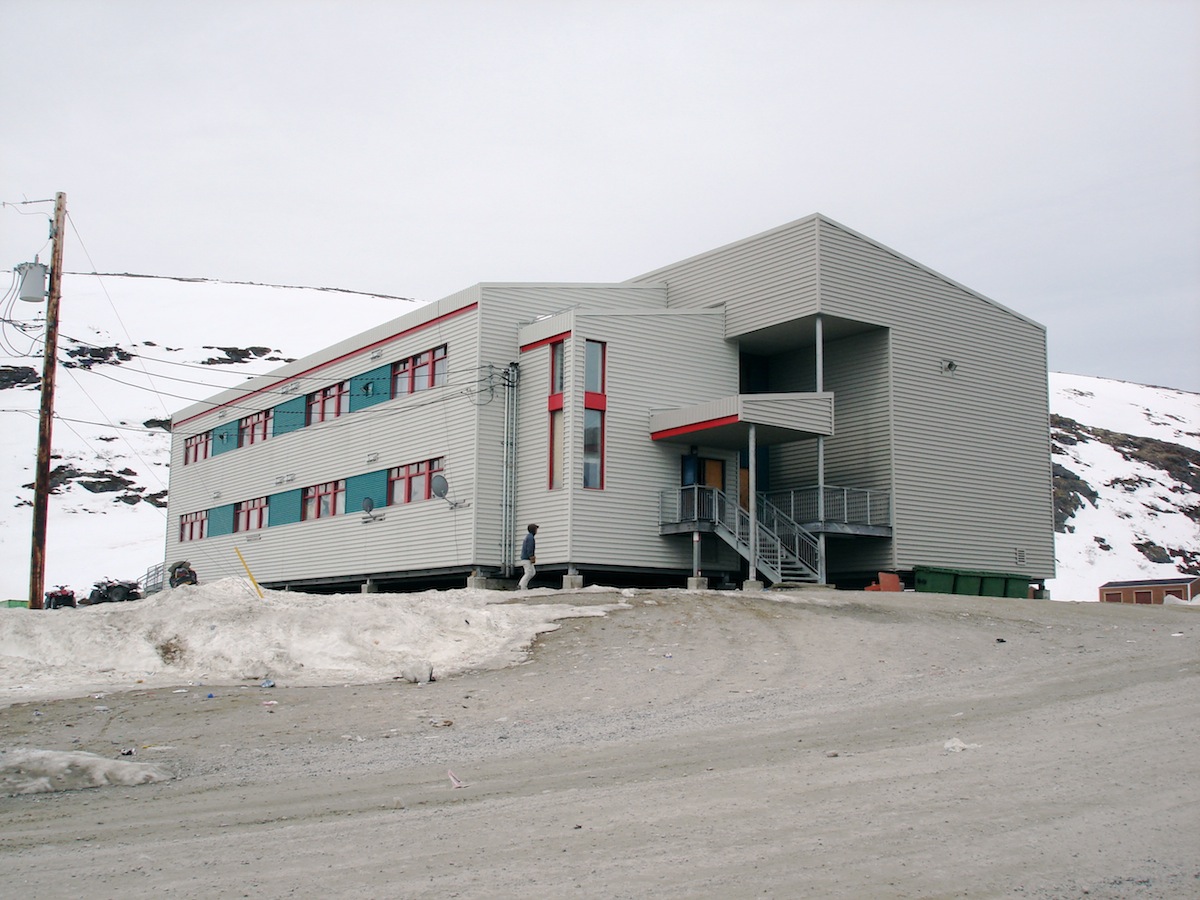
The addition to Satuumavik School — the only part left undamaged by the avalanche — is an apartment complex in 2007. (PHOTO BY JANE GEORGE)

The addition to Satuumavik School — the only part left undamaged by the avalanche — is an apartment complex in 2007. (PHOTO BY JANE GEORGE)

Like an iceberg continues May 28.

You can read earlier instalments here:

Like an iceberg: on being a journalist in the Arctic

Like an iceberg, 1991…cont.

Like an iceberg, 1991…more

Like an iceberg, 1992, “Shots in the dark” 

Like an iceberg, 1992, “Sad stories”

Like an iceberg, 1993, “Learning the language of the snows”

Like an iceberg, 1993 cont., “Spring”

Like an iceberg, 1993 cont., “Chesterfield Inlet”

Like an iceberg, 1993 cont., more “Chesterfield Inlet”

Like an iceberg, 1994: “Seals and more”

Like an iceberg, 1994, cont., “No news is good news”

Like an iceberg, 1994 cont., more “No news is good news”

Like an iceberg, 1994 cont., “A place with four names”

Like an iceberg, 1995, “More sad stories”

Like an iceberg, 1995 cont., “No place like Nome”

Like an iceberg, 1995 cont., “Greenland”

Like an iceberg, 1995, cont. “Secrets”

Like an iceberg, 1996, “Hard Lessons”

Like an iceberg, 1996 cont., “Working together”

Like an iceberg, 1996 cont., “At the edge of the world”

Like an iceberg, 1996, more “At the edge of the world”

Like an iceberg, 1996, cont. “Choices” 

Like an iceberg, 1997, “Qaggiq”

Like an iceberg, 1997, more “Qaggiq”

Like an iceberg, 1997, “Qaggiq” cont.

Like an iceberg, 1997 cont., “Qaggiq and hockey”

Like an iceberg, 1997 cont., “Brain surgery in POV”

Like an iceberg, 1997 cont.: “Masks on an island”

Like an iceberg, 1997 cont., “Abusers on the pulpit”

Like an iceberg, 1998, “Bearing gifts”

Like an iceberg, 1998 cont., “At the top of the world”

Like an iceberg, 1998 cont., “A bad week” 

Like an iceberg, 1998 cont.: more from “A bad week”

Like an iceberg, 1998 cont., “Memories”

Like an iceberg, 1999, “The avalanche”

Like an iceberg, 1999 cont., “An exorcism, followed by a penis cutting”

Like an iceberg, 1999 cont., “An exorcism, followed by a penis cutting”

Like an iceberg, 1999 cont.: “An exorcism, followed by a penis cutting”

Almost always, as soon as I got off a plane in the North, someone came up to me to confide a tidbit of information: By 1999, I had become the reporter of secrets that many already knew about.

In Quaqtaq, a community of 300 on Quebec’s Ungava Bay, not long after my arrival in March, 1999, a man I knew headed in my direction. He whispered in my ear: Did I know about the penis cutting?

“Penis cutting?” I asked quietly.

“I heard about this guy who cut off his penis. In Akulivik,” he said. “I don’t know anything else.”

This news caught my interest at once. I was in Quaqtaq to attend the annual general meeting of Makivik Corp., a week-long ordeal because I was still shunned by some of its leaders for my past stories and reports. And this was the organization whose lawyer threatened me with jail in 1996, which left me with some bad feelings.

The 1999 Makivik Corp. annual general meeting takes place in Quaqtaq at the community's school. (PHOTO BY JANE GEORGE)

The 1999 Makivik Corp. annual general meeting takes place in Quaqtaq at the community’s school. (PHOTO BY JANE GEORGE)

And, because of my reports, during many discussions, all journalists, Inuit and non-Inuit, were in 1999 kicked out of the meeting — and their translation headsets were taken away before they left the room, so no one could listen in on headphones outside the meeting, as I had done in 1994 in Salluit.

This week I expected to be asked to leave the meeting often.

But, thinking about this new news tip I’d just been handed, I felt cheered up. At least I’d have something to work on when I wasn’t in the meeting.

I thought back to February, when I’d visited Kangiqsujuaq for a meeting of the Kativik Regional Government. There I’d overheard councillors talking to each other about something going on in Akulivik — but I had gotten no straight answers about that from Luc Harvey, then the police chief of the Kativik Regional Police Force, the police force run by the KRG.

But there are no secrets in Nunavik, I learned once again.

In March, it was much warmer than when I was in Kangiqsualujjuaq after the avalanche in January, but it was still cold. The school where the meeting took place was banked with snow. Members of the media were supposed to work in a classroom outfitted with some telephone lines and larger desks. Apart from me, there were local radio and television reporters, a Radio-Canada radio host and a journalist from France.

I was staying at the home of Quaqtaq’s mayor, a man I first met when he took over as the police chief in Puvirnituq: Johnny Oovaut, a large man with a deep voice, a born-again Christian and a gospel singer. His home outside the village was large and modern, finished only months before I stay there.

It was more luxurious than most homes in the South, with entirely new furnishings, and touches I wouldn’t mind in my own home — such as a giant-sized Jacuzzi tub. I ended up hardly being there, however, as I threw myself into finding out information about the man in Akulivik who had tried to cut off his penis.

Nunavik (IMAGE/ KATIVIK SCHOOL BOARD)

Nunavik (IMAGE/ KATIVIK SCHOOL BOARD)

Before starting to make calls, however, I created a mental picture of Akulivik on Nunavik’s Hudson Bay coast: — that’s something I always did before trying to do a long-distance story. Akulivik, population of about 400, was a tiny place, a cluster of buildings on a peninsula that branches into the water and looks like a fish harpoon — an akulivik.

It was a place I had actually visited when I accompanied the traveling court on its regular stop to the community in the early 1990s. In the small school gym, the bleachers were full as residents watched the makeshift courtroom action unfold. Those accused stood in front of a low school desk facing Judge Yvon Roberge. The young men wore shiny padded jackets; they held sunglasses in their hands that they clasped behind their backs.

This large carving stands in front of Akulivik's school. (PHOTO BY JANE GEORGE)

This large carving stands in front of Akulivik’s school. (PHOTO BY JANE GEORGE)

A woman rose with her husband to talk about the progress he had made since he assaulted her not long ago. She was wearing an amautik parka. A stream of light poured in on the paperback Bible lying on the desk.

Roberge listened to lawyers describe another case where a young man had stolen propane for sniffing and assaulted a girl on the same night. But that was four years ago, and the accused said he’d been clean for a year. He was working. His sentence involved probation and a public apology for his behaviour.

I recalled all this about Akulivik: It was a community that still settles its own disputes, I thought. I also remembered it was a place where there had been several violent incidents — in 1998 a man took a woman hostage, sexually assaulted her daughter and then killed the mother while another child looked on. Anything’s possible, I thought.

I found a telephone book and start dialing numbers in Akulivik, searching for information. I decided to start with anyone who had a non-Inuk name because they might less likely to have a reason not to talk to me about the incident. After a few calls, I finally got referred to a woman to whom I spoke to over her lunch hour.

“Hi, I’m Jane George from Nunatsiaq News. I want to ask you something about a story I’m chasing. Can you tell me what do you know about a man who cut his penis off? ”

“You mean the exorcism?’

“Uh” I hesitated.

An exorcism? I had been thinking it’s a penis-cutting incident. Now it was an exorcism. Okay.

“Yes, of course, the exorcism. I’ve heard about it and I wanted to check out my details.”

A woman, she told me, was the subject of an exorcism. It was the woman’s future brother-in-law who attempted to cut off his penis, after he urged others to “repent their sins.”

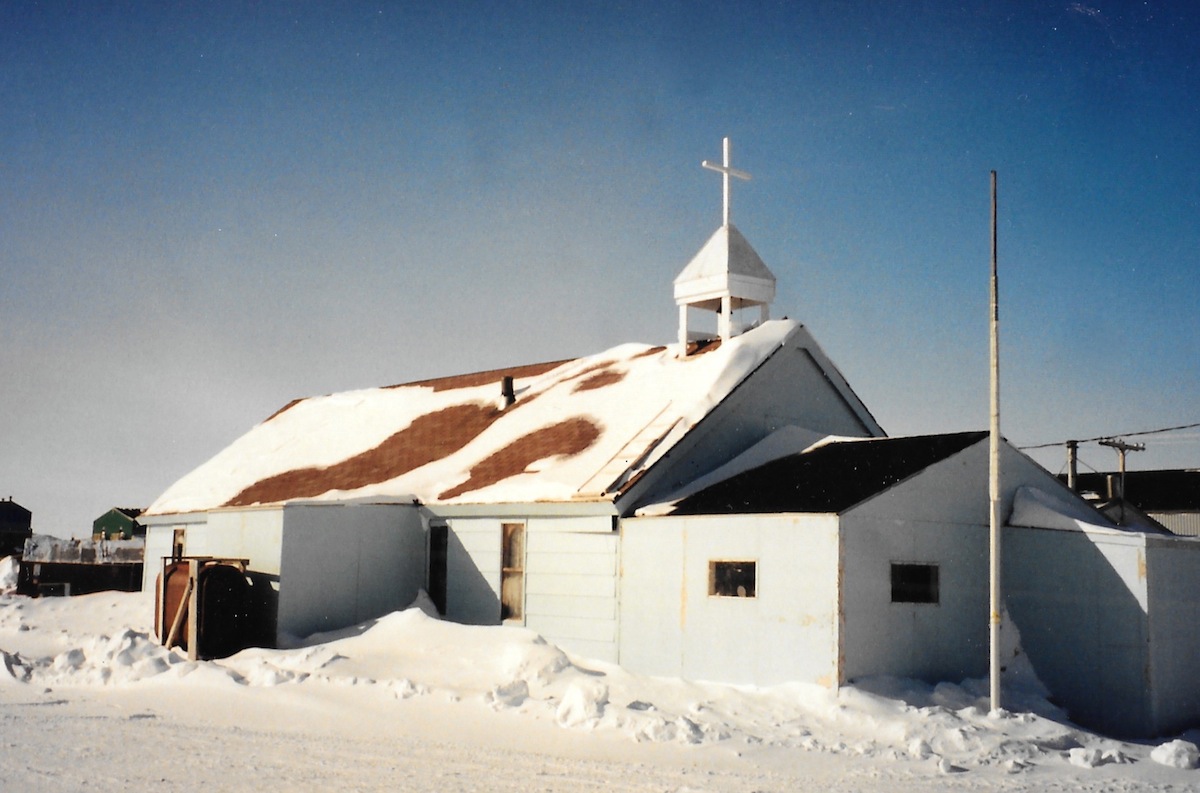
In Akulivik, there was only one church, an Anglican church. It was in this modest place of worship, just a few weeks previously — and not long after two southern evangelists had visited the community — that the local church committee singled out one woman as being “possessed.”

I finally called Eli Aullaluk, a municipal councilor, who described himself as “a Christian,” when I felt I have enough information to ask the right questions. He gave me more details, telling me that this woman’s family first noticed that she was disturbed on Feb. 19 — just a few weeks earlier.

“She was not being normal,” Aullaluk said. “Her mother asked her, ‘who are you?’ and her answer was, ‘I’m a bad spider, a devil, a demon.’ She knew right away that she wasn’t well.”

Anglican church, Akulivik. (PHOTO BY JANE GEORGE)

Anglican church, Akulivik. (PHOTO BY JANE GEORGE)

The woman, 30, was brought to the Anglican Church, where the church vestry committee spoke with her.

“They decided she was possessed,” said Aullaluk. “She was very disturbed. Naturally, we would know that she was evilly possessed. We believe in this.”

A rite of exorcism followed, Aullaluk said. It was held in a room usually occupied by the community’s social services unit, on the suggestion of a social worker, who was also a member of the church committee. The woman occasionally had to be restrained during the proceedings.

“They had to hold down her arms and legs or tie her arms to her wrists sometimes to prevent her from hurting herself,” said Aullaluk who saw the woman on several occasions during her ordeal.

According to Aullaluk, the recent exorcism in Akulivik came to an abrupt end when the woman injured her hands while trying to grab at a window blind. She was taken to see a nurse for medical treatment and then brought to another location in the village. Against the wishes of her family and a healer from another community who had come to assist, medical personnel wanted to remove the woman from Akulivik for more medical treatment.

“The reason why we wanted to deal with it is that she wasn’t medically sick, but she was spiritually sick. There were people who were capable of working with her,” said Aullaluk. “It was definitely a spiritual problem.”

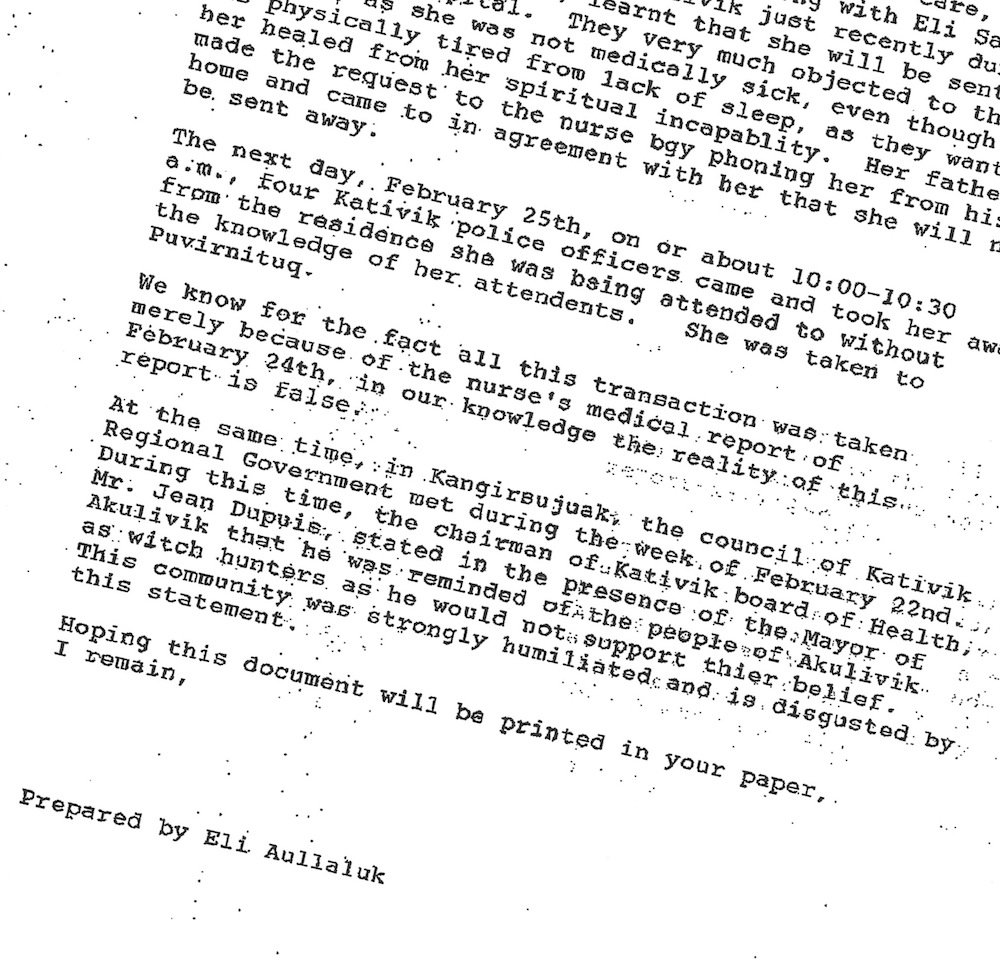
An excerpt from the faxed statement Eli Aullaluk sends to the Nunatsiaq News on March, 1999.

An excerpt from the faxed statement Eli Aullaluk sends to the Nunatsiaq News on March, 1999.

“Spiritual incapability,” he later called her condition in a statement faxed to the newspaper.

Following a call to the regional police, the woman was removed from Akulivik and transferred to Puvirnituq’s Inuulitsivik hospital. Covered with bruises, dehydrated and hungry, the woman was heavily sedated for several days and taken to Montreal for treatment.

Also during or after the exorcism, her future brother-in-law tried to cut off his penis.

The injured man reportedly made a good recovery in Montreal from his self-inflicted wounds.

I couldn’t find out how or why he attempted to sever the organ. He had provided several differing explanations, including remorse over previous sinful behaviour, following Mark 9:43, “And if thy hand offend thee, cut it off : it is better for thee to enter into life maimed, than having two hands to go into hell, into the fire that never shall be quenched.”

No criminal charges were ever laid.

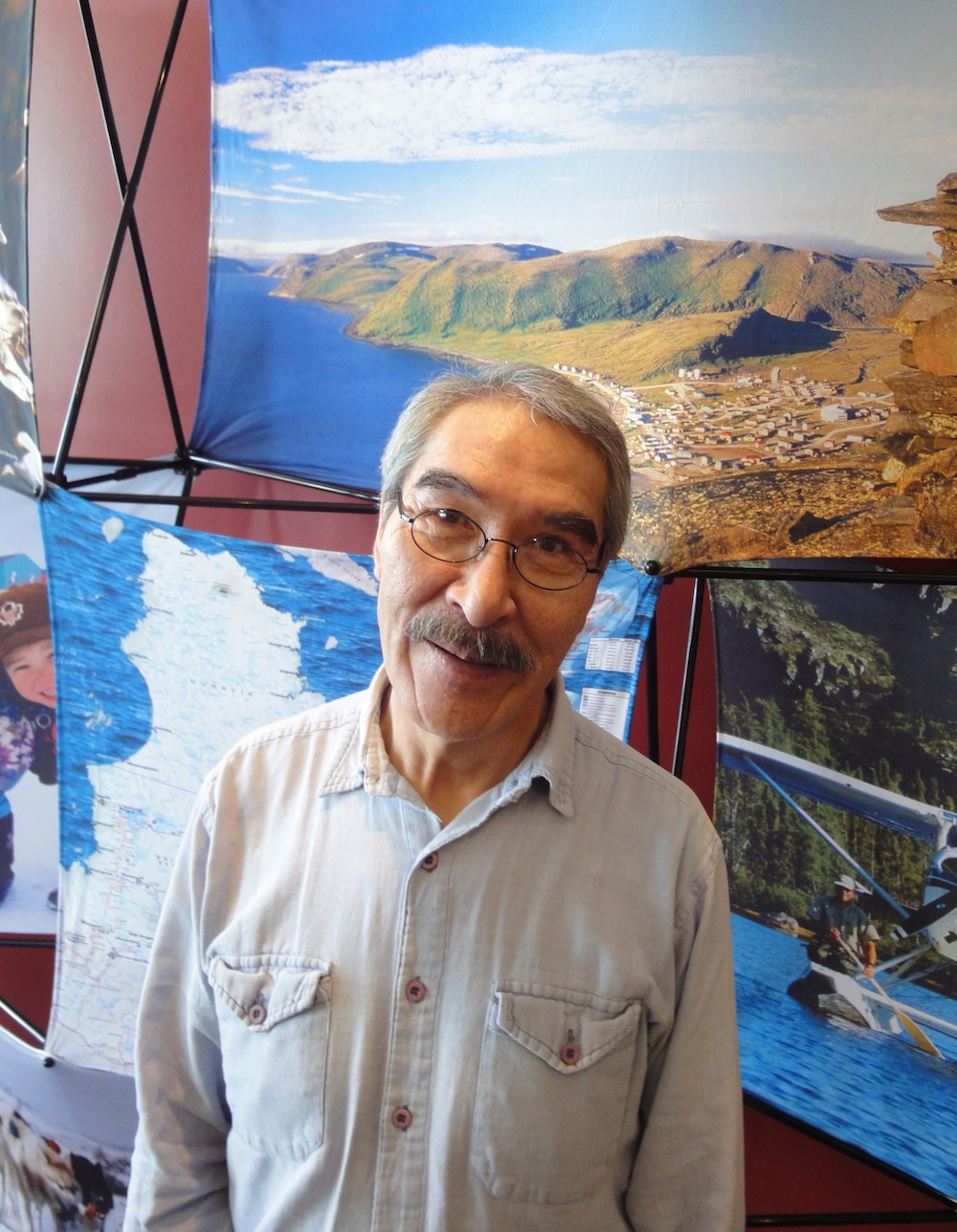
Eli Aullaluk, shown here in a photo from 2010. (PHOTO BY JANE GEORGE)

Eli Aullaluk, shown here in a photo from 2010. (PHOTO BY JANE GEORGE)

Officers from the KRPF finally mumbled explanations when I call them for information about what took place in Akulivik — because this time they could no longer say nothing had happened, as they had in Kangiqsujuaq in February.

Sûreté du Québec  provincial police investigators even came to Akulivik, but closed the file because its investigators couldn’t determine whether or not the woman had been held against her will.

Meanwhile, according to Aullaluk, many people in Akulivik were actually hoping that criminal charges would be laid. They hoped that, then, their side of the story would come out in court.

“We would have seen which side was right,” Aullaluk said. “The people here in the community, especially the people who were involved, are very unhappy with the decision taken by the authorities, like the police and the health services. They were wrong. She would be better now if they hadn’t taken her.”

In a statement, he said the head of Nunavik’s regional board of health of social services, Jean Dupuis, also a KRG councillor in 1999, was aware of the exorcism at the February KRG meeting, when Aullaluk said Dupuis called the people of Akulivik “witch hunters.”

“This community was strongly humiliated and is disgusted by this statement,” Aullaluk wrote in a letter to the newspaper after my story on the exorcism is published.

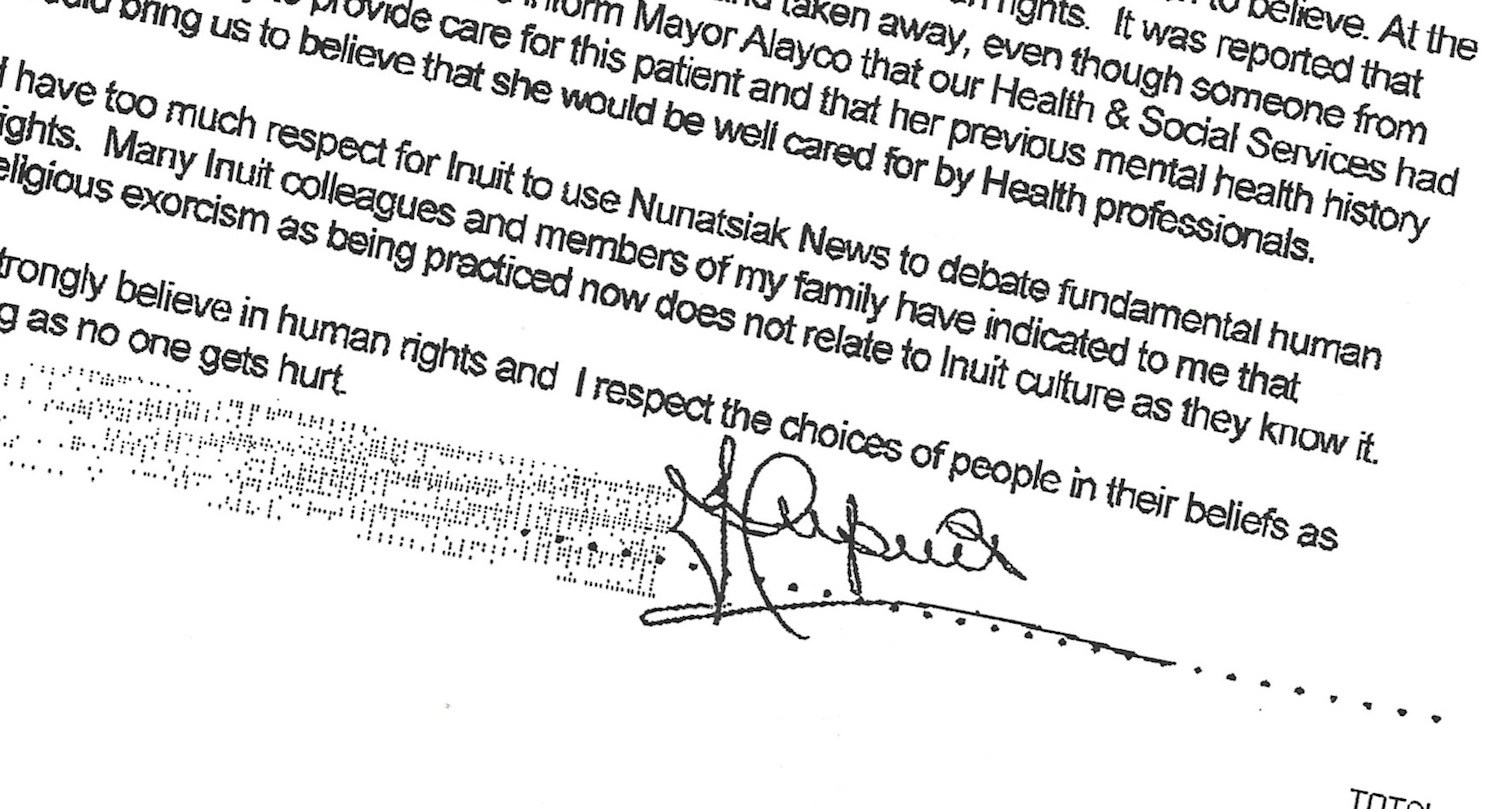
Jean Dupuis, head of the board of the Nunavik regional board of health and social services, sends this statement to the Nunatsiaq News in March, 1999.

Jean Dupuis, head of the board of the Nunavik regional board of health and social services, sends this statement to the Nunatsiaq News in March, 1999.

“I have too much respect for Inuit to use Nunatsiak [sic] News to debate fundamental human rights,” Dupuis said in his own statement to the newspaper.

“Many Inuit colleagues and members of my own family have indicated to me that religious exorcism as being practiced now does not relate to Inuit culture as they know it.”

While spiritual possession was not an everyday situation in Akulivik, other northern communities had experienced it, both recently and in the past, Aullaluk told me.

Residents of Akulivik suspected that unseen, foreign forces are afoot in their icy streets.

“This community here strongly believes that it is very possible to believe that people can be possessed by evil spirits,” Aullaluk said.

A few years later, in 2002, I visited Akulivik again. It was March, but it was one of those bitter minus 30 C days that, despite the bright sunlight, defied the idea of spring. Under a bright sun and cloudless sky, the wind was blowing snow that bit into my face. In the municipal office, I met Aullaluk who had become the mayor of Akulivik.

He looked delighted when he learned who I was. He gave me a mug embossed with the community’s fish harpoon logo as a souvenir of our meeting, which I still use today.

Like an iceberg continues May 27.

You can read earlier instalments here:

Like an iceberg: on being a journalist in the Arctic

Like an iceberg, 1991…cont.

Like an iceberg, 1991…more

Like an iceberg, 1992, “Shots in the dark” 

Like an iceberg, 1992, “Sad stories”

Like an iceberg, 1993, “Learning the language of the snows”

Like an iceberg, 1993 cont., “Spring”

Like an iceberg, 1993 cont., “Chesterfield Inlet”

Like an iceberg, 1993 cont., more “Chesterfield Inlet”

Like an iceberg, 1994: “Seals and more”

Like an iceberg, 1994, cont., “No news is good news”

Like an iceberg, 1994 cont., more “No news is good news”

Like an iceberg, 1994 cont., “A place with four names”

Like an iceberg, 1995, “More sad stories”

Like an iceberg, 1995 cont., “No place like Nome”

Like an iceberg, 1995 cont., “Greenland”

Like an iceberg, 1995, cont. “Secrets”

Like an iceberg, 1996, “Hard Lessons”

Like an iceberg, 1996 cont., “Working together”

Like an iceberg, 1996 cont., “At the edge of the world”

Like an iceberg, 1996, more “At the edge of the world”

Like an iceberg, 1996, cont. “Choices” 

Like an iceberg, 1997, “Qaggiq”

Like an iceberg, 1997, more “Qaggiq”

Like an iceberg, 1997, “Qaggiq” cont.

Like an iceberg, 1997 cont., “Qaggiq and hockey”

Like an iceberg, 1997 cont., “Brain surgery in POV”

Like an iceberg, 1997 cont.: “Masks on an island”

Like an iceberg, 1997 cont., “Abusers on the pulpit”

Like an iceberg, 1998, “Bearing gifts”

Like an iceberg, 1998 cont., “At the top of the world”

Like an iceberg, 1998 cont., “A bad week” 

Like an iceberg, 1998 cont.: more from “A bad week”

Like an iceberg, 1998 cont., “Memories”

Like an iceberg, 1999, “The avalanche”