Like an iceberg, 1996 cont., “Choices”

Like an iceberg, 1996 cont., “Choices”

The old bar in the Nunavik community of Kuujjuaq was an unnerving place. I went there one evening in the early 1990s for a beer. The bar was filled with smoke and people, maybe 150 men and women or more, a good percentage of the town’s adult population.

I stood at the bar, taking in the scene. A dartboard was on one wall, and some players were throwing darts from across the room, right over the heads of drinkers. I was glad not to be sitting down.

But for two weeks during the month of September in 1996, no more booze was flowing into Kuujjuaq. It looked as if Kuujjuaq could become a dry community. Mayor Johnny Adams had decided to do something about excessive drinking in his community.

The Ikkaqivik Bar, Kuujjuaq. (PHOTO/ LAVAL FORTIN)

The Ikkaqivvik Bar, Kuujjuaq. (PHOTO/ LAVAL FORTIN)

He asked the Ikkaqivvik Bar to close down and requested that the Fort Chimo Co-op store no longer sell beer. The new Ikkaqivvik Bar, built in 1994, was open Monday through Friday evening, selling about 30 cases of beer at the bar every night. The co-op store sold more than 150 cases of beer every Wednesday and Friday.

“It was a difficult decision, but we’ve been facing difficult times,” Adams said. “Of the 11 burials we’ve seen the beginning of 1996, eight were somehow caused by too much alcohol.”

I was not in Kuujjuaq when the ban was put into place, so I called Adams on the telephone. I was still feeling bad then about my story on Kuujjuaq’s school. No matter what repercussions I suffered, I knew what I wrote upset him: the failure of education in Kuujjuaq was seen as his failure too.

I’d spoken with Adams before, about what it was like to be a journalist here. All I could do was to promise him to deliver the good and the bad about Kuujjuaq in what I said or wrote.

In 1996, Kuujjuaq and Kuujjuaraapik were the only two communities in northern Quebec that have bars or alcohol sales. Adams said he felt he had to take official action before anyone else died in Kuujjuaq.

The week before his decision in September, a young, intoxicated woman died when she lost control of her all-terrain vehicle and rammed into a tractor-trailer. Her death left three young children motherless. Since August, there had also been three other deaths in Kuujjuaq, all involving excessive alcohol consumption.

Another man, Jaypeetee Akpalialuk, the former mayor of Pangnirtung, who had grand plans of selling seal pelts to Japan, drowned in a few inches of water under a bridge. Another man died by suicide. A third man died of a gunshot wound received during a drunken dispute that turned violent.

A street in Kuujuaq, where voters in decide in 1996 to keep the bar open — and in 2011 to start selling beer again. (PHOTO BY JANE GEORGE)

A street in Kuujuaq, where voters in decide in 1996 to keep their bar open. (PHOTO BY JANE GEORGE)

In October, 1996, Kuujjuaq residents voted in a municipal referendum on whether to continue alcohol sales in the community.

Registered voters could answer “yes” or “no” to two questions: “Do you agree that the Ikkaqivvik Bar should continue to sell alcohol?” and “Do you agree that the Fort Chimo Co-op continue to sell beer?”

Students at Jaanimmarik School also held a referendum of their own and voted overwhelmingly to keep the bar closed and to sell no more beer through the co-op. The women’s shelter director said on the community radio’s call-in show that fewer women had come in for assistance since the ban was imposed. And the Kativik Regional Police Force had received only half their normal volume of calls.

But the workers at the Ikkaqivvik Bar said their establishment was being unfairly singled out as the cause of the community’s problems.

“It’s like people with guns — one person goes off half-cocked and everyone gets blamed,” said a bar employee.

With the closure of the bar, 15 people were out of work. But during the two-week-long ban, Kuujjuaq was a changed community, a tranquil place, with no all-terrain vehicles speeding around the streets.

As the season’s first snowflakes came down, people stayed at home, instead of heading out for a drink at the bar, and they weren’t drinking at home either, because no booze was available in town.

“It was the quietest two weeks we just had. It was great,” said the owner of the local motor vehicle sales and repair shop.

But Kuujjuaq’s period of calm ended when the people decided to bring booze back into the community — but not too much of it. Voters came out 70 per cent in favour of keeping the local bar’s doors open. Eighty-four per cent of those who vote also wanted the Fort Chimo Co-op to stop selling beer.

No one was surprised by the decision to re-open the bar. Bar revenues supported the local hotel, provided jobs and underwrote community recreation activities. Still, many had mixed feeling about the results. They weren’t sure whether cutting out retail beer sales would solve the alcohol abuse problem, although they said children might suffer less if drinking goes on outside of the home.

In 2013 beer and wine can be purchased at the Kuujjuaq co-op store. (PHOTO BY JANE GEORGE)

A second referendum decides in 2011 that retail alcohol sales can take place in Kuujjuaq, and in 2013 beer and wine can be purchased at the Kuujjuaq co-op store. (PHOTO BY JANE GEORGE)

The municipal council also passed a by-law limiting orders for alcohol flown up from the South to four cases of beer a month and two litres of spirits or four litres of wine.

These new limits on ordering in booze were designed to cut off supplies to bootleggers because all requests for alcohol will have to go through the council.

The referendum would not be a cure-all, Adams said. He wasn’t even sure that all alcohol-related deaths and family violence would end.

“But I think there will see some reduction, although we’ll only see in a few months, whether it’s had an impact,” Adams said.

He told me that he was going out on the land for the weekend to clear his thoughts. Like him, though, I was feeling, at that moment, hopeful for Kuujjuaq, a community that seemed to want to get better.

In 2011 residents voted in another referendum to re-instate retail beer sales, along with wine sales, at the local co-op store, which again starts selling alcohol in 2013.

Police later maintained that crime — high enough still — had not risen.

The next instalment of “Like an iceberg” goes live May 5.

Did you miss earlier blog entries of “Like an iceberg”? You can read them here:

Like an iceberg: on being a journalist in the Arctic

Like an iceberg, 1991…cont.

Like an iceberg, 1991…more

Like an iceberg, 1992, “Shots in the dark” 

Like an iceberg, 1992, “Sad stories”

Like an iceberg, 1993, “Learning the language of the snows”

Like an iceberg, 1993 cont., “Spring”

Like an iceberg, 1993 cont., “Chesterfield Inlet”

Like an iceberg, 1993 cont., more “Chesterfield Inlet”

Like an iceberg, 1994: “Seals and more”

Like an iceberg, 1994, cont., “No news is good news”

Like an iceberg, 1994 cont., more “No news is good news”

Like an iceberg, 1994 cont., “A place with four names”

Like an iceberg, 1995, “More sad stories”

Like an iceberg, 1995 cont., “No place like Nome”

Like an iceberg, 1995 cont., “Greenland”

Like an iceberg, 1995, cont. “Secrets”

Like an iceberg, 1996, “Hard Lessons”

Like an iceberg, 1996 cont., “Working together”

Like an iceberg, 1996 cont., “At the edge of the world”

Like an iceberg, 1996, more “At the edge of the world”

Like an iceberg, 1996, “Who speaks for Inuit”
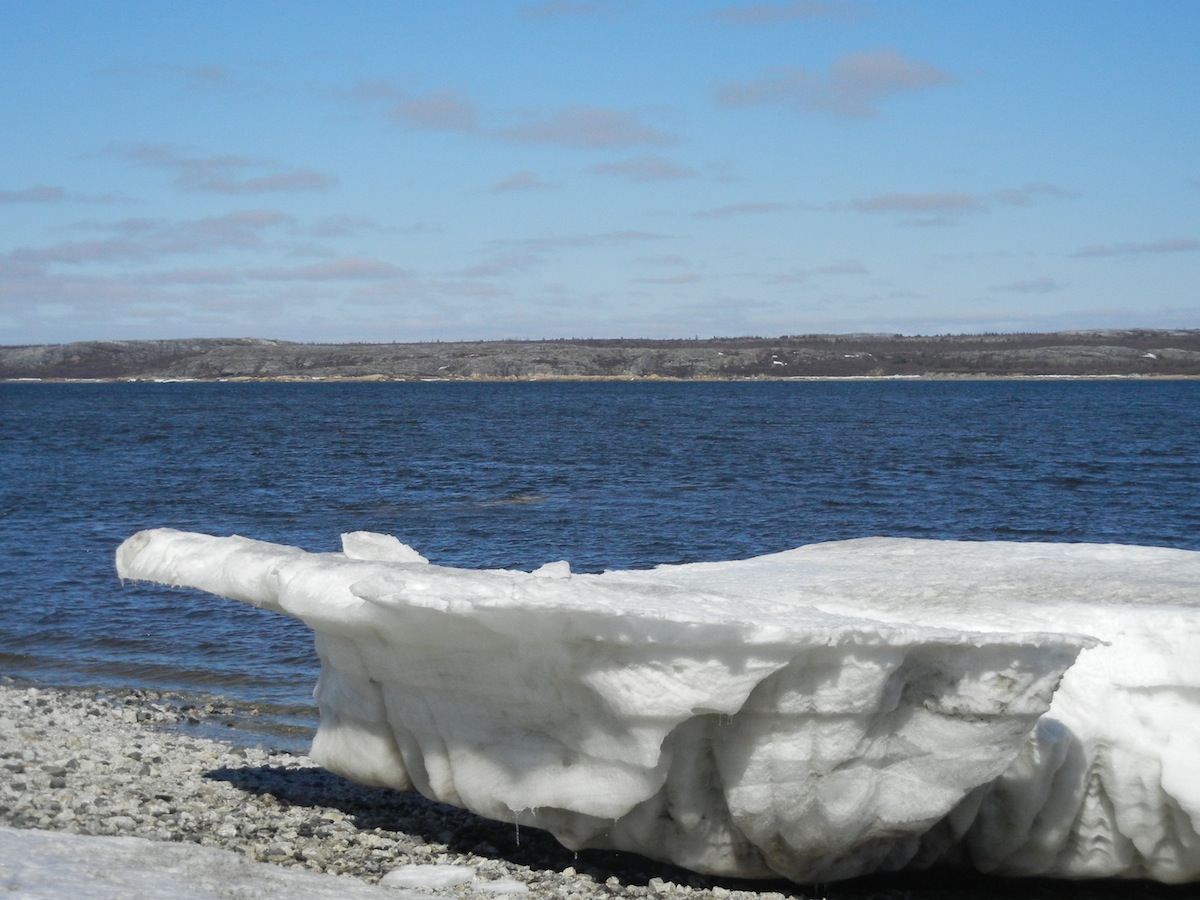
 

A piece of ice rots in the spring sun near the Koksoak River. (PHOTO BY JANE GEORGE)

A piece of ice rots in the spring sun near the Koksoak river. (PHOTO BY JANE GEORGE)
Like an iceberg, 1996, “Who speaks for Inuit”

Like an iceberg, 1996, “Who speaks for Inuit”

In August, 1996, I ran into Piita Irniq at the Dorval airport in Montreal.

“Piita,” I said, “It’s me — Jane. I don’t think we’ve seen each other since Chesterfield Inlet.”

That’s was in 1993, when Irniq was an organizer of the first reunion of former residential school students from the Sir Joseph Bernier School in Chesterfield Inlet.

As we waited for our flight over tea, Irniq told me as we waited for our plane that he had stopped smoking and drinking. And  that he was busy — with the Nunavut Implementation Commission, the group that was designing the new government for Nunavut, to be created in 1999.

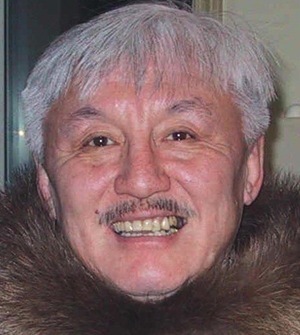
Piita Irniq, shown here in a handout photo after he become the first Commissioner of Nunavut.

Piita Irniq, shown here in a handout photo after he become the first Commissioner of Nunavut.

Irniq, like me, was on his way to Memorial University in St. John’s, Nfld. for the Inuit Studies Conference.

But he said he was not happy when non-Inuit academics talk about Inuit, which is exactly what happened at these gatherings.

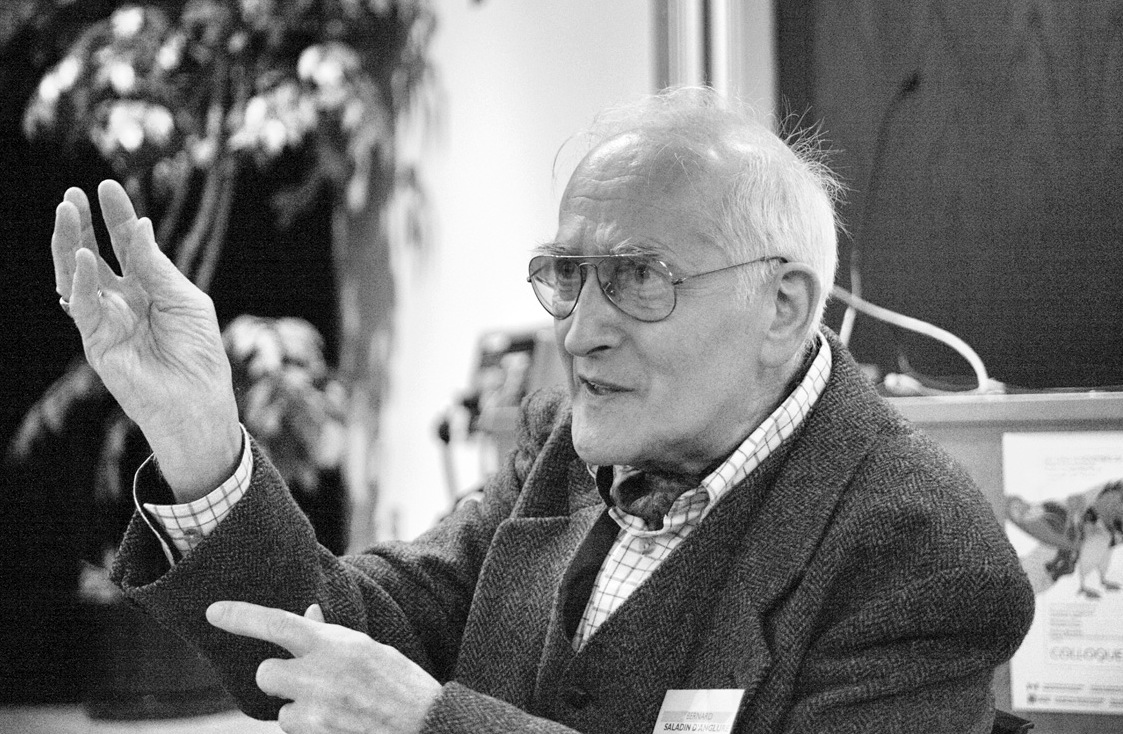
Two years ago, at the previous Inuit Studies conference in Iqaluit, Bernard Saladin d’Anglure, a professor from Quebec City’s Laval university and president of the Inuit Studies Association (Inuksiutitt Katimajiit Association), had issued a “call for help from the spirits of the numerous Inuit shamans of the past” to solve the social, cultural and economic crises in Inuit communities.

Saladin d’Anglure said then that a return to traditional religion might restore the value system and ideology that Inuit had lost. He said that shamanism is the “original religion of humanity,” with a powerful message for today.

“Why such a social crisis,” asked Saladin d’Anglure, “when at the same time Inuit succeeded so marvelously in their political negotiations?”

Bernard Saladin D'Anglure in a photo from Université Laval.

Bernard Saladin D’Anglure in a photo from Université Laval.

Saladin d’Anglure continued to study shamanism, in Igloolik, in Siberia and in South America, and, in  St. John’s, he hadn’t changed his point of view.

“The Inuit political development is a big success, but in terms of philosophy, ideology and religion, it’s a big disaster,” he said.

“Now, the Arctic is full of preachers coming in from the United States and Canada. It’s like a new attack from the South.”

At the conference in St. John’s, Saladin d’Anglure chaired a special session on “Shamanism and Possession.” He shared stories collected during 40 years of research, about shamans’ special abilities to communicate with unseen spirits and to mediate between unknown forces and people, from the past and the future.

“We only understand the point of the iceberg,” Saladin d’Anglure said. “The old traditional way of thinking of the Inuit was shared in other parts of the world where dream, mythology and religion, all that is connected.”

But Irniq said he thought Saladin d’Anglure, a non-Inuk, shouldn’t be talking about shamanism.

“It’s Inuit who should be invited to talk about shamanism at an Inuit Studies Conference. It’s a spiritual belief,” Irniq said.

He said he believed Inuit should decide if they want to revive shamanism, not researchers.

“Their purpose is to study Inuit ways,” Irniq said. “Not to promote a new kind of colonialism. It’s none of Inuit Studies’ business to promote shamanism and things like that.”

Nelson Takkiruq Canadian, 1930–1999 Double Shaman Drum Dancer, 1989. (PHOTO/ WINNIPEG ART GALLERY

Carving by Nelson Takkiruq called
Double Shaman Drum Dancer. (PHOTO/ WINNIPEG ART GALLERY

Resentment against researchers was common in the North during the 1990s.

And the joke that an Inuit family consists of a man, a woman, two children, dogs and an anthropologist wasn’t seen as funny anymore.

Martha Flaherty, then the president of the Pauktuutit Inuit Women’s Association, also used the Inuit Studies Conference in St. John’s as a forum to get this message across. She said too often southerners come north, do field research for a few months and then influence government funding and policy with their results.

Flaherty said Inuit needed to assume tighter controls over research and its impact.

“This is a very difficult standard to uphold, especially with all the talk of freedom of expression in universities,” she said. “However, we take this strict line because we know the power and consequences of such research when not restricted.”

Some 40 or more years in the past researchers could freely study Inuit, traveling wherever they pleased and talking to anyone who would speak to them — just like I had been doing as a journalist.

When Saladin d’Anglure was a young man, he went to northern Quebec, and stayed for months, learning the language and recording stories.

His Inuktitut nickname was apiqsuk — the one who asks questions. As long as he lived with the Inuit who were living around Kangiqsujuaq, then known as Wakeham Bay, in tents and igloos, he was accepted as a member of their community and learned to speak Inuktitut.

“They tested my capacity as a hunter,and when I succeeded at the test, they all wanted to go out hunting with me!” he said in a 1996 interview.

Saladin d’Anglure used to give notebooks to elders, so that they could write all their stories down in syllabics. A young woman called Mitiarjuk became one of his main sources. Mitiarjuk first began writing for Father Robert Lechat, who wanted to improve his Inuktitut.

But she soon tired of writing simple sentences. So, with Saladin d’Anglure’s encouragement, she began to weave — out of her own imagination — an entire saga.

An undated photo of Mitiardjuk Nappaaluk.

An undated photo of Mitiarjuk Nappaaluk.

That long story, called Sanaaq, tells the story of a fictional Inuit family living on the land when white men were just beginning to come into northern Quebec during the 1920s and 1930s. The heroine and narrator of the tale is a woman — called Sanaaq.

No one had ever told her that fiction existed: the only book Mitiarjuk had ever seen was the Bible, “so she actually reinvented the novel,” Saladin d’Anglure said.

When in 1997, I finally visited Kangiqsujuaq, where Mitiarjuk lived until her death at 78 in 2007. I arranged to meet her at the local school, where she was a language and culture instructor. When I met her, she was an elder, a small, thin woman with lank, grey hair.

These seal bones are similar to the ones which Mitiarjuk used to teach about Inuit culture and language. (PHOTO/ UNIVERSITY OF WATERLOO)

These seal bones are similar to the ones which Mitiarjuk used to teach about Inuit culture and language. (PHOTO/ UNIVERSITY OF WATERLOO)

We talked over the kitchen table. She took a few small bones out of a bag and put them on the kitchen table. Out of these she deftly constructed a traditional camp scene.

“There’s the qamutik,” she explained, pointing to one arrangement of bones. “Over there, the dogs, the mother, father and children…”

Under her hands, these bones appeared as if they were really taking off over the land. She reflected on the scene she created out of bones. She sang a short song to the dogs, using words that she saif most young Inuit today would scarcely recognize.

Sanaaq is now available in English, through Nunavik's Avataq Cultural Institute.

Sanaaq is now available in English, through Nunavik’s Avataq Cultural Institute.

“If I hadn’t written, no one would know the old words anymore,” said Mitiarjuk who had also compiled an Inuit Encyclopedia based on Inuit traditional knowledge.

But Saladin d’Anglure said Sanaaq might never have been written, preserved and eventually published, if he hadn’t worked with her and translated her first writings.

However, in 1996, there was very little of this kind of close collaboration between anthropologists and Inuit.

“They ask us to have a form with the signature of the informant, so many things that when we try to do that with old informants and friends they respond, ‘So I have to sign on this form? Until now, we were working so well together. If you are not confident in me, I stop to work with you.’ So that’s the other side of the medal,” said Saladin d’Anglure.

Louis-Jacques Dorais, an anthropologist from Laval university, said that, when the Inuit Studies Conference first convened in 1978, Inuit were only indirectly involved in research and not always informed of the results, which were shared in southern professional journals or at conferences in the South.

“The knowledge you gain comes from our ideas, beliefs and traditions,” Flaherty told researchers in St. John’s. “Our right to ownership of the direction and findings of research cannot be contested or denied.”

Many said they don’t agree with this attitude, and some contested the idea that knowledge of any kind is owned.

The result would be that, for many years, particularly during the 1990s, much research wouldn’t be done. That’s because researchers were uneasy with the new way of doing things, which meant they could no longer come into a community and walk away with what they learned.

And research, particularly on controversial subjects such as violence against women, was often never made public because many studies, usually commissioned by organizations, remained their property.

As a journalist, I sometimes felt that I walked on thin ice: I talked to people freely, about the most touchy of subjects, but I shared what I learn: I published everything for people in the North— and, in the Nunatsiaq News, for which I was writing more and more in 1996 most stories were also translated into Inuktitut.

However, journalists who parachuted in to Inuit communities and published in the South would experience problems many years later — particularly in Nunavik where many of the reports and articles were usually published in French only.

Many years down the road, in 2012, the Nunatsiaq News even published translations of some stories so people could read these after outrage followed a series called “La tragédie Inuite” (The Inuit Tragedy) in La Presse.

The next instalment of Like an iceberg goes live May 2.

You can read previous posts here:

Like an iceberg: on being a journalist in the Arctic

Like an iceberg, 1991…cont.

Like an iceberg, 1991…more

Like an iceberg, 1992, “Shots in the dark” 

Like an iceberg, 1992, “Sad stories”

Like an iceberg, 1993, “Learning the language of the snows”

Like an iceberg, 1993 cont., “Spring”

Like an iceberg, 1993 cont., “Chesterfield Inlet”

Like an iceberg, 1993 cont., more “Chesterfield Inlet”

Like an iceberg, 1994: “Seals and more”

Like an iceberg, 1994, cont., “No news is good news”

Like an iceberg, 1994 cont., more “No news is good news”

Like an iceberg, 1994 cont., “A place with four names”

Like an iceberg, 1995, “More sad stories”

Like an iceberg, 1995 cont., “No place like Nome”

Like an iceberg, 1995 cont., “Greenland”

Like an iceberg, 1995, cont. “Secrets”

Like an iceberg, 1996, “Hard Lessons”

Like an iceberg, 1996 cont., “Working together”

Like an iceberg, 1996 cont., “At the edge of the world”

Like an iceberg, 1996, more “At the edge of the world”