Yellowknife — a capital city with no national newspapers

Saturday: that’s the day in the week that I traditionally reserve for the reading of as many print editions of newspapers as possible.

But in Yellowknife, I discovered that you can no longer buy any daily print newspapers from the South — that means there’s no Globe and Mail, no National Post, not even an Edmonton Journal. Not on Saturdays and not on any other day of the week.

A woman at a Yellowknife pharmacy where I used to find newspapers during previous visits told me that it’s been nearly a year since the distributor for daily newspapers from the South went out of business. Since then, no one’s picked up the distribution, she said.

And that’s in a city of 20,000, the capital of the Northwest Territories.

Yellowknife, lots of people, buildings and no national newspapers. (PHOTO BY JANE GEORGE)

Yellowknife, lots of people, buildings and no national newspapers. (PHOTO BY JANE GEORGE)

You might think there would be enough people in this city to support newspaper distribution — especially since it’s still costly for many to gain access to internet that’s fast enough to read the online editions of southern dailies with ease.

But I’m even more shocked because even in Iqaluit — Nunavut’s capital, which lies further to the north — you can buy newspapers such as La Presse, Ottawa Citizen, Montreal Gazette and Globe and Mail to the Sunday New York Times — although the Sunday edition arrives a day late — and Yellowknife, unlike Iqaluit, is connected to the southern road network and is served by many more flights in and out of the South than Iqaluit.

Newspaper-wise, all you can find in Yellowknife to read are copies of the Nunatsiaq News or local Yellowknife papers.
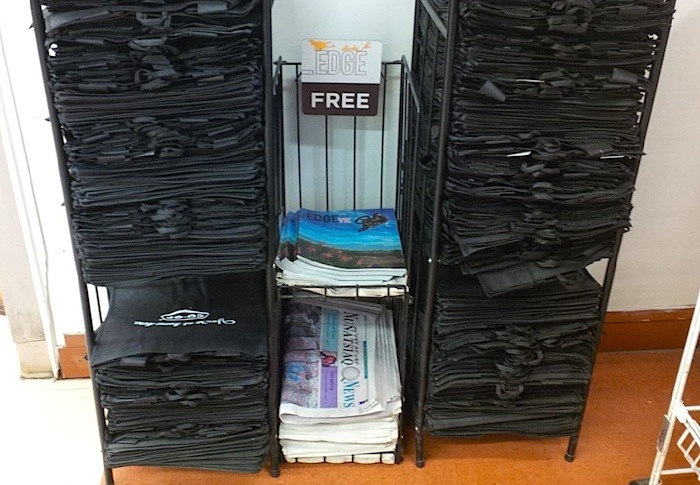
At the local co-op store in Yellowknife, I find a Nunatsiaq News. (PHOTO BY JANE GEORGE)

At the local co-op store in Yellowknife, I find Nunatsiaq News. (PHOTO BY JANE GEORGE)

That’s fair enough, because people need to know what’s going on in the city and the North, but it’s disturbing to think that people in Yellowknife — many of whom are also newcomers from other countries — are left out of the larger Canadian dialogue on politics and other national issues, particularly during a federal election period.

With no newspapers to read, here’s what you can do on a Saturday in Yellowknife:

  • shop for food (reasonable compared to other places in the North or at Walmart (with same the stuff as in the South) or buy alcohol at the liquor shop (impossible to do in most other places in the North);
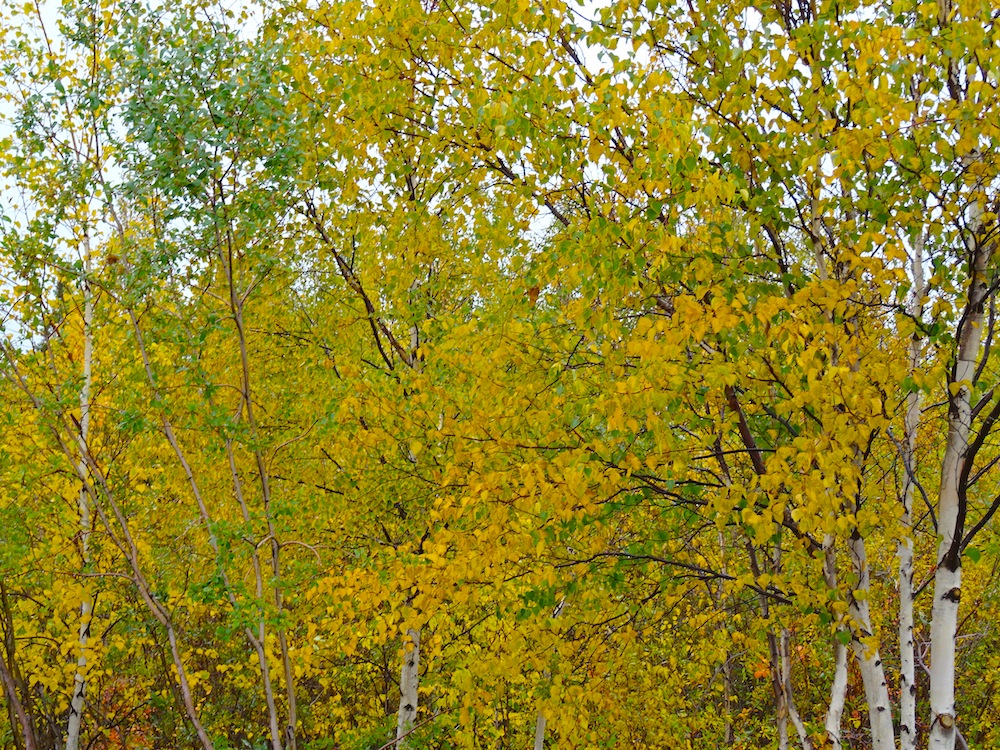
  • take a walk to admire the houseboats on Great Slave Lake, the changing leaves on the trees and still-blooming flowers;
    The birch trees turn a bright yellow colour at this time of year, reminding me of Finland. (PHOTO BY JANE GEORGE)
    The birch trees turn a bright yellow colour at this time of year, reminding me of Finland. (PHOTO BY JANE GEORGE)

  • visit the Prince of Wales Northern Heritage Centre; and,
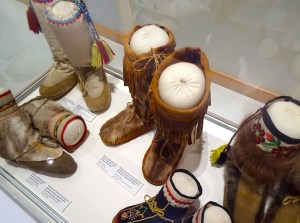
    A display of northern footwear at the Prince of Wales Norther Heritage Centre. (PHOTO BY JANE GEORGE)

    A display of northern footwear at the Prince of Wales Norther Heritage Centre. (PHOTO BY JANE GEORGE)

  • eat some Ethiopian food at a recently-opened restaurant.

    A mixed platter at the Zehabesha restaurant in Yellowknife. (PHOTO BY JANE GEORGE)
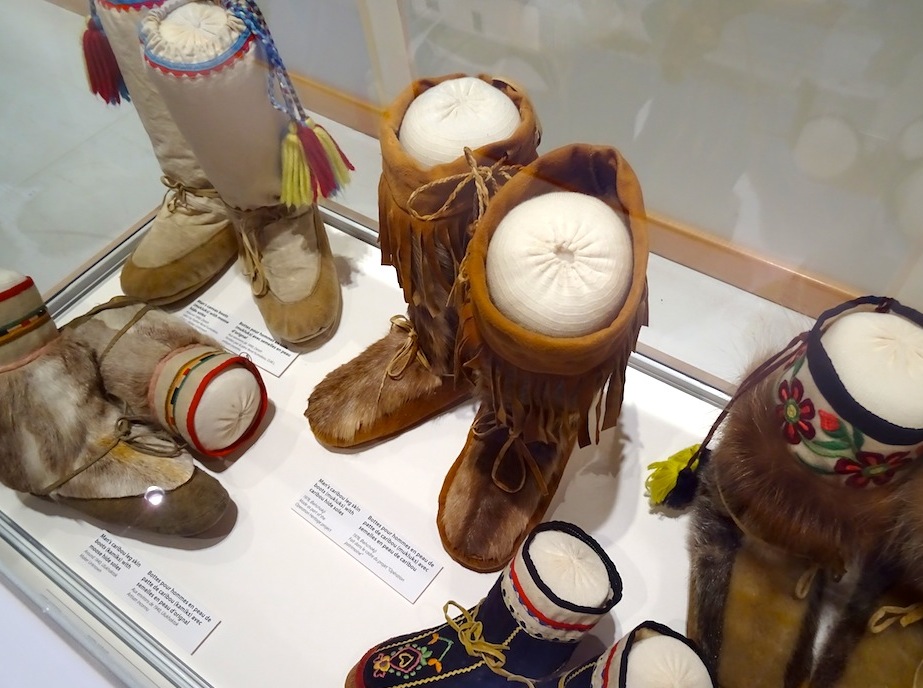
    A mixed platter at the Zehabesha restaurant in Yellowknife. (PHOTO BY JANE GEORGE)
You can also sample a variety of fast-foods, drink all the Tim Horton’s coffee you want or drive on paved roads with stop-lights.

You’ll also see buses, recycling bins, trash cans — in short, a lot of the service trappings of a fully-functional southern Canadian city.

You might think that this makes Yellowknife a better to live than colder, treeless and expensive Nunavut, but this makes it even more scary in my opinion that in Yellowknife, because there are no newspapers, many residents don’t know what’s going on outside the city — unless they listen to the radio and watch television.

In any case, they’re basically shortchanged of access to a news medium that, despite its financial challenges, is still thriving and which Canadians living in territorial and provincial capitals take for granted.

Is this your first time reading this blog? If so, check out earlier posts, including my “Like an iceberg” series on being a journalist in the Arctic during the 1990s. You can find all the links to that here.
Mitä olen oppinut Suomessa … what I learn in Finland

I’m in Finland for two weeks, from May 31 to June 13.

And it’s not my first time in this Arctic country, located around the top of the world from northern Canada: when I was young I lived there and learned the language, which I talked about in an earlier “date.”

But here’s what I have learned so far during this trip — which I didn’t really expect to learn:

After years working as a broadcaster and journalist, I finally understand something I’ve been told, retold and then retold to others — that if you are writing a story about an issue, make it a story about people.

How do I finally really understand why this is so important?

Well, my reading skills in Finnish are at about a Grade Six level, so suddenly I’m in the situation of a person with low literacy.

But when I’m in Finland, I still try to practice reading.

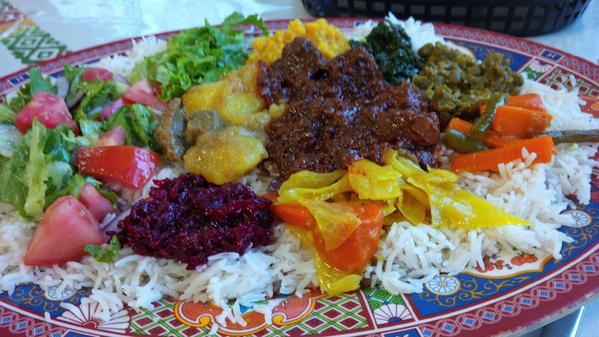
A selection of magazines that can be borrowed from a library in Finland. (PHOTO BY JANE GEORGE)

A selection of magazines that can be borrowed from a library in Finland. (PHOTO BY JANE GEORGE)

Here’s the kind of stories I read at first:

• a 22-year-old Finnish man is killed in Goa, India under mysterious circumstances;

• a couple’s premature baby struggles to survive;

• a woman who is overweight becomes a chaplain and then discovers she’s gay;

• Finnish celebrities, whose names mean nothing to me, talk about their divorces, affairs, tattoos, etc.; and,

• people who own and renovate a typical Finnish “mökki” or cottage show what they did.

Why do I read these? Because people-oriented stories are easier to read and far more interesting than others.

As my reading skills improve, I start to read stories about politics (Russia’s close presence makes Finns very nervous) and climate change (a journalist from the Helsingin Sanomat newspaper goes to California, where he finds a Finnish woman who talks about the state’s water crisis.)

If you want to buy Karelian patties, here's the place: but it still helps to know what the Finnish says. (PHOTO BY JANE GEORGE)

If you want to buy Karelian patties, here’s the place: but it still helps to know what the Finnish says. (PHOTO BY JANE GEORGE)

In the Nunatsiaq News, people stories also prove to be more popular — for readers, whose first language is often not English.

But we also have to encourage people to improve their reading skills, like me, so they’ll dare to read a story about something else, such as climate change, or even international politics.

Here’s what else I learn:

My brain keeps a lot of Finnish somewhere on its back-burner — but using the language and immersing myself in it is the key to bringing this out.

When I get on the airplane to go to Helsinki, I hear people speaking Finnish and the language sounds so strange, like Klingon almost… and yet, somehow, I understand it. But can I speak it after a year?

I don’t even ask the flight attendants for drinks in Finnish.

On Day One, I wish I’d brought a Finnish-English dictionary along as I stumble over the simplest explanations; by Day Two, I am able to baby-talk Finnish.

Someone asks me for directions on Day Three and I can answer. although I don’t know where they should go.

It's easy to stay up late when the sun doesn't set. (PHOTO BY JANE GEORGE)

It’s easy to stay up late when the sun doesn’t set. (PHOTO BY JANE GEORGE)

By Day Four I stay up with friends, until the sun is almost at the horizon (and ready to rise again.) I’m talking and making jokes in Finnish, with half-remembered  verbs somehow appearing again — verbs like cut down, suggest, disappear or suffer.

I also relearn, among many other words, the following: dandelion, rainbow, otter, design, crow, insurance, wheelbarrow and pine cone.

On Day Five I still look for right endings when faced with saying things like “in the house of my friend’s brother”  — ystäväni veljen talossa. Television, where everyone speaks fast, starts to make more sense, and I start to read magazine and newspapers more easily.

I talk to myself in Finnish sometimes and random words pop into my brain. Finnish now longer feels strange but more like the rushing water of a brook that I usually think about when I’m listening to Finnish or speaking it.

I wish I had more than two weeks here — what would that do for my language skills? I wish I had that same fluency in Inuktitut, which I’ve spent more than 20 years trying to learn. And I wish there were easy-to-read celebrity magazines in Inuktitut and more things that I would want to read — in Roman orthography.

Mint, lime, cucumber drink is a find from a Finnish magazine. (PHOTO BY JANE GEORE)

Mint, lime, cucumber drink is a find from a Finnish magazine. (PHOTO BY JANE GEORGE)

My best find from a Finnish magazine: a recipe for a cucumber-lime-mint drink.

Here’s how to make it:

Cut up four limes into circles and mash them in a bowl.

Add a bunch of fresh mint and continue to mash it up.

Press out the juice through a sieve. Put the juice in with a chopped up cucumber (English) into a blender.

The result is very green.

Kippis (cheers)