Like an iceberg, 1997, “Qaggiq”

Like an iceberg, 1997: “Qaggiq”
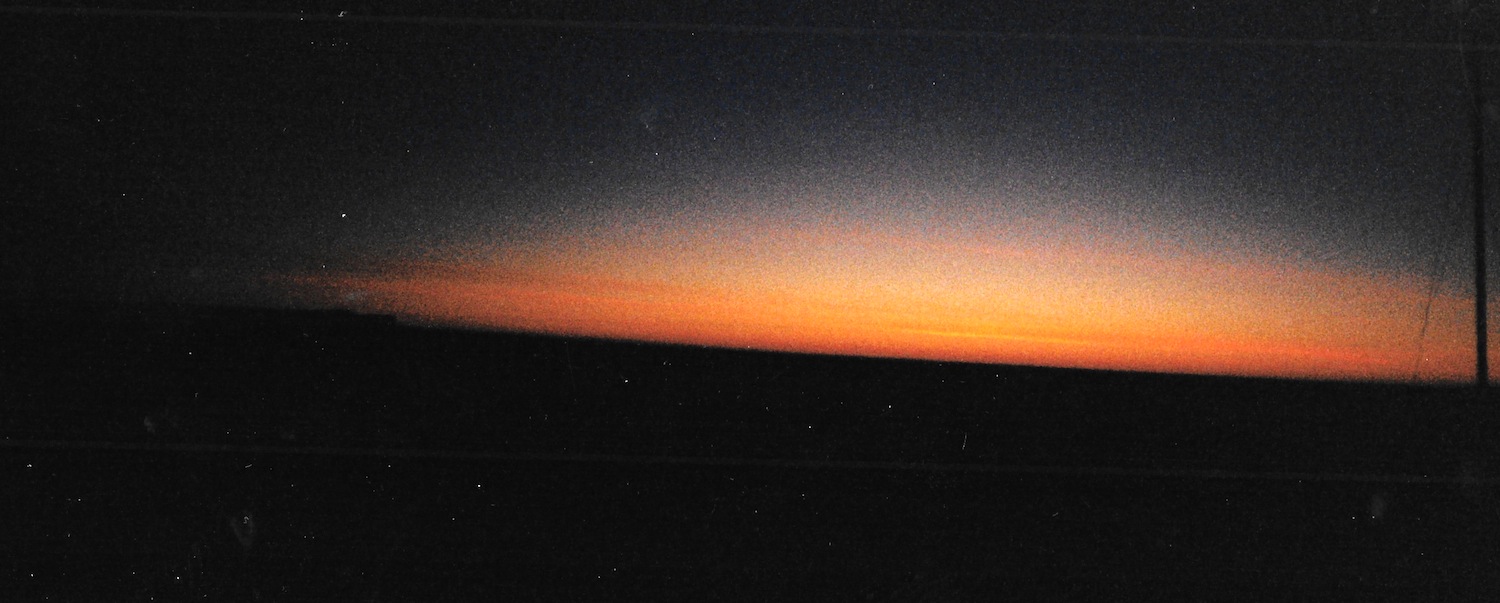
The sun still doesn't rise above the horizon in mid-January, 1997, when I visit. (PHOTO BY JANE GEORGE)

The sun still remained below the horizon in January, 1997, when I first arrived in Igloolik. (PHOTO BY JANE GEORGE)

The long polar night was not yet over in Igloolik when I decided to visit this eastern Arctic community, 870 kilometres northwest of Iqaluit, in early January 1997. I’d heard about its ceremony to welcome back the sun, and for years I’d wanted to visit Igloolik, because it was supposedly the most “traditional” place in the region.

In Igloolik, residents spoke the purest dialect of Inuktitut, so my Inuktitut teachers told me. It was a community that still kept Inuit traditional culture alive, I heard.

And I’d been watching a television series called Nunavut: Our Land, by Igloolik filmmaker Zacharias Kunuk, which made me want to see that landscape and its people for myself.

When I was in Igloolik, I stayed with the local Anglican minister’s family at their informal bed-and-breakfast — the only place I could afford. I’d come on a shoestring budget, patching together contracts from CBC radio and Canadian Press, and cashed in some frequent flyer points to get there.

Rev. Dana Dean baked bread daily. His puffy warm loaves were something to look forward to. But my basement room depressed me. If I was lucky enough to be there in the middle of the day, I could see a bit of reddish twilight through its two windows for a few minutes.

The rest of the time my view on the world was dark, with a veil of ice and snow. In fact, it seemed that I could always feel the minus 40 C cold through the walls: It chilled me even as I lay on the bed rolled up in my down sleeping bag.

I arrived on a Friday, spending the weekend mainly trying to get my bearings in this dark and cold place.
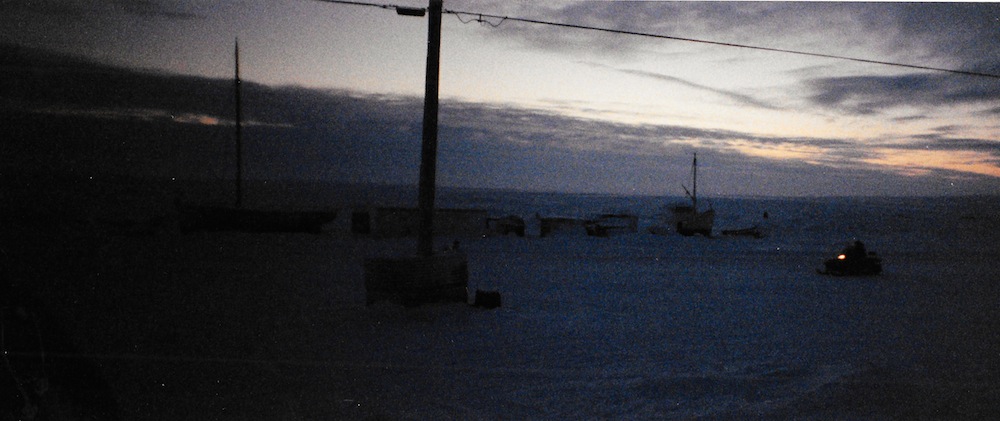
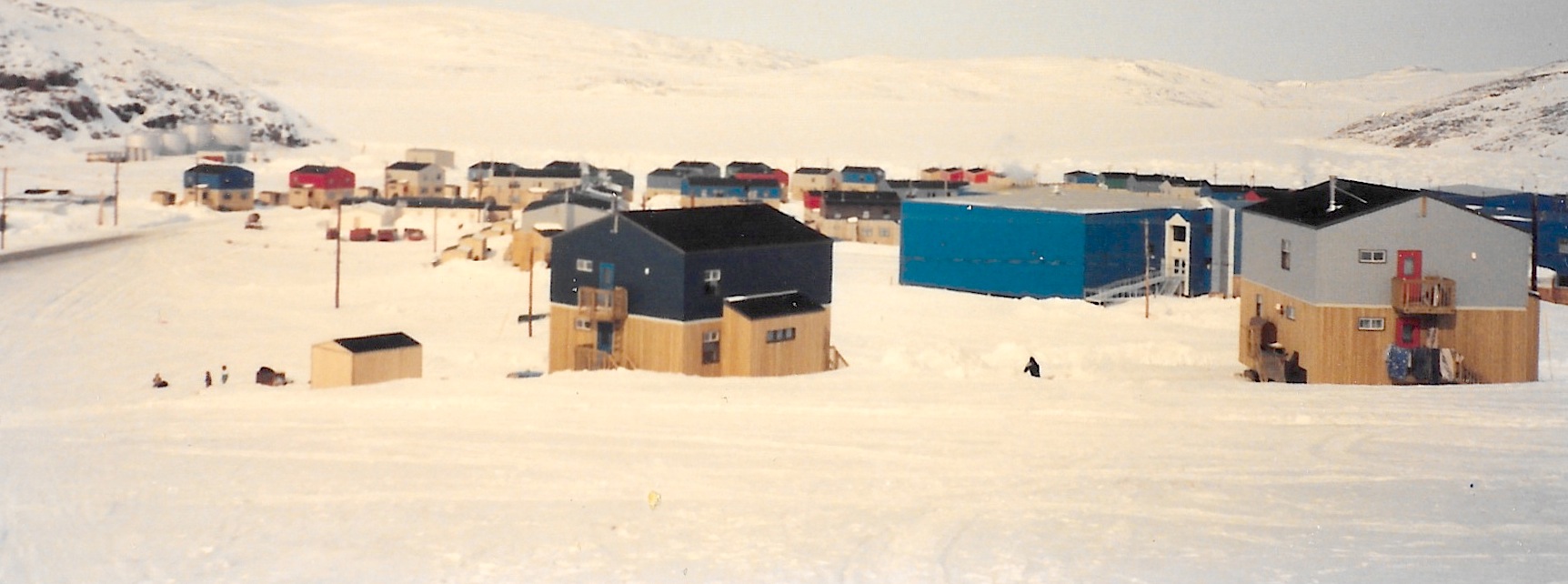
It's hard to get my bearings in Igloolik which never gets lighter than this in the middle of the day. (PHOTO BY JANE GEORGE)

It was hard to know where I was going in Igloolik, which never gets lighter than this in the middle of the day in early January. (PHOTO BY JANE GEORGE)

I’d read about Igloolik’s unusual stone church, but when I found it, clearly no one was using the church any more for worship: The low, curved stone walls were covered in a layer of ice and huge drifts were banked up against the sides. Inuit built the church at the behest of one of the Catholic missionaries. Later, they wanted to tear it down: It was too hard to heat and kids climbed up the drifts to jump on the roof. Someone could get hurt, I heard.

Few people were out on the slippery, ice-packed streets of Igloolik when I ventured around town. Wind was blowing off the sea ice and it swept freezing crystals of snow along in its path. Over in the east, a bloodshot light stained the blowing snow pink.
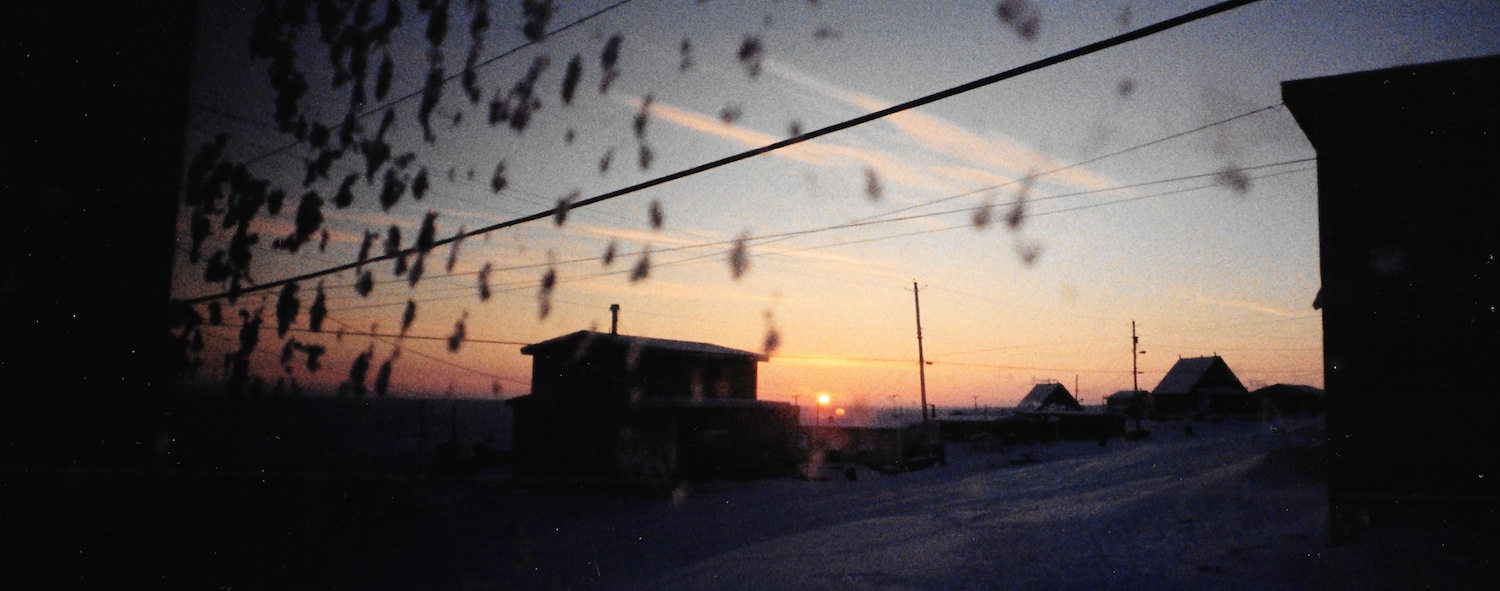
When the sun first rose above the horizon, I could see it from my room in Igloolik. (PHOTO BY JANE GEORGE)

When the sun first rose above the horizon, I could see it from my room in Igloolik. (PHOTO BY JANE GEORGE)

On the Monday following my arrival, when the sun finally peeked over the horizon, its return was supposed to be a reason for celebration. A qaggiq, inspired by the gatherings Inuit used to hold out on the sea ice in a huge snow house, had been scheduled for that evening. It would be held in the school gym, though, not in an igloo.

But plans for that evening’s Qaggiq were quickly shelved when the community ended up mourning the sudden death of a young man who died from a drug overdose.

Qaggiq organizer Louis Tapardjuk told me that going on with the celebration later in the week would be important for everyone in the community.

“The Qaggiq does give them some alternatives. It gives new ways of looking at things,” he said. “It’s preventative —and is also going to help the parents in their bereavement, as a distraction for longing for their loved one.”

Qaggiq celebrations, he said, were based on information from the oral histories of Igloolik’s elders. Iglulingmiut had stopped qaggiqs because of their shamanistic elements: drum-dancing, songs and story-telling. When local researchers began to interview elders in the late 1980s, these forgotten traditions were rediscovered.

“From the interviews we’ve conducted, we’ve seen how important the role of the sun was,” Tapardjuk said. “I decided that we might as well do something about it because it’s a heritage, it’s a culture that was more or less wiped out with the introduction of Christianity and missionaries coming in.”

Before hearing the elders’ stories, he had no knowledge of January’s qaggiq ceremonies.

“When I was growing up, I went to residential school in Chesterfield Inlet, and the government’s policy of the day was assimilation,” Tapardjuk said. “You look like an Inuk, but you begin to realize how little you know.”

Elders told him how, on the day of the sun’s reappearance, children would run to each igloo and blow out the wicks on the stone lamps, known as qulliit in Inuktitut. Then, new wicks would be set into place and relit from a single ceremonial flame.
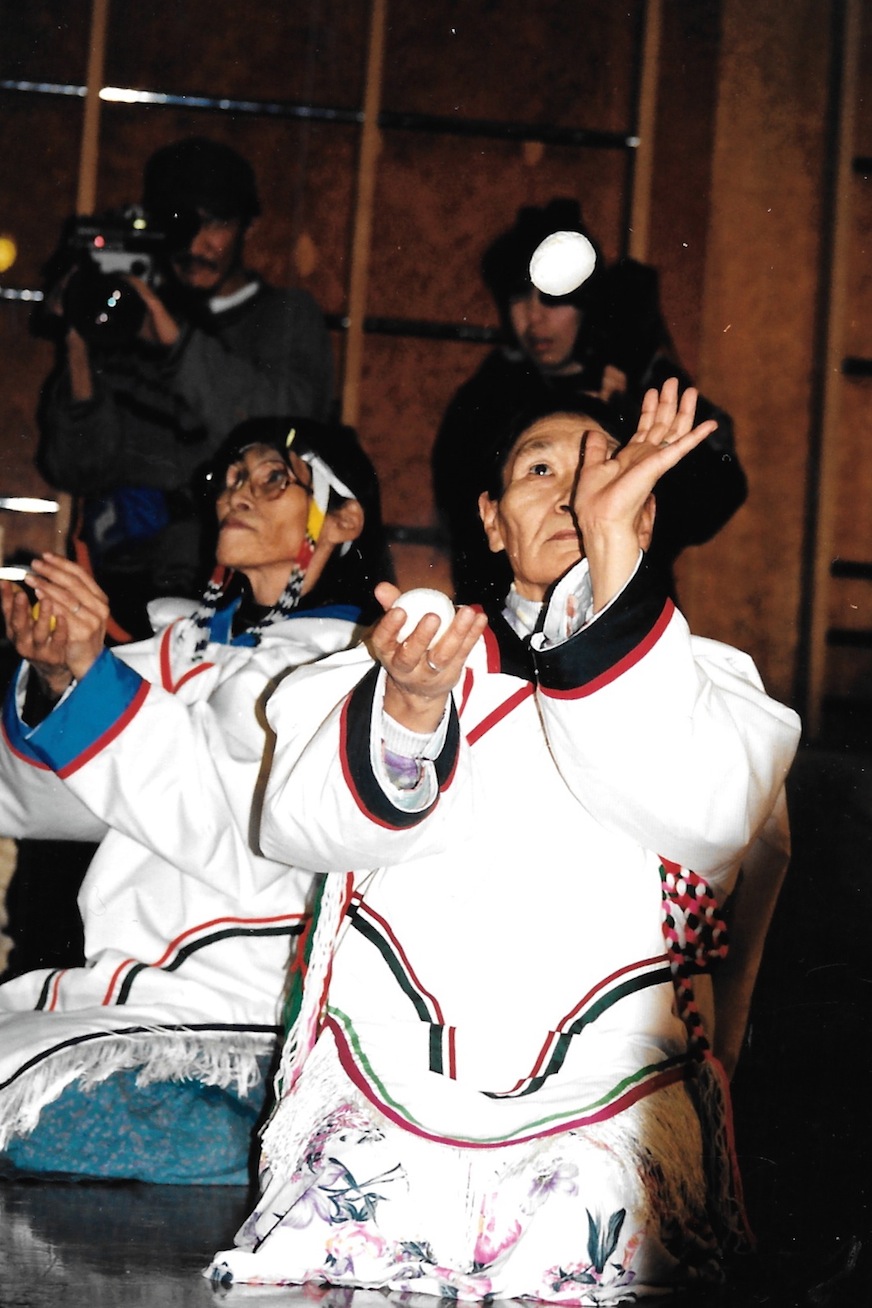
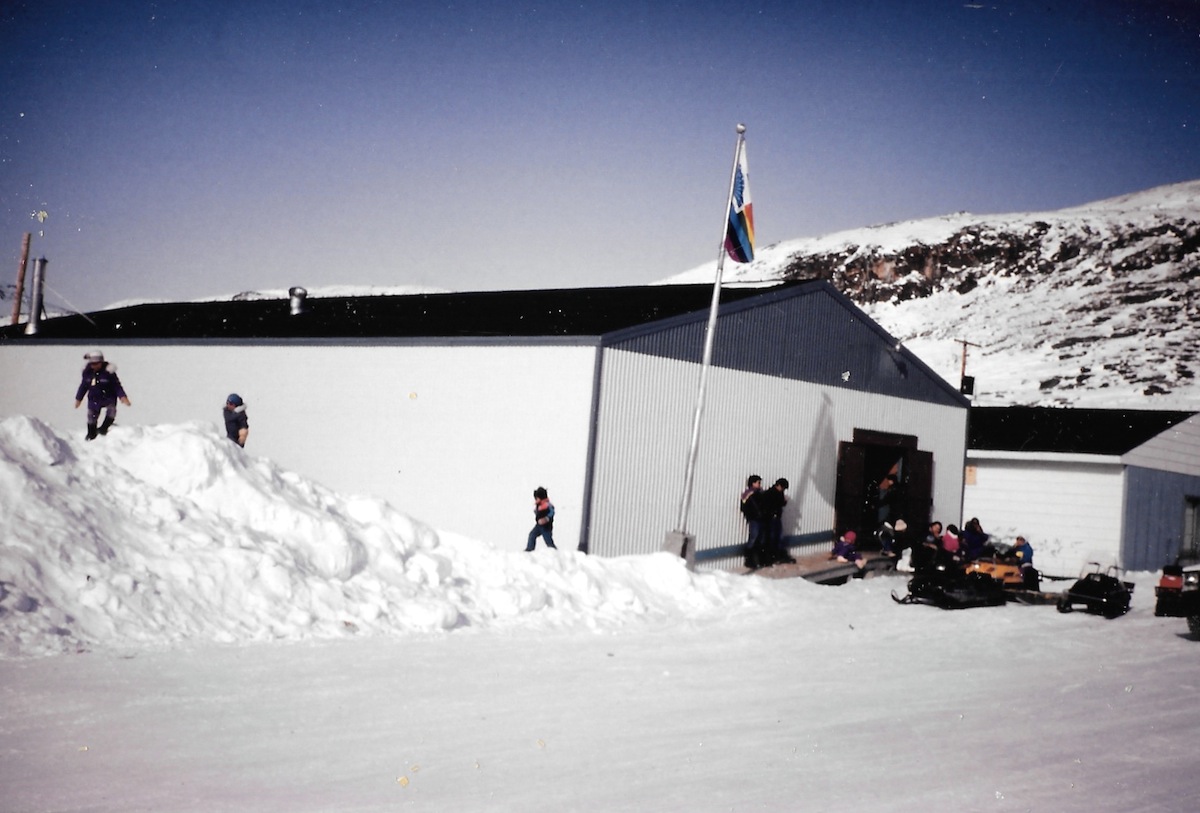
A demonstration of ajagaq, a cup and ball game, is included in the Return of the Sun ceremony in Igloolik in January, 1997. (PHOTO BY JANE GEORGE)

A demonstration of ajagaq, a cup and ball game, is included in the Return of the Sun ceremony in Igloolik in January, 1997. (PHOTO BY JANE GEORGE)

The long, dark time of the year was an anxious time, said elders. They remembered playing cat’s-cradle string games to catch the sun and prevent its disappearance. Then, near the end of the polar night, they would cut up their ajaraaq strings and begin, instead, to play an version of the ajagaq, a cup and ball game, in which a bone used to be thrown up in the air and speared with a stick, to encourage the sun to rise.

Elders also remembered that people scanned the skies intently, looking for signs that the sun would return. When the morning stars, called akuttujuuk, stayed out even during the brief twilight, they knew that sun would soon return.

“Akuttujuuk appear. Yonder the daylight, A-ya-ya. It is a joyous feeling that I will go on living,” goes a traditional song.

With the promise of easier times ahead, elders said that children would smile, but with only a half-smile. One side would be happy because the sun was back, the other side straight because it would still be a long time before warmer weather would return.

But I didn’t see a lot smiles of any sort when I was in Igloolik in 1997, except at the hockey arena or during bingo games. Over the past year, more than a dozen people had died, and many said it was difficult to pick up and go on.
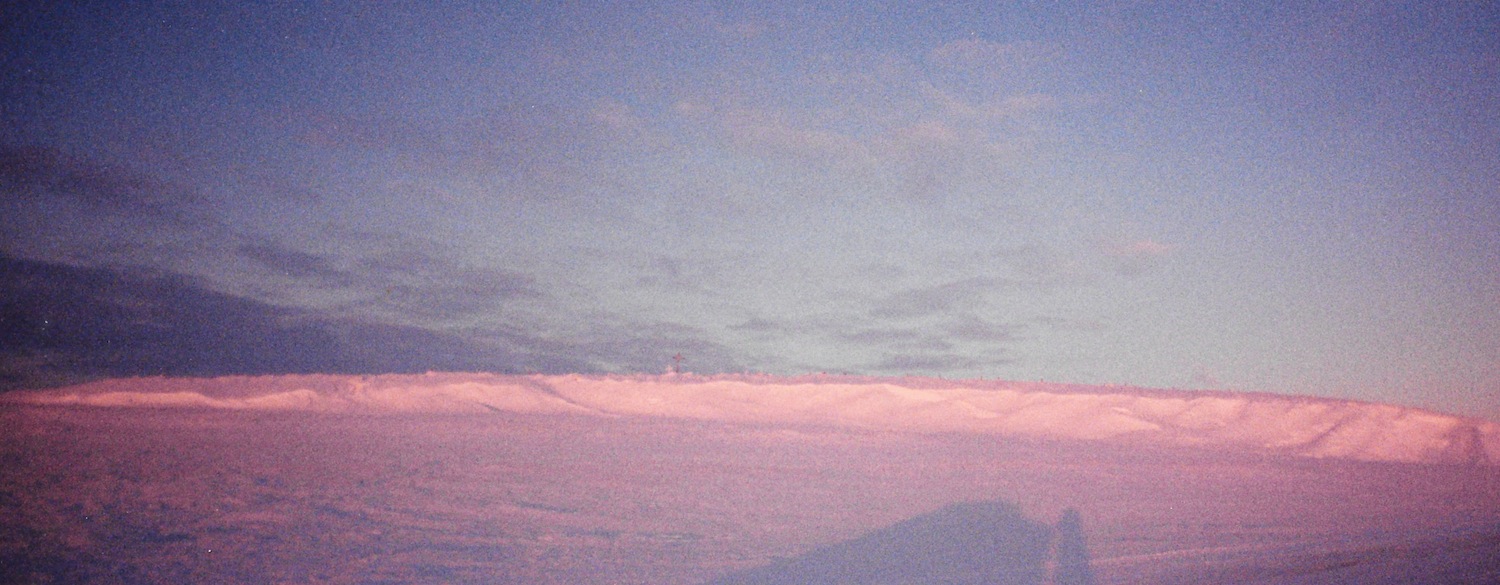
Pink light illuminates the cemetery in Igloolik in January, 1997. (PHOTO BY JANE GEORGE)

Pink light illuminates the cemetery in Igloolik in January, 1997. (PHOTO BY JANE GEORGE)

Several of the deceased were elders.

Before the Return of the sun qaggiq, the 22 remaining elders of Igloolik were fêted at a traditional meal, followed by drum-dancing. They ate an entire seal, sliced open for the occasion. There were also shanks of frozen caribou, fermented walrus called igunaq, maktaaq and char, and lots of bannock spread out on plastic bags in the middle of the large, circular floor.

The elders’ get-together was held at the Igloolik Research Centre, a building shaped midway between a mushroom and water-tower. The circular space on the elevated floor of the building suited the occasion.

Elders sat around the edges of this room, much as they would have in an igloo. Their deeply creased faces hinted at a difficult life; their hands showed signs of hard labour. Their intricately embroidered boots and felt liners witnessed to their artistry. They all joined in to sing traditional a-ya-ya songs as drum dancers beat out a rhythm on round drums.

“If it weren’t for their dedication and hardship, we wouldn’t be here today,” Tapardjuk said. “From them we learn how to cope with life.”

Like an iceberg, 1997, “Qaggiq,” a four-part series, continues May 6.
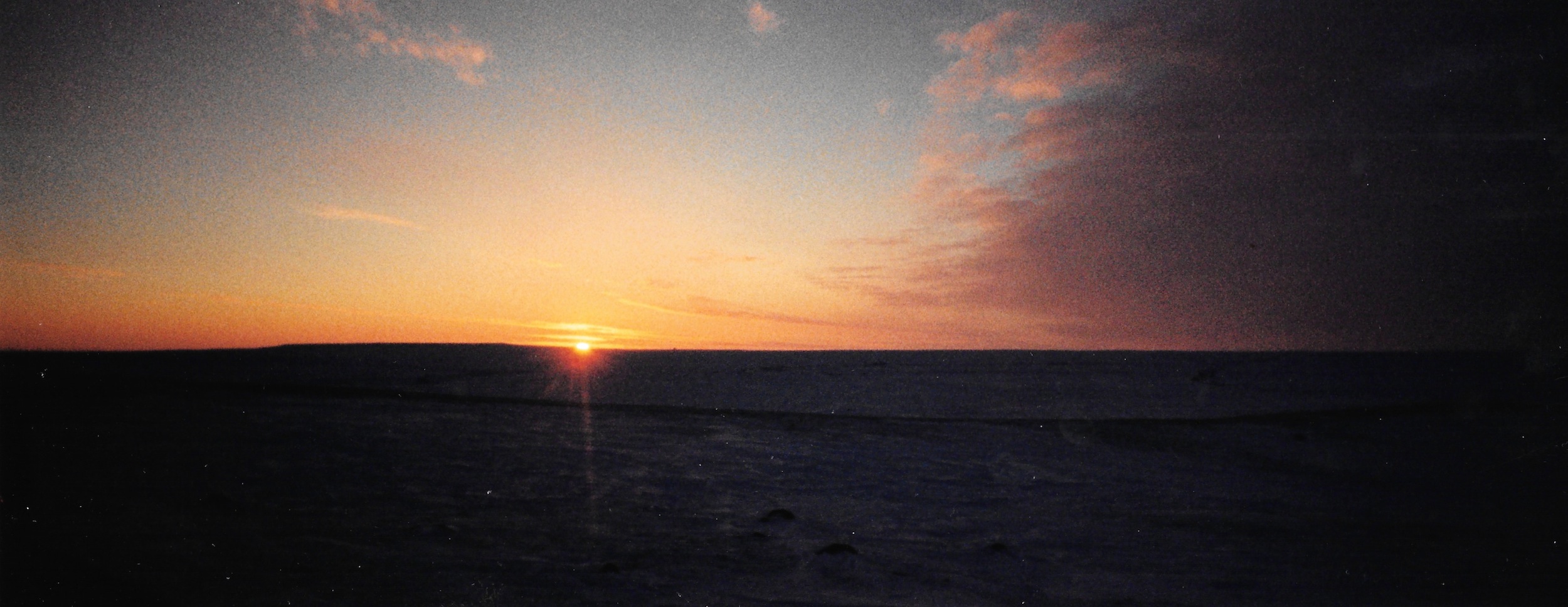
The sun rises over the horizon in mid-January, 1997. (PHOTO BY JANE GEORGE)

The sun rises over the horizon in mid-January, 1997. (PHOTO BY JANE GEORGE)

You can find previous instalments here:

Like an iceberg: on being a journalist in the Arctic

Like an iceberg, 1991…cont.

Like an iceberg, 1991…more

Like an iceberg, 1992, “Shots in the dark” 

Like an iceberg, 1992, “Sad stories”

Like an iceberg, 1993, “Learning the language of the snows”

Like an iceberg, 1993 cont., “Spring”

Like an iceberg, 1993 cont., “Chesterfield Inlet”

Like an iceberg, 1993 cont., more “Chesterfield Inlet”

Like an iceberg, 1994: “Seals and more”

Like an iceberg, 1994, cont., “No news is good news”

Like an iceberg, 1994 cont., more “No news is good news”

Like an iceberg, 1994 cont., “A place with four names”

Like an iceberg, 1995, “More sad stories”

Like an iceberg, 1995 cont., “No place like Nome”

Like an iceberg, 1995 cont., “Greenland”

Like an iceberg, 1995, cont. “Secrets”

Like an iceberg, 1996, “Hard Lessons”

Like an iceberg, 1996 cont., “Working together”

Like an iceberg, 1996 cont., “At the edge of the world”

Like an iceberg, 1996, more “At the edge of the world”

Like an iceberg, 1996, cont, “Choices”
Like an iceberg, 1996 cont., “Working together”

Like an iceberg, 1996 cont.: “Working together”

In May 1996 I was once more in Salluit, a community on Nunavik’s Hudson Strait, this time working with Inuit broadcasters at the Taqramiut Nipingat Inc. network. This radio and television network brings news to Inuit in Nunavik, in Inuktitut, and I was helping them develop a series of television specials to celebrate their 20th anniversary.

By this time of the year, the days were getting warmer as the sun shone from early in the morning until late at night. Even on cloudy days, the sun sent out swaths of sunlight that lit up the mountains at the far side of the fiord facing the community.

Children screamed happily as they slid down the slippery hills around Salluit and there was a soft milling sound in the background as snowmobiles headed off on the land. Each breath was full of that heady springtime combination of exhaust and melting snow.

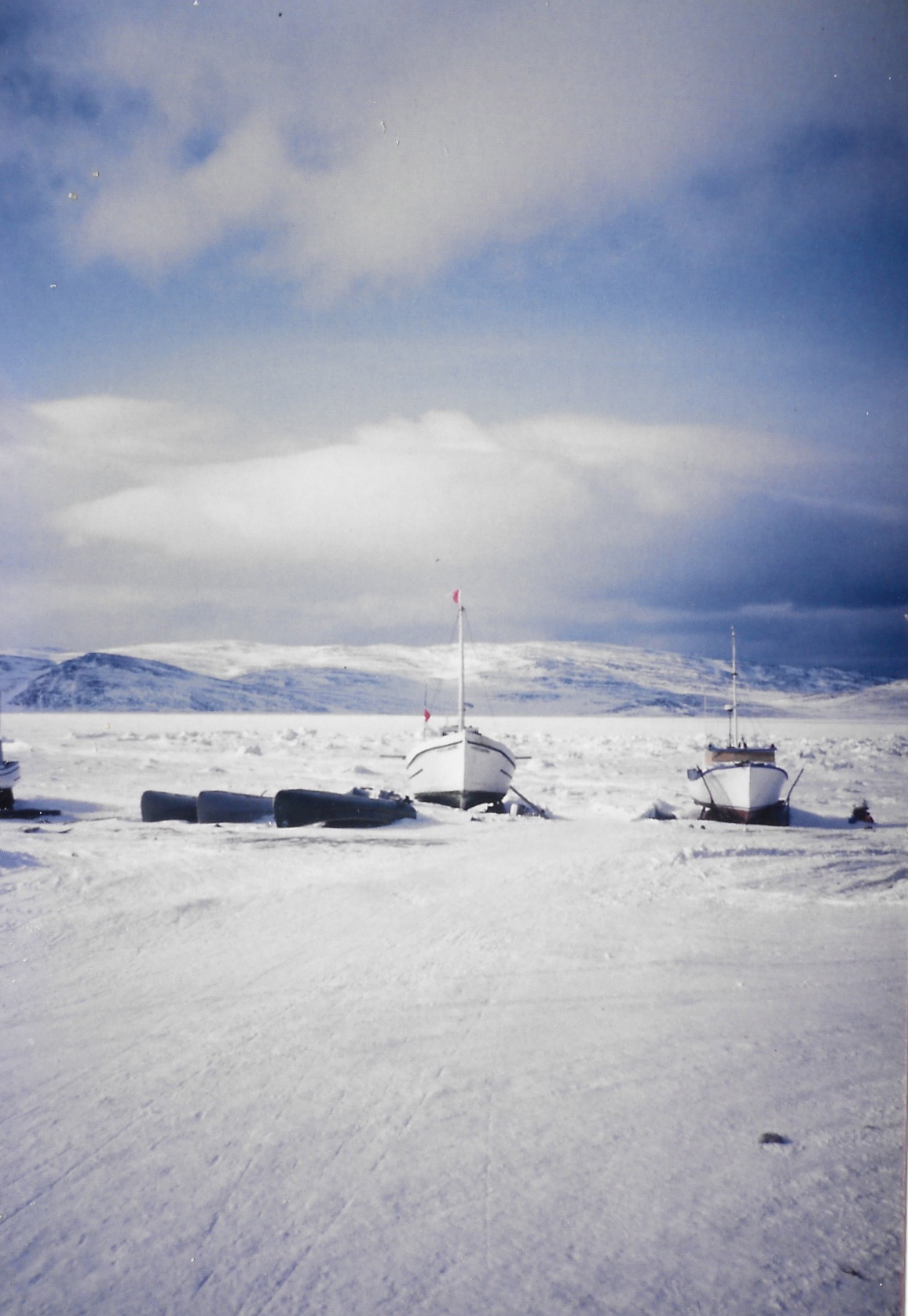
Boats are frozen in the ice, awaiting warmer days, in the spring of 1996. (PHOTO BY JANE GEORGE)

Boats are frozen in the ice, awaiting warmer days, in the spring of 1996. (PHOTO BY JANE GEORGE)

I stood in front of the TNI studio with Joanasie Koperqualuk, taking in this spring scene, when he suddenly asked me, “What do you suppose today’s date is in Roman numerals?”

I told him I have no idea, but this question made me laugh.

Koperqualuk was always surprising me. He was the secretary at TNI, but we discussed the story lines and planned interviews together for TNI and for reports I was also working on for CBC radio at the same time.

He became much more than an interpreter when we talked to people together: Koperqualuk was able to translate simultaneously for me, but at the same time he was also planning the next question that I should ask before I could even think about it.

The small TNI studio was almost entirely run by Inuit — the only other non-Inuk around maintained the equipment. Daily radio broadcasts and weekly television programs were all prepared by Inuit: there were no non-Inuit here behind the scenes thinking they make things work.

One of the employees never showed up the whole time I was there, but Koperqualuk and the other employees looked down on him. Koperqualuk arrived at the office every morning at 8:30 a.m., and often stayed until late in the evening, to finish an important document or plan for the next day.

A view into the Nunavik community of Salluit in 1995. (PHOTO BY JANE GEORGE)

A view into the Nunavik community of Salluit in 1995. (PHOTO BY JANE GEORGE)

Elder broadcaster, the late Elashuk Pauyungie, then 55, was in charge of radio programming, and she took her work seriously, too. I learned that Pauyungie, who spoke only Inuktitut, had lived in an igloo until she was 17.

She never went to school. When she was young, communication was limited to letters between camps, often delivered by dog-team. The community of Salluit didn’t exist.

And, when I’m there, Salluit was on the brink of more big changes. The giant nickel mining company Falconbridge Ltd. was starting to build the Raglan nickel mine, located not far from the community. People in Salluit were hoping for jobs at the mine: With unemployment officially at 30 per cent, any new job possibilities were welcome.

Down at the former restaurant, a group of students had started a two-year professional cooking course. When I visit, two of them were cutting up onions and potatoes for a salad, while another mashed eggs for sandwich filling. Another added whipped cream to a pie for dessert.

A big pile of snow beside the co-op store in Salluit is a draw to kids in the spring of 1996. (PHOTO BY JANE GEORGE)

A big pile of snow beside the co-op store in Salluit is a big draw for kids in the spring of 1996. (PHOTO BY JANE GEORGE)

As part of this course, the class had also been learning about making balanced meal menus and reading recipes. When participants mastered all aspects of cooking, they hoped jobs would be waiting for them at Raglan mine site.

The Quebec government gave Falconbridge the go-ahead to develop the Raglan nickel mine site in May 1995. Only a year later, serious construction work was beginning at Raglan, and jobs for qualified Inuit employees had already opened up.

Salluit and Kangiqsujuaq, the other community near the mine site, were also looking to link up with southern-based companies to make money.

About $75 million in compensation (and that turned out to be a low estimate) was already guaranteed over 20 years as part of the Raglan Agreement that Inuit signed with Falconbridge in 1995 —  money that could be used by the communities to invest in joint ventures.

But critics said this economic progress would come with a cost, environmental and social. Contaminants and pollutants might be stirred up by the mine’s construction as well as by the production and transport of nickel.

And nearby Deception Bay, a favourite hunting spot, where huge tankers would someday fetch nickel concentrate and deliver fuel, could be at risk from spills, airborne particles and run-off from the nickel extraction process that can produce substances like arsenic, chromium, cobalt and lead. Wildlife that provide country foods to Inuit in the region could also be affected by these contaminants.

Concern for the fragile environment around a future provincial park not far from the mine was also surfacing. The park would surround a huge naturally-formed crater called Pingualuit. Formed by the explosive impact of a meteorite 1.4 million years ago, this crater lake’s water is exceptionally pure, so clear and soft that researchers used it to study the atmospheric fall-out of trace elements.

Of course, the official word was then always that everyone supported the Raglan mine, but I didn’t have to look very hard to find dissenters.

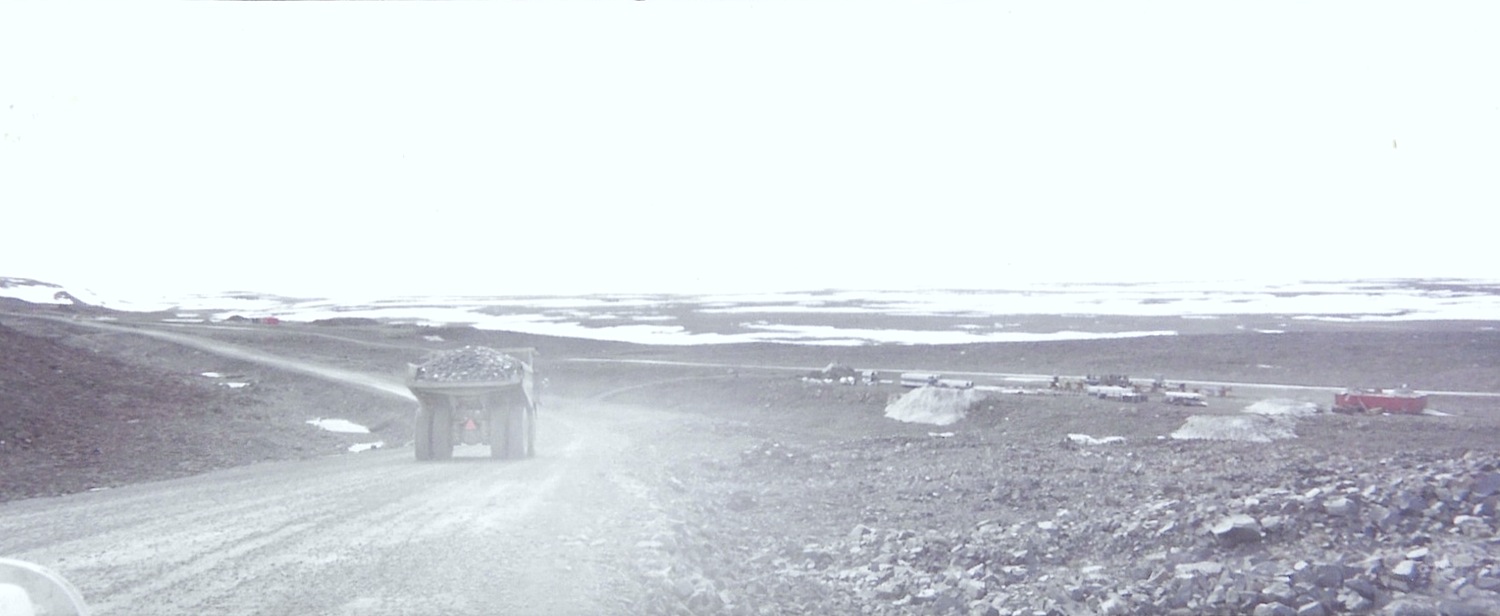
A truck rolls along a road outside the Raglan mine in Nunavik in the mid-1990s. (PHOTO BY JANE GEORGE)

A truck rolls along a road outside the Raglan mine in the mid-1990s. (PHOTO BY JANE GEORGE)

Putulik M. Okituk had nothing to fear from being outspoken. Twenty years earlier he had fallen off the top of the large gas reservoirs in Salluit while sniffing gas. He broke his back and had been in a wheelchair ever since. That fall changed his life, he told me.

In 1996, Okituk spent his time reading, listening to radio, playing crossword puzzles and thinking.

When I went over to his house, we chatted over tea. On this visit to Salluit, I learned that since I last saw him, Okituk had become also a municipal councillor.

Putilik Okituk is not afraid to say what he thinks about the Raglan mine. (PHOTO BY JANE GEORGE)

Putilik Okituk is not afraid to say what he thinks about the Raglan mine. (PHOTO BY JANE GEORGE)

But he still believed that the compensation payment Inuit would receive for the Raglan mine development could not make up for “the impending carnage of their land.”

He was upset that more local people didn’t show up here at a meeting held in early 1995 to discuss the project with representatives of Falconbridge. Okituk said those who did were handicapped by their poor grasp of English.

“The people who could understand the proceedings were not fluent enough to voice their concerns or to oppose the meagre offerings put before them,” he said.

“In the long run, people who did not attend the meeting will regret not having gone to the meeting of their lifetime. There will be a greater regret once they see the mistake they made when they start to see what is happening to the land which they so lovingly refer to as ‘our land.’”

I also went with Koperqualuk to visit Jimmy Kakayuk, one of Salluit’s elders, to talk to him about the mine development. Kakayuk said he wasn’t impressed by a $350 cheque he had received as part of the compensation money from the Raglan Agreement. To Kakayuk, the cheque seemed a bit like a pay-off.

“What did I do to deserve this?” asked Kakayuk, a hunter and carver who not is used to getting something for doing nothing.

Despite promises of money and proper environmental management, in 1996, there was huge uncertainty over just what changes the communities would face during the estimated 20-year lifespan of the mine — which is still in operating in 2015.

Although mine workers from the South were not supposed to visit the neighbouring communities, contact would be inevitable leading perhaps to more drugs, more teenage pregnancies and perhaps even violence, I heard (Some of those fears were realized later when huge resource-sharing cheques saw people in town walking off from the job and spending the extra money on drugs and alcohol.)

In 1996 people said they are also worried about environmental damage and how this would be monitored.

“The only time Inuit go out extensively on the land is in winter and we’re in snowmobiles. What covers debris and garbage better than snow?” a critic of the mine said.

One afternoon I went out snowmobiling with L., a broadcaster at TNI. We headed out from Salluit down the bay. On both sides we were flanked by cliffs. Everything was white.

She dodged giant hummocks of ice. Finally, we stopped by an open spot of water where locals came to harvest mussels. L. smoked a cigarette, while I looked around. It was May 4, and I was standing in an icy landscape, while I knew that in the South the first spring flowers were already in bloom.

From the top of the hill near Salluit, the community below, 1996. (PHOTO BY JANE GEORGE)

Salluit, from the top of a nearby hill, 1996. (PHOTO BY JANE GEORGE)

On the way back, we decided to head up one of the steep hills around Salluit. On top, the wind was blowing so hard it almost knocked us over, but you could see for kilometres, right over to Hudson Strait. The community spread out below us.

In the 1960s,  only a few dwellings hugged the shoreline of the bay. In 1996, new houses entirely filled the space between this hill and the next. A suburb had even sprung up since my last visit, a cluster of houses about 15 minutes from the centre of town, on the way up to the airport.

We raced down the hill back into town. While we were out on the land, I felt free: the streets of the community seemed to clash with the ice and snow we just navigated through.

I relished being in Salluit. I went to the Anglican church on Sunday, where I was invited home by fellow worshippers for Arctic char. I shopped at the co-op store and ran into people I knew.

I went visiting at night. I spent my evenings drinking tea and eating pilot biscuits. I visited with Elisapie Isaac, then a high school student and young broadcaster at TNI, who later would become a singer known throughout the North, in Quebec, and beyond.

When I leave Salluit, I was brought to the airport by Salluit resident Bill Smith. He always wore a tasseled crocheted hat, a nassak, with the word “Salluit” woven in the design.

As he dropped me off at the airport terminal, I suddenly remembered this hat from that first trip I took to Puvirnituq in 1991, but five years later, I, like everyone else that day, five years earlier, knew who the man wearing this hat is. This time he also knew me.

Like an iceberg continues April 29.

You can read previous instalments here:

Like an iceberg: on being a journalist in the Arctic

Like an iceberg, 1991…cont.

Like an iceberg, 1991…more

Like an iceberg, 1992, “Shots in the dark” 

Like an iceberg, 1992, “Sad stories”

Like an iceberg, 1993, “Learning the language of the snows”

Like an iceberg, 1993 cont., “Spring”

Like an iceberg, 1993 cont., “Chesterfield Inlet”

Like an iceberg, 1993 cont., more “Chesterfield Inlet”

Like an iceberg, 1994: “Seals and more”

Like an iceberg, 1994, cont., “No news is good news”

Like an iceberg, 1994 cont., more “No news is good news”

Like an iceberg, 1994 cont., “A place with four names”

Like an iceberg, 1995, “More sad stories”

Like an iceberg, 1995 cont., “No place like Nome”

Like an iceberg, 1995 cont., “Greenland”

Like an iceberg, 1995, cont. “Secrets”

Like an iceberg, 1996, “Hard Lessons”