Travelling by air in the North? Remember these 10 things

When I visited the western Nunavut community of Cambridge Bay recently, a little plastic nose pad or a “plaquette” (as we say in Quebec) fell off my eyeglasses. So the glasses were lopsided and painful to wear.

Luckily, I had another pair with me —  actually two, counting my sunglasses.13096190_10208108908032524_2699857646217233277_nSo here are 10 things you want to think about if you’re heading from point A to point B by air in Canada’s Arctic, particularly if you’re planning to work when you arrive:

#1 — If you wear glasses, bring two pairs. When I first travelled to Iqaluit in the early 1990s, I stepped on my glasses in transit and broke them in half. I arrived in Iqaluit and found someone at Nunavut Arctic College who was able screw the two pieces together. Don’t ask what I looked like.

Iqaluit airport

#2 — Bring two of everything you really need. I still travel with a laptop and an iPad, two cameras (digital, cellphone), etc. If something breaks, you can still do your work. I learned that again the hard way when I was in Iceland and the top of my  laptop broke off when I opened it: Apple has fixed that weakness now. But, in that pre-smartphone era, I had to write my stories on a hotel computer.

geyser

#3 — Remember your power cords. Once when I packed my equipment to leave for Yellowknife from Iqaluit, a co-worker started talking to me. Distracted, I left the power cord to my laptop on my desk. I couldn’t find one in Yellowknife. Again, I was fortunate to have a friend there who loaned me her laptop so I could get my work done in western Nunavut.DSC03780

#4 — Wear your heaviest outerwear on an airplane. A military survival expert in Resolute Bay said wearing a warm parka and boots when you crash on land can make a difference between life and death. He advised even carrying a sleeping bag on flights. I once got on a flight heading north in Montreal, with my warm parka packed in my suitcase. I arrived. It didn’t.

Resolute Bay

#5 — Pack enough essentials in your carry-on bag to tide you over. Just this week, a woman from Cambridge Bay, who was heading on a short hop from Cambridge Bay to Kugluktuk, arrived in Kugluktuk without her bag and a week’s worth of food and clothes. In the bag, which couldn’t be located, was a supply of frozen maktaaq (narwhal.) I once spent a week in Nunavik with only what I could pick up at a co-op store because I had packed everything in my bag, which never made it to the community.DSC02101
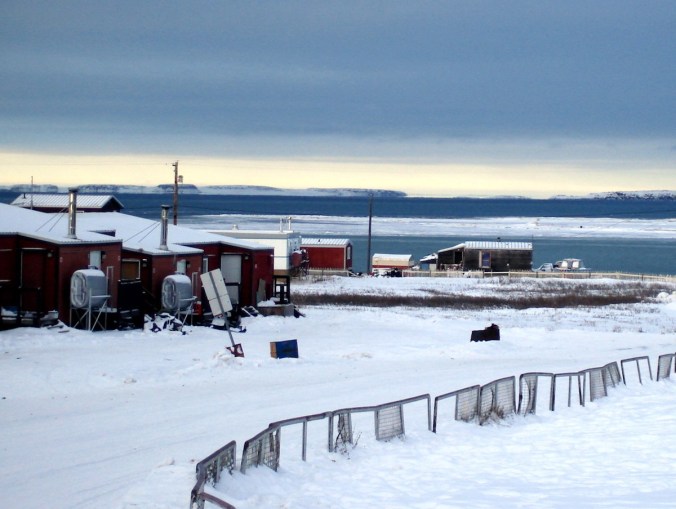
#6 — Bring socks. Bring underwear. Bring a toothbrush. Bring the right boots. You know.  I’ve packed and forgotten these items or brought the wrong ones. I arrived in Yellowknife this past weekend without my hair brush, which was back in Cambridge Bay — but a store was right across the street. You won’t have this luxury in most places. And bring the right kinds of boots. Are the streets snow-covered or icy? Muddy or dry?  Will you be out on the land?

The boots with built-in crampons that I use in icy Cambridge Bay would be silly for Iqaluit where it’s already rubber boot-season.

When I went to the floe edge in Pond Inlet I suffered from cold feet because I brought boots that were too light, and when I first went goose-hunting in May 1991, I arrived in Eastmain, Que. with boots that ended at my ankles — and spent the next 10 days in borrowed rubber boots in snow up to my knees. I’ve also ended up in Ottawa wearing sealskin kamiks when a flight was diverted there. Lessons learned.

#7 — Take snacks. And water. You never know when you may get an unexpected layover. This past weekend a five-minute station stop lasted for more than an hour.

#8 — Fill your carry-on bags to the maximum. I always travel with two heavy carry-ons and leave the light stuff in the bag, which may or may not arrive. But don’t let them out of your sight as I did on Ellesmere Island, only to find out later in the air that my backpack had been offloaded and left behind on the Lake Hazen tarmac.

View down Tanquary Fiord, Ellesmere Island

#9 — Check your time of departure and make sure you arrive when you need to. Sometimes flights are cancelled, sometimes they’re delayed or even leave earlier.DSC01399

#10 — Talk to people while you wait for the flight and while you’re in the air: You’ll make new friends. Even airports can be fun. On April 30, National Hockey League alumni arrived as I was leaving Cambridge Bay.


DSC03952

Yellowknife — a capital city with no national newspapers

Saturday: that’s the day in the week that I traditionally reserve for the reading of as many print editions of newspapers as possible.

But in Yellowknife, I discovered that you can no longer buy any daily print newspapers from the South — that means there’s no Globe and Mail, no National Post, not even an Edmonton Journal. Not on Saturdays and not on any other day of the week.

A woman at a Yellowknife pharmacy where I used to find newspapers during previous visits told me that it’s been nearly a year since the distributor for daily newspapers from the South went out of business. Since then, no one’s picked up the distribution, she said.

And that’s in a city of 20,000, the capital of the Northwest Territories.

Yellowknife, lots of people, buildings and no national newspapers. (PHOTO BY JANE GEORGE)

Yellowknife, lots of people, buildings and no national newspapers. (PHOTO BY JANE GEORGE)

You might think there would be enough people in this city to support newspaper distribution — especially since it’s still costly for many to gain access to internet that’s fast enough to read the online editions of southern dailies with ease.

But I’m even more shocked because even in Iqaluit — Nunavut’s capital, which lies further to the north — you can buy newspapers such as La Presse, Ottawa Citizen, Montreal Gazette and Globe and Mail to the Sunday New York Times — although the Sunday edition arrives a day late — and Yellowknife, unlike Iqaluit, is connected to the southern road network and is served by many more flights in and out of the South than Iqaluit.

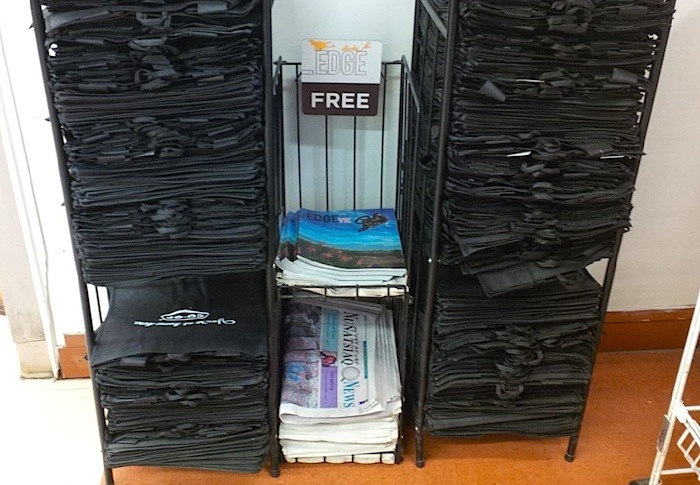
Newspaper-wise, all you can find in Yellowknife to read are copies of the Nunatsiaq News or local Yellowknife papers.

At the local co-op store in Yellowknife, I find a Nunatsiaq News. (PHOTO BY JANE GEORGE)

At the local co-op store in Yellowknife, I find Nunatsiaq News. (PHOTO BY JANE GEORGE)

That’s fair enough, because people need to know what’s going on in the city and the North, but it’s disturbing to think that people in Yellowknife — many of whom are also newcomers from other countries — are left out of the larger Canadian dialogue on politics and other national issues, particularly during a federal election period.

With no newspapers to read, here’s what you can do on a Saturday in Yellowknife:

  • shop for food (reasonable compared to other places in the North or at Walmart (with same the stuff as in the South) or buy alcohol at the liquor shop (impossible to do in most other places in the North);
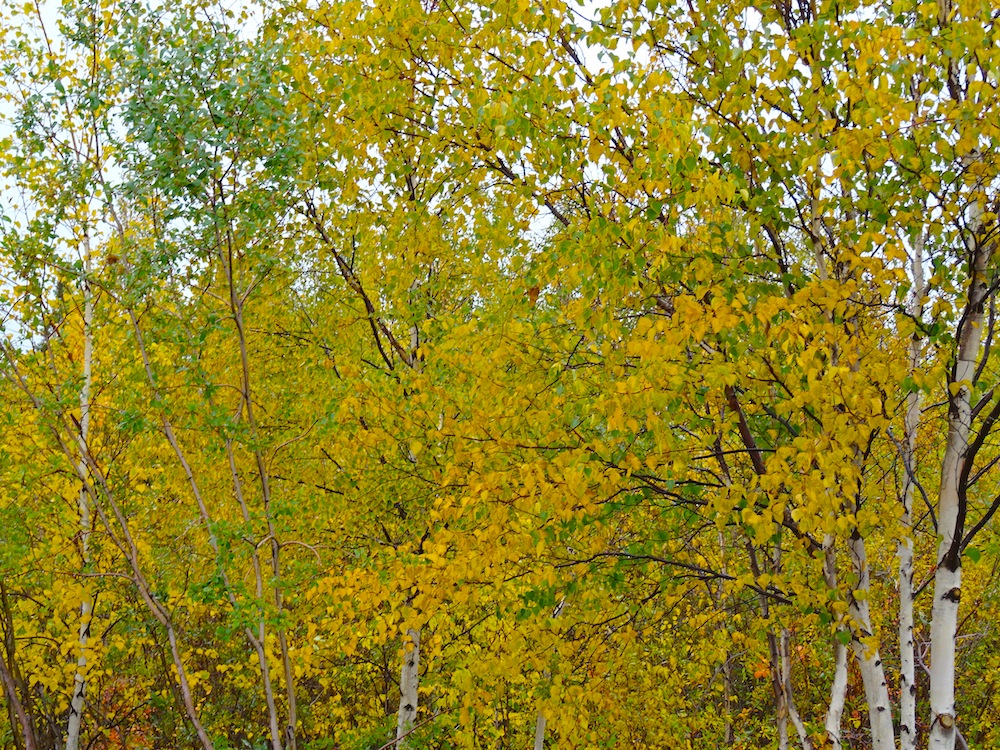
  • take a walk to admire the houseboats on Great Slave Lake, the changing leaves on the trees and still-blooming flowers;

    The birch trees turn a bright yellow colour at this time of year, reminding me of Finland. (PHOTO BY JANE GEORGE)

    The birch trees turn a bright yellow colour at this time of year, reminding me of Finland. (PHOTO BY JANE GEORGE)

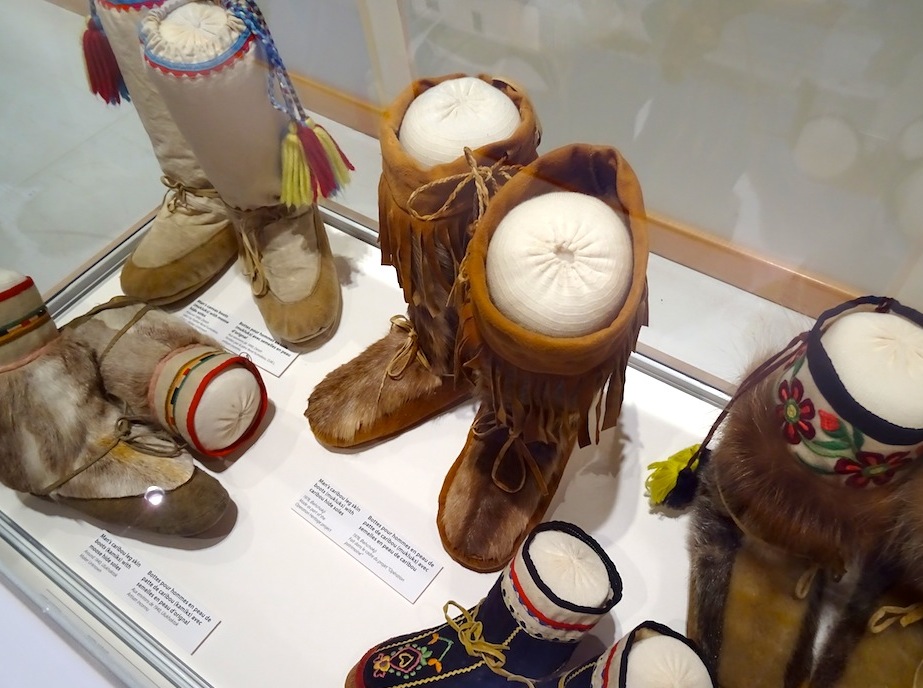
  • visit the Prince of Wales Northern Heritage Centre; and,

    A display of northern footwear at the Prince of Wales Norther Heritage Centre. (PHOTO BY JANE GEORGE)

    A display of northern footwear at the Prince of Wales Norther Heritage Centre. (PHOTO BY JANE GEORGE)

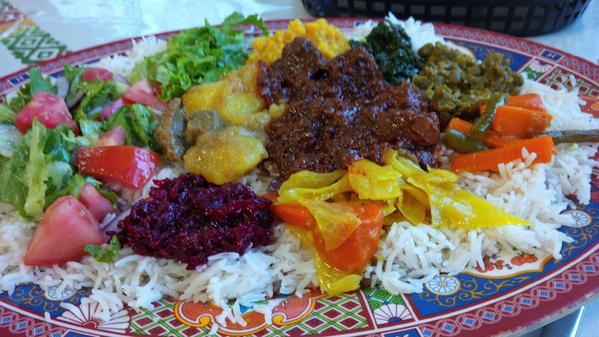
  • eat some Ethiopian food at a recently-opened restaurant.

    A mixed platter at the Zehabesha restaurant in Yellowknife. (PHOTO BY JANE GEORGE)

    A mixed platter at the Zehabesha restaurant in Yellowknife. (PHOTO BY JANE GEORGE)

You can also sample a variety of fast-foods, drink all the Tim Horton’s coffee you want or drive on paved roads with stop-lights.

You’ll also see buses, recycling bins, trash cans — in short, a lot of the service trappings of a fully-functional southern Canadian city.

You might think that this makes Yellowknife a better to live than colder, treeless and expensive Nunavut, but this makes it even more scary in my opinion that in Yellowknife, because there are no newspapers, many residents don’t know what’s going on outside the city — unless they listen to the radio and watch television.

In any case, they’re basically shortchanged of access to a news medium that, despite its financial challenges, is still thriving and which Canadians living in territorial and provincial capitals take for granted.

Is this your first time reading this blog? If so, check out earlier posts, including my “Like an iceberg” series on being a journalist in the Arctic during the 1990s. You can find all the links to that here.