Like an iceberg, 1998 cont., “Memories”

Like an iceberg, 1998 cont., “Memories”

Despite the stories about violence and abuse that I often had to report on from northern Quebec, I liked Nunavik and its people. I liked their warmth and the way they joked and teased.

They were generous with their time and energy. When I landed in communities, people took me into their homes. I was invited over for meals. I went berry-picking with friends in the autumn.

Like Inuit, I was rarely lonely or even alone no matter where I was. I walked along the streets and people aome up to me and shook my hand, smiling. “Here you are,” they would say, even if they hadn’t seen me in months.

My northern environment might not have been the one that Peter Murdoch first encountered in the 1950s, but the people I met still  displayed many of the same qualities that drew him there.
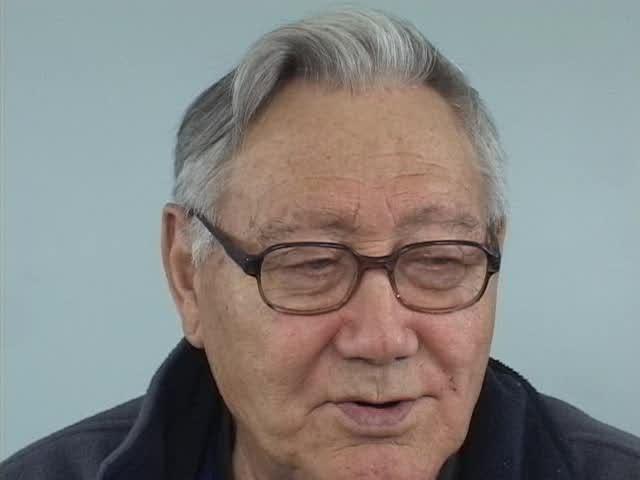
George Koneak from an interview with Isuma TV.

George Koneak from an interview with Isuma TV.

In 1998, elder George Aqqiqiq Koneak of Kuujjuaq (now deceased,) one of the first political spokespersons for Inuit in northern Quebec, shared with me stories about the Christmas in the old days.

Aqqiqiq or “Ptarmigan,” as everyone called him, told me about how he missed his first Christmas by a few days because he hadn’t been born yet.

George Koneak was often in the middle of negotiations with the federal government in the 1950s and 1960s. Left to right: Koneak, Fort Chimo, QC.; Shinuktuk, Rankin Inlet, NWT.; John Georege Diefenbaker, Prince Rupert, Sask.; Jean Ayaruark, Rankin Inlet, NWT.; Abraham Ogpik, Aklavik, NWT. In Ottawa, Ontario, Canada, May 1959 Title / Titre : Left to right: George Koneak, Fort Chimo, Quebec.; Shinuktuk, Rankin Inlet, Northwest Territories.; John Georege Diefenbaker, Prince Rupert, Saskatchewan.; Jean Ayaruark, Rankin Inlet, NWT; Abraham Ogpik, Aklavik, NWT. In Ottawa, Ontario, May 1959 (PHOTO/ ARCHIVES OF CANADA/ Ref. No. MIKAN 3217847

George Koneak was often involved negotiations with the federal government in the 1950s and 1960s. Left to right: Koneak, Fort Chimo, QC.; Shinuktuk, Rankin Inlet, NWT.; John George Diefenbaker, Prince Rupert, Sask.; Jean Ayaruark, Rankin Inlet, NWT.; Abraham Okpik, Aklavik, NWT. In Ottawa, Ontario, Canada, May 1959. (PHOTO/ ARCHIVES OF CANADA/ Ref. No. MIKAN 3217847)

On Jan. 3, 1931, his parents were traveling back to their inland camp by dog team after holiday celebrations at the Hudson Bay Co.’s trading post near today’s community of Quaqtaq, when his mother suddenly felt the onset of labour. They stopped and hurriedly put up a snow house.

“I was born maybe a half hour after the igloo was built,” Aqqiqiq said.

When he was a child, his family always traveled at Christmas time back to the post from their camp near Diana Bay, an inlet on Ungava Bay, he said.

More than 200 Inuit from the nearby camps would gather there, building temporary snow houses for their holiday celebrations. These began in earnest on Christmas Eve, when the Hudson Bay factors treated everyone to a feast, then dancing to accordion music.

“The feast, it was pork and beans,” Aqqiqiq said. “They would make a big batch of pork and beans, lots of bannock, with lots of raisins in the bannock. When the dance would come around in the evening, everyone would fart!”

At midnight the festivities paused for a church service. Gift-giving, Aqqiqiq remembered, was also part of the holiday, but not as formal as today.

“People were giving something, but nothing new,” he said. “Older people would make sealskin lines [for use in dog teams] and packs. Some people would trade jackets and parkas. [There was] Nothing new, coming from the store, and wrapped up in fancy paper. There was nothing to wrap it up with.”

When Aqqiqiq moved with his family to Old Fort Chimo — now Kuujjuaq — in 1958, he was introduced to another way of celebrating the holiday, with lights, decorations, trees and wrapped gifts.

“When I wrapped my first present, I was really proud of myself!” he said. “You had to sleep first, then get up at one o’clock and do the wrapping on Christmas Eve.”

In 1998, Aqqiqiq usually received socks and mittens and other articles of warm clothing for gifts.

“My wife, she was able to make parkas, eider down parkas,” he said. “We collected it in the summertime, and she kept it in bags and cleaned it, taking out the dirt and grass and feathers.”

There was a church in Old Chimo where religious services were held on Christmas Eve and Christmas Day. This church was later moved to Kuujjuaq, where it still stands.

Back in Old Chimo, as in today’s community of Kuujjuaq, games were an important part of Christmas, with indoor and outdoor games as well as dog team races. Aqqiqiq said he found the prolonged Christmas celebrations and exchange of gifts, standard these days, a bit overwhelming.

“Christmas presents today are fantastic. There are expensive ones, could be a ski-doo, could be an outboard motor.” he said. “We’re spoiling our kids now, and that’s not our tradition.”

He also said he regretted that alcohol had become a part of the community’s celebrations.

“I’ve been reluctantly abusing alcohol myself. It’s too much. It’s gone too far right now,” he said. “It’s okay to take a little bit, but not every night. Sometimes booze doesn’t make you happy. My parents drank only very seldom. Sometimes they were given a bottle of home brew. They’re celebrating every day now!”

In 1998, the best part of Christmas was being with his family of 11 grown children, more than 40 grandchildren and numerous great-grandchildren. But a night or two of Christmas was enough for George Aqqiqiq Koneak. Then, he headed out of Kuujjuaq to go hunting.

“There’s a lot of differences,” he said. “I’ve touched the beginning and [how it is] right now. I’ve felt the difference between those sealskin lines and a skidoo at Christmas.”

 Christmas candy drop in Quaqtaq, 1963. (PHOTO. AVATAQ ARCHIVES, IND-DIO-930)

Christmas candy drop in Quaqtaq, 1963. (PHOTO. AVATAQ ARCHIVES, IND-DIO-930)

Like an iceberg continues May 23.

You can read earlier instalments here:

Like an iceberg: on being a journalist in the Arctic

Like an iceberg, 1991…cont.

Like an iceberg, 1991…more

Like an iceberg, 1992, “Shots in the dark” 

Like an iceberg, 1992, “Sad stories”

Like an iceberg, 1993, “Learning the language of the snows”

Like an iceberg, 1993 cont., “Spring”

Like an iceberg, 1993 cont., “Chesterfield Inlet”

Like an iceberg, 1993 cont., more “Chesterfield Inlet”

Like an iceberg, 1994: “Seals and more”

Like an iceberg, 1994, cont., “No news is good news”

Like an iceberg, 1994 cont., more “No news is good news”

Like an iceberg, 1994 cont., “A place with four names”

Like an iceberg, 1995, “More sad stories”

Like an iceberg, 1995 cont., “No place like Nome”

Like an iceberg, 1995 cont., “Greenland”

Like an iceberg, 1995, cont. “Secrets”

Like an iceberg, 1996, “Hard Lessons”

Like an iceberg, 1996 cont., “Working together”

Like an iceberg, 1996 cont., “At the edge of the world”

Like an iceberg, 1996, more “At the edge of the world”

Like an iceberg, 1996, cont. “Choices” 

Like an iceberg, 1997, “Qaggiq”

Like an iceberg, 1997, more “Qaggiq”

Like an iceberg, 1997, “Qaggiq” cont.

Like an iceberg, 1997 cont., “Qaggiq and hockey”

Like an iceberg, 1997 cont., “Brain surgery in POV”

Like an iceberg, 1997 cont.: “Masks on an island”

Like an iceberg, 1997 cont., “Abusers on the pulpit”

Like an iceberg, 1998, “Bearing gifts”

Like an iceberg, 1998 cont., “At the top of the world”

Like an iceberg, 1998 cont., “A bad week” 

Like an iceberg, 1998 cont.: more from “A bad week”

Like an iceberg, 1998 cont., more from “A bad week”

Like an iceberg, 1998 cont.: more from “A bad week”
In August, 1998, while I was observing a week of court in Inukjuak, I again saw anger and grief fill the courtroom, when accused molester Tommy Aculiak entered.

View of Inukjuak. (PHOTO/ NRBHSS)

View of Inukjuak. (PHOTO/ NRBHSS)

“Suma? Suma? (Why? Why?),” a young woman cried to Aculiak.

Her outcry caused Judge Donald Bissonnette of the Quebec traveling court to call the first of several recesses when emotional outbursts interrupt court proceedings.

Aculiak, then 46, had already pleaded guilty a few months earlier to two charges of sexual assault against girls aged nine and 10, but he maintained that he wasn’t guilty on a charge of sexual interference and sexual assault on a two-year old girl in September 1996.

Given the very young age of the victim at the time of the alleged assault, Bissonnette said he did not feel that she could testify to events that happened two years previously. So, he said he had to determine if the testimony of her grandmother and mother are admissible as evidence.

“The first rule of a judge is that he listens to testimony from people who saw or heard something,” Bissonnette said.

He explained to those present in the courtroom that hearsay is not generally accepted in court unless certain conditions are met.

“If that testimony is necessary and if it is reliable, a person can come to court and tell me what somebody else said to them,” he said.

The court heard separately from the child’s grandmother and mother to evaluate their testimony. The grandmother said she was shocked to find her young granddaughter fearful and unresponsive when babysitting her on the evening of Sept. 14, 1996.

When she was changing her granddaughter’s diaper, she noticed that the girl did not protect her genital region. The little girl was acting, in the words of the court interpreter, more “like an adult” than a child.

“We teach our children not to be touched,” the grandmother said.

The girl’s vaginal area was also swollen and red. She told her grandmother in baby talk that it hurt her. Alarmed, her grandmother took her immediately to the nursing station where a nurse and police officer examined the child.

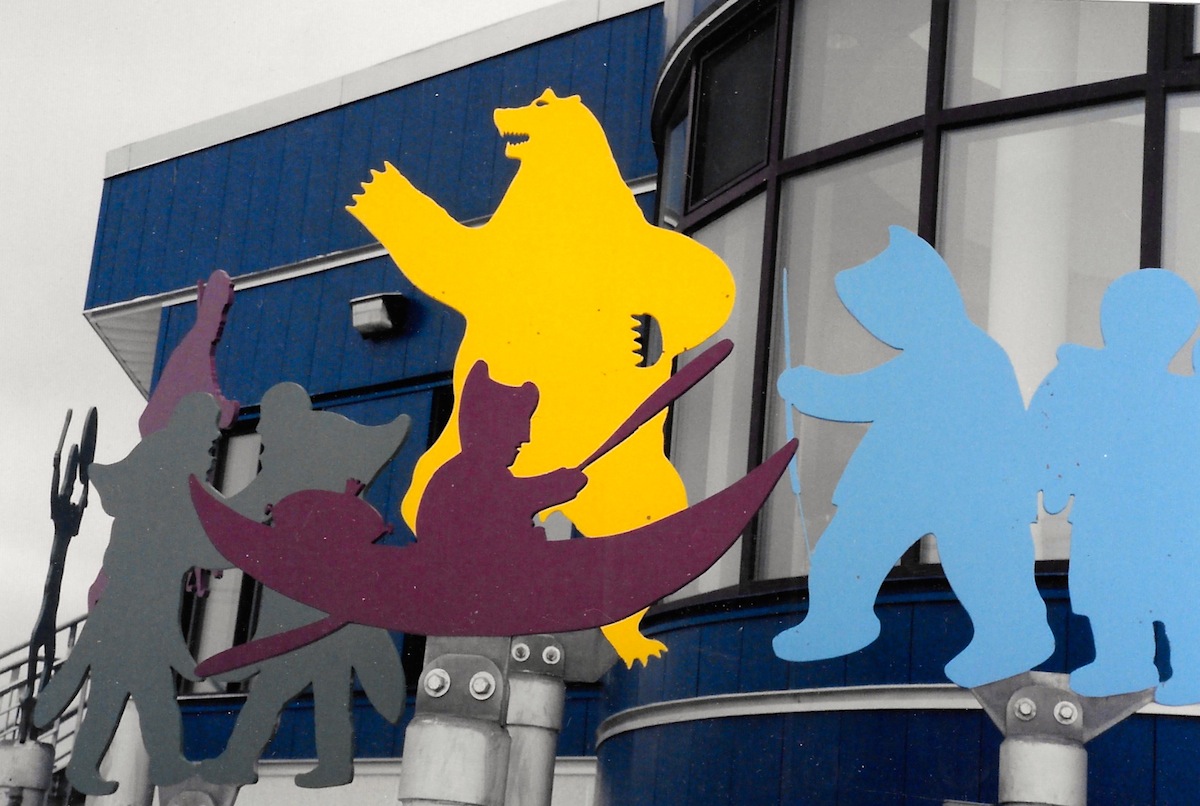
Art in front of Inukjuak nursing station, 1997

Art in front of Inukjuak nursing station, 1997. (PHOTO BY JANE GEORGE)

The child’s mother said she was shocked when her daughter demonstrated on a police doll how she had been assaulted. She broke down several times during her testimony when describing her daughter’s unusual temper tantrums and strange gait.

“Her legs were wide open,” she says. “She was walking funny.”

Despite vagueness in a police report, written only in English, both witnesses agreed that the girl told them it was her not her “big uncle” Tommy, but rather Tommy Aculiak, the live-in boyfriend of her babysitter, a cousin of the family, who had hurt her.

They rejected all suggestions by the defence lawyer that her genital redness could have been due to recurrent constipation, instead of attempted vaginal penetration or touching.

The lawyers asked the two women to repeat over and over the events of that September. This process was made more difficult by the normal tedium of consecutive interpretation and the interpreters’ discomfort with the subject.

The mother admitted that she had been naïve about leaving her daughter in the company of an accused sexual abuser, but she thought her daughter would be safe in diapers.

Snowhouses in Port Harrison (Inukjuak) in an unattributed photo.

Snowhouses in Port Harrison (Inukjuak) in an unattributed photo.

“I tried to forgive what he’d done to other girls,” said this working single parent. “Because I was desperate for a babysitter.”

Bissonnette decided to accept the women’s account of the events, calling it honest, reliable and impartial.

He said he based this decision on a 1990 Supreme Court ruling: in the Kahn case, Canada’s highest court said that testimony from the parent of a young child who had been molested by a doctor in his examination room could be accepted as evidence if it was necessary and reliable.

Bissonnette also found the girl, through her parent and grandparent, to be a reliable witness, particularly because of the short time that elapsed between the incident and its reporting to the grandmother and mother.

“The words spoken by the child as related by the mother and the grandmother were spontaneous,” he concluded.

A doctor, writing an evaluation for the defence, also concluded that it was rare for a child of such a young age to make up stories.

“This further strengthens the reliability of the child’s statement,” said the judge who then moved that the child’s evidence would be entered into the official record.

Aculiak also had his chance to speak in his own defence. He said that the afternoon of Sept. 14 was the only time that he had ever been alone with the little girl, and that she was sleeping most of the time.

When she did wake up from her nap, Aculiak said he felt she was unhappy, drooling around the mouth and perhaps feeling sick. He denied ever changing her diaper. He discredited the testimony of the two women, saying, through the interpreter, that “they were searching for words as if they were in total darkness.”

“This accusation is not true,” he said. “This is going on far too long, although I am being wrongly accused. We will find out the truth.”

As court recessed after these words, police in the courtroom escorted furious members of the audience out of the courtroom.

After two days of reflection following the closing arguments of the lawyers, Bissonnette found Aculiak guilty. He said he found it hard to believe the accused’s version of the events of Sept. 14, 1996.

The positive identification of the abuser by the child, her unsolicited statement that she was abused and the gestures she used to show that she was abused played in the judge’s decision.

Because Aculiak had  already spent the equivalent of 21 months in jail for sexual offenses committed during the same period and is on probation, Bissonnette gave him a three-month conditional sentence, followed by a supervised probation.

During this period Aculiak could remain in Inukjuak, but would have to observe several conditions, such as a curfew. He would also be prohibited from all contact with children, the victim and her family.

Bissonnette said this sentence, which would not send Aculiak out of the community, might be hard for the family of the victim to accept.

“This in no way diminishes the pain and suffering that in this case the child suffered,” he said.

There was relief in Inukjuak over the court’s progress in convicting these sexual abusers and many said they hoped that the community would be a safer place for children. But when the traveling court was in session, youth protection workers said they received more than the usual number of emergency calls.

Bissonnette said he hoped his judgments during the week the court sat in Inukjuak would send out a message to the community that the court will protect women and children against physical and sexual abuse.

I was not sure this would happen, but I sent the message out. A week of hearing dreadful testimony left me drained, without thoughts.

When I arrived back in Montreal, a strange thing happened: my luggage, which I hadn’t seen for a week, suddenly reappeared on the baggage carousel.

The next instalment of Like an iceberg goes live May 22.

You can read earlier instalments here:

Like an iceberg: on being a journalist in the Arctic

Like an iceberg, 1991…cont.

Like an iceberg, 1991…more

Like an iceberg, 1992, “Shots in the dark” 

Like an iceberg, 1992, “Sad stories”

Like an iceberg, 1993, “Learning the language of the snows”

Like an iceberg, 1993 cont., “Spring”

Like an iceberg, 1993 cont., “Chesterfield Inlet”

Like an iceberg, 1993 cont., more “Chesterfield Inlet”

Like an iceberg, 1994: “Seals and more”

Like an iceberg, 1994, cont., “No news is good news”

Like an iceberg, 1994 cont., more “No news is good news”

Like an iceberg, 1994 cont., “A place with four names”

Like an iceberg, 1995, “More sad stories”

Like an iceberg, 1995 cont., “No place like Nome”

Like an iceberg, 1995 cont., “Greenland”

Like an iceberg, 1995, cont. “Secrets”

Like an iceberg, 1996, “Hard Lessons”

Like an iceberg, 1996 cont., “Working together”

Like an iceberg, 1996 cont., “At the edge of the world”

Like an iceberg, 1996, more “At the edge of the world”

Like an iceberg, 1996, cont. “Choices” 

Like an iceberg, 1997, “Qaggiq”

Like an iceberg, 1997, more “Qaggiq”

Like an iceberg, 1997, “Qaggiq” cont.

Like an iceberg, 1997 cont., “Qaggiq and hockey”

Like an iceberg, 1997 cont., “Brain surgery in POV”

Like an iceberg, 1997 cont.: “Masks on an island”

Like an iceberg, 1997 cont., “Abusers on the pulpit”

Like an iceberg, 1998, “Bearing gifts”

Like an iceberg, 1998 cont., “At the top of the world”

Like an iceberg, 1998 cont., “A bad week”