Saami, Finnish, Inuktitut: ancient cousins, once removed

Wouldn’t it be great if everyone in the circumpolar region could understand each other without translators or interpreters? At least one linguist thinks that may have been the case about 20,000 years ago.

Michael Fortescue, a linguist and expert in Eskimo–Aleut and Chukotko-Kamchatkan, believes that a group of people, all speaking a common language that he’s dubbed “Uralo-Siberian,” then lived by hunting, fishing and gathering in south-central Siberia (an area located roughly between the upper Yenisei river and Lake Baikal in today’s Russia, as shown in the map).
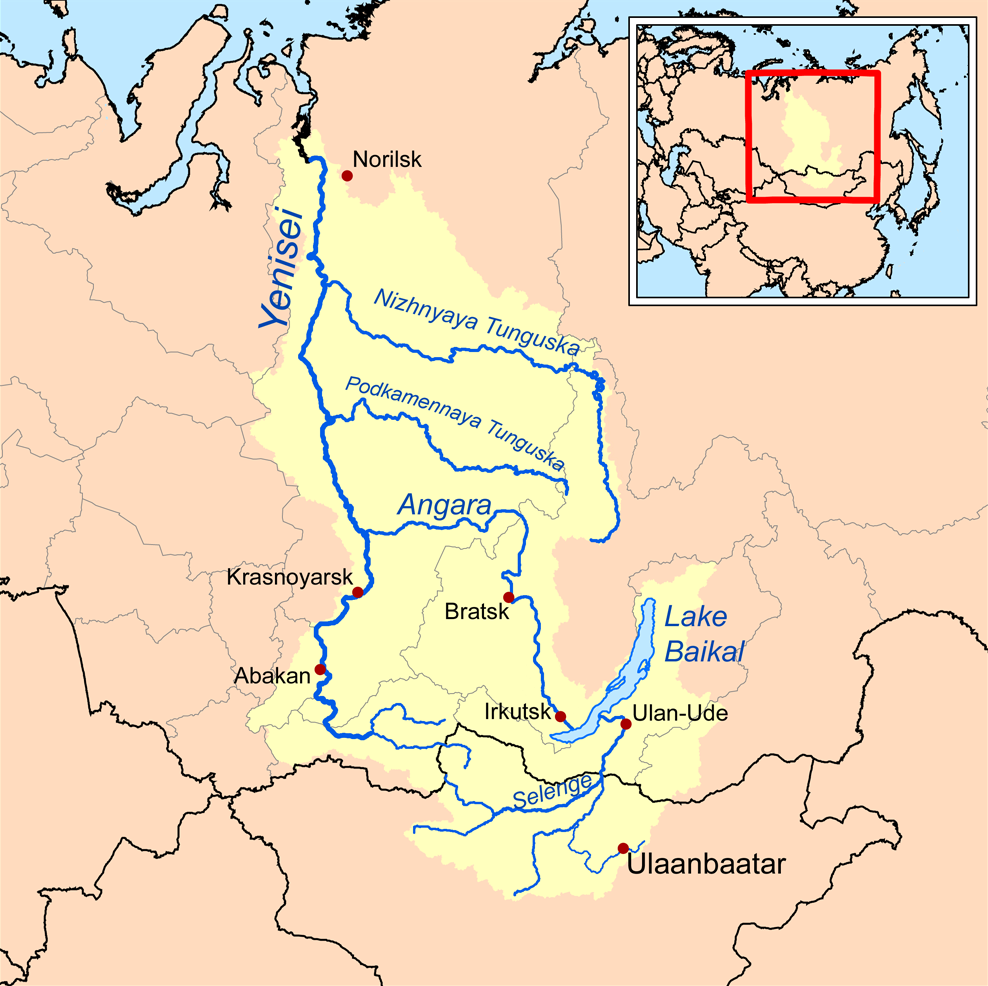
The area between the Yenisei River and Lake Baikal in central Siberia where early residents are thought to have spoken a common language that gave rise to Saami, Finnish and Inuit languages.

The area between the Yenisei River and Lake Baikal in central Siberia where early residents are thought to have spoken a common language called Uralo-Siberian that gave rise to Saami, Finnish and Inuit languages.

There, families whose migrations were ruled by the coming and going of glaciers during the Ice Age moved northward out of this area in successive waves until about 4,000 BC.

Some headed west along the northern coasts and others went east, eventually crossing the Bering Strait to North America.

They would end up living across the circumpolar region, with Inuit living from Alaska through to Canada and Greenland, Saami in Sápmi (northern Norway, Sweden, Finland and northern Russia) and Finns in Finland (or Suomi in Finnish.)

During those long-ago migrations, travelers took their common language, Uralo-Siberian, Fortescue suggests.

You can still hear today’s version of that language in Nunavut — where Uralo-Siberian developed into Inuktitut — and in Finland — where that language survived as Saami and as Finnish.

To me, someone who has lived in both regions and speaks Finnish (fairly fluently) and Inuktitut (not nearly as well) and can understand when people speak Saami (usually), the idea that there was once a united Uralo-Siberian family of languages makes sense.

That’s because the grammars of the three languages feel so similar (not to mention many shared cultural elements).

Map of the Uralo-Siberian languages.

A family tree of the Uralo-Siberian and related languages which shows the various Inuit languages as well as Saami and Finnish and how they are related.

Indeed, on this family tree of Uralo-Siberian languages, Inuktitut and Finnish look like fairly close cousins.
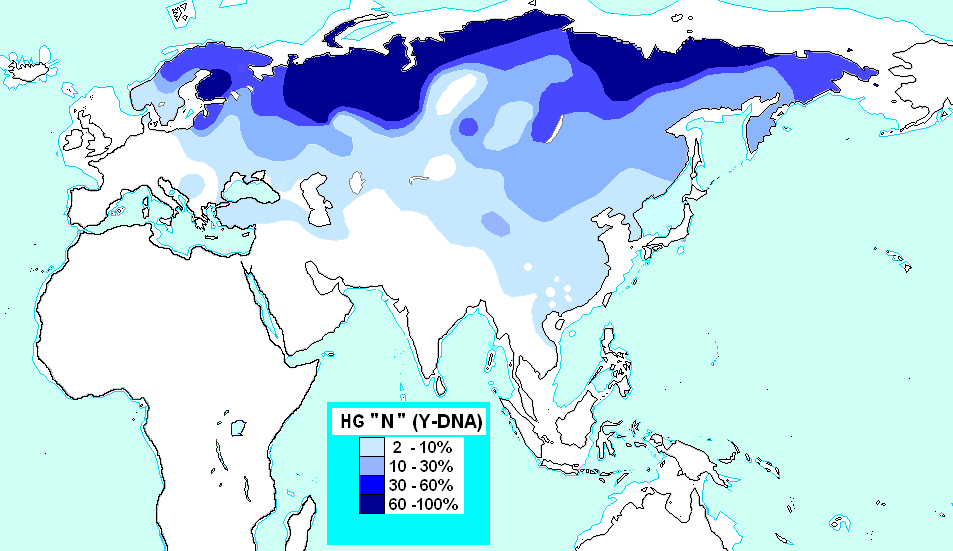
This map shows the spread of the genetic marker Haplo group N "Y", which goes from the northern coast of Scandinavia through Siberia towards North America.

This map shows the spread of the genetic marker Haplogroup N “Y”, which goes from the northern coast of Scandinavia through Siberia towards North America.

This language family was first proposed in 1998 by Fortescue in his book Language Relations across Bering Strait . But some linguists still don’t embrace his proposal, because it looks at the spread of languages and people in a new way.

More recent genetic tests do show Saami and Finns share more genetic markers linked with Asian populations in the Bering Strait and beyond than do any other European populations.

As for this early language, Uralo-Siberian, Fortescue argues that some common grammatical marker features are recognizable in the Inuit languages, Saami and Finnish, namely:

*-t   — plural

*-k  — dual

*m — 1st person

*t  —  2nd person

*ka  —interrogative pronoun

*-n —  genitive case

And you can still find verb roots in the Inuit languages of Canada and in Saami or Finnish as well as words in all three that appear to stem from that ancient common language:

Proto-Uralo-Siberianaj (aɣ) — ‘push forward’

Proto-Eskimo–Aleut ajaɣ —‘push, thrust at with pole’

In today’s Finnish —  ajaa, ‘drive’

Or you can hear similarities in other words used today, such as:

• kina (who) in Inuktitut, ken in Finnish;

• mannik (egg) in Inukitut, monne in Saami, muna in Finnish; and,

• kamek (boot) in Inuktitut, gama in Saami, kenka in Finnish.

The spoken languages also sound similar because they’re spoken with a word-initial stress (that is with the first syllable being emphasized — i.e. Nu-navut, Su-omi.)

As well, words (both nouns and verbs) get their meaning from many added-on chunks that tell you, among other things, who did what and when and to whom. This allows for a precision that  you don’t find in English.

For example, in Inuktitut and Finnish, even the notion of saying “there” must be precise — you need to say exactly where something is, whether it’s at a certain point nearby, here or there or further away.

For some experts, the enduring similarities in these languages, spoken by a majority of people who live within the jurisdictions of Nunavut, Greenland and Finland, reflect the amazing survival of that early  Uralo-Siberian grammar and lexicon of words.

But its isolation in the North in may also have had something to do with the Uralo-Siberian language’s endurance.

The Origin and Genetic Background of the Sámi suggests that Saami and, to a lesser extent, Finns were able to maintain their separate language identities over the centuries due to their geographic isolation in the Arctic while other peoples were losing their languages to Indo-European speakers from the South.

We now see different situations between the Inuit languages, Saami and Finnish — the largest of the three languages, which is spoken by more than five million people in Finland.

In Like an iceberg. I talk about learning Inuktitut.

In a future post in A Date with Siku girl, I will talk about what it was like for me to learn Finnish as a young girl and what this experience reveals — at least to me — about language learning and preservation.
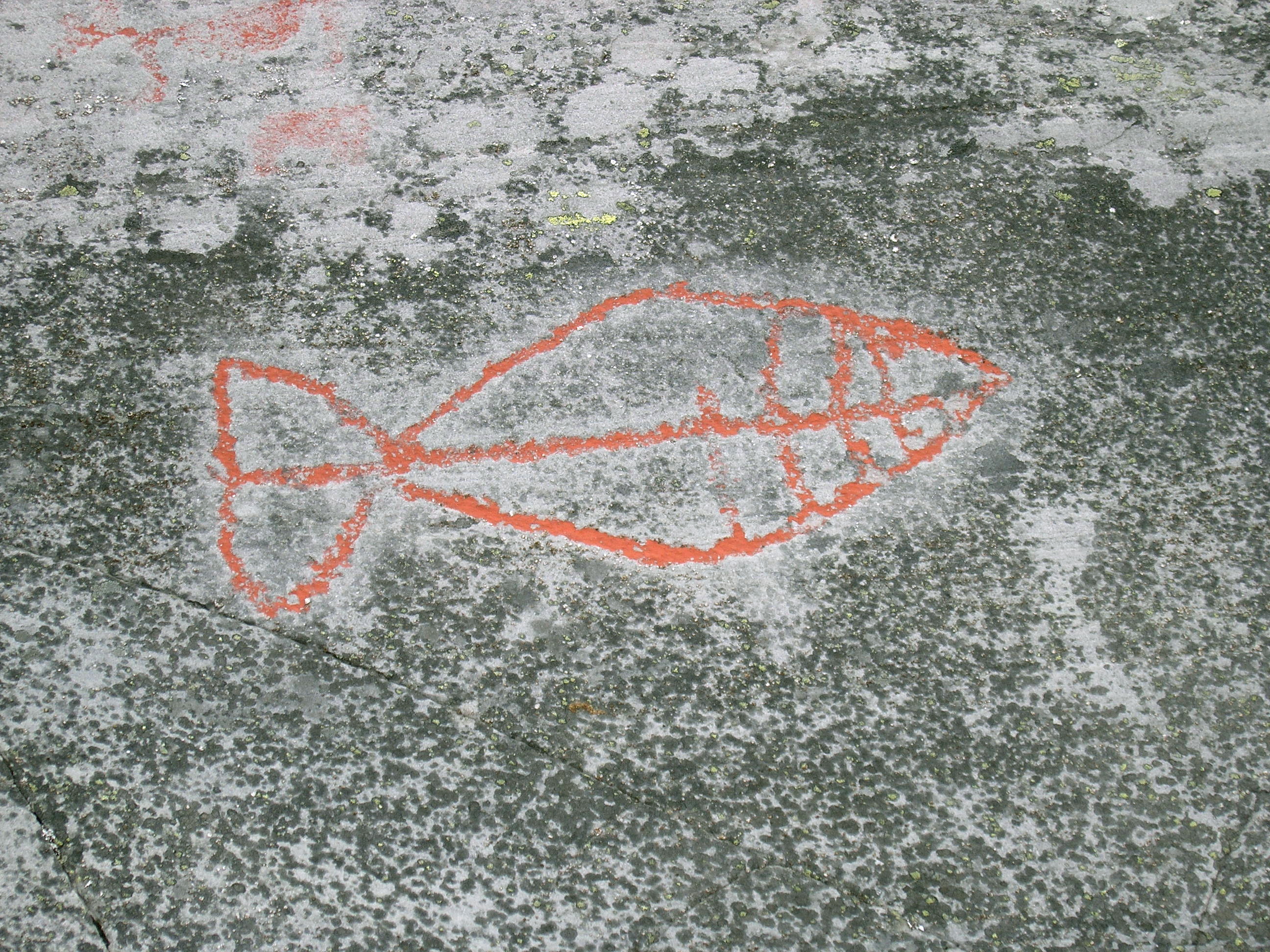
Rock art in northern Norway from the earliest inhabitants of the region. (PHOTO BY JANE GEORGE)

Rock art in northern Norway from the earliest inhabitants of the region. (PHOTO BY JANE GEORGE)

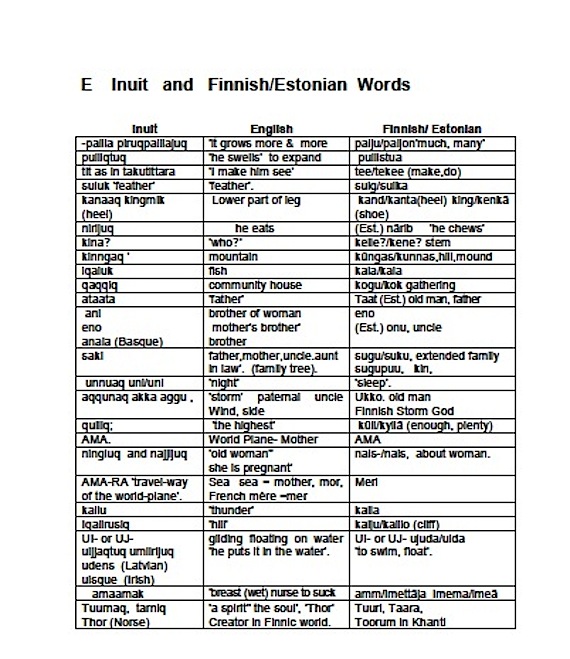
(For this post, I consulted so many sources online that I have not provided links to them all, but if you’re curious about the relationships between the ancient Uralo-Siberian languages, I urge you to do your own online searches and see what turns up. There appears to be many disputes over all the genetics and linguistics about which I could write a book, not simply a blog post. As for me, I’d be interested in receiving feedback from those more knowledgeable than I am in this area. Since publishing this blog in 2014, I received this very interesting list of words in Inuktitut, Finnish and Estonian:
 

Like an iceberg, 1999 cont.,”And then there was Nunavut”

Like an iceberg, 1999 cont.:”And then there was Nunavut”

Looking into the Nunavut legislature. (PHOTO BY JANE GEORGE)

Looking into the Nunavut legislature. (PHOTO BY JANE GEORGE)

The hopes of many Inuit were raised by the the creation of Nunavut — Canada’s newest (and Inuit-majority) territory — in 1999.

Nunavut also gave me an opportunity to sit still for a while.

With its moments of drama and boredom, the Nunavut legislature’s sittings unfolded like a slow-moving television show, and the “ledge” became a cozy place to pass the hours. The legislative chamber’s shape was reminiscent of an igloo, the chairs and gallery benches covered in sealskin. Pangnirtung tapestries and Baker Lake wall hangings decorated its walls, and the legislative mace was a long narwhal tusk.

Mace at the Nunavut legislature. (PHOTO BY DAVID MURPHY/NUNATSIAQ NEWS)

Mace at the Nunavut legislature. (PHOTO BY DAVID MURPHY/NUNATSIAQ NEWS)

When in session, the legislature’s schedule ran with a calming regularity, unlike the flow of news. The day’s session always began on time. There were the predictable orders of the day: statements, questions and tabled documents.

I sat in the gallery behind the health minister. It was my favourite spot  because I could see everyone— and nestle there for hours.

The antics of the rookie MLAs provided me with much entertainment. During a memorable afternoon in November 1999, there was the last-minute walkout of members David Iqaqrialu, Jobie Nutaraq and Enoki Irqittuq, just before the final vote on Bill 3, which was to give formal assent to Nunavut’s short-lived unified time zone.

Nunavut’s decentralized administration stretched across three time zones, making communication difficult for government officials whose days began and ended at different times, depending on where they lived.

So to some people, putting Nunavut into one time zone looked like a great idea. The idea was especially popular in Nunavut’s western Kitikmeot region, where the work day lagged two hours behind that of Iqaluit, the capital. But in the east, many residents complained that in the winter, darkness would come too early under their re-adjusted time zone.

As the MLAs against the single-time zone sulked outside, other members scurried to form a quorum. But even this tension is short-lived. The members finally came back to vote against the bill’s adoption.

But they learned the Government of Nunavut had already adopted a regulation putting the time zone change into effect.

The members voiced their discontent in a scene that reminded me of television courtroom programs because they sounded stilted and scripted. Premier Paul Okalik then said the move to put Nunavut into a single time zone — which was later repealed — hadn’t been done behind their backs.

“This is not new. We’re been seeking options for the benefit of Nunavut,” Okalik said. “Irrespective of where you are in Nunavut, you can call me at the same time.”

During more boring moments in the legislature, some ministers read newspapers or pass notes to each other, and, at other times, they yawned. If nothing interesting was happening, I looked at what the legislators are wearing.

The Premier often wore a plush sealskin vest. On some days, up to six of the 19 members followed his fashion lead, turning up in sealskin vests, sometimes with designs or even dyed in variety of colours. The choice of what members decided to wear, however, wasn’t entirely about comfort or good looks — they said it was also a way of showcasing Nunavut’s sealskin industry.

MLA Donald Havioyak wears a colourful tie to the ledge, although he associates ties with residential school. (PHOTO BY JANE GEORGE)

MLA Donald Havioyak wears a colourful tie to the ledge, although he associates ties with residential school. (PHOTO BY JANE GEORGE)

Some sported colourful blue ties with Nunavut’s distinctive polar bear logo or ties featuring animals from geese to bears. The occasional tie was made from sealskin. Instead of a tie, one MLA preferred to wear a string bolo topped with an ivory drum dancer.

Although Kugluktuk MLA Donald Havioyak said he didn’t like ties “because they remind me of residential school” — where he was obliged to wear one — Havioyak wore one anyway —and picked cheerful designs for his ties.

“If you’re well-dressed, you’re respecting the people you represent,”  said Nunavut’s sole woman member and minister of public works, Manitok Thompson.

MLA Manitok Thompson in her amautik. (PHOTO BY JANE GEORGE)

MLA Manitok Thompson in her amautik. (PHOTO BY JANE GEORGE)

Thompson’s outfits alternated between professional suits and a selection of three traditional amautiit, decorated with beads.

“I wear them on special occasions — or if something stressful is going on,” Thompson said.

Others in the chamber wore sealskin or caribou kamik boots, sometimes  in combination with silapaq parkas. Occasionally sealskin boots also showed up along with suits. Some always stuck to conventional southern-style suits, because they said they were more comfortable.

MLA Peter Kattuk wears a white silapaq to the Nunavut legislature. (PHOTO BY JANE GEORGE)

MLA Peter Kattuk wears a white silapaq to the Nunavut legislature. (PHOTO BY JANE GEORGE)

White dress shirts, however, were not seen as often because, as one member confided, these were particularly hard to find at Iqaluit’s poorly-stocked retail stores.

As a result, members were even known to borrow white shirts from each other to wear on special occasions.

Colonial apparel from an earlier era was also displayed by the stiff traditional black and white robes worn by the speaker and his staff.

Pages in the Nunavut legislature sit outside in the foyer. (PHOTO BY JANE GEORGE)

Pages in the Nunavut legislature sit outside in the foyer. (PHOTO BY JANE GEORGE)

Pages, usually found outside the ledge in the teenage uniform of jeans and t-shirts, wore a variety of different traditional Inuit clothing from each of Nunavut’s three regions.

The clothing was designed to combine Inuit Qaujimajatuqaangit, that is, Inuit language and traditions, with Canada’s parliamentary system of government.

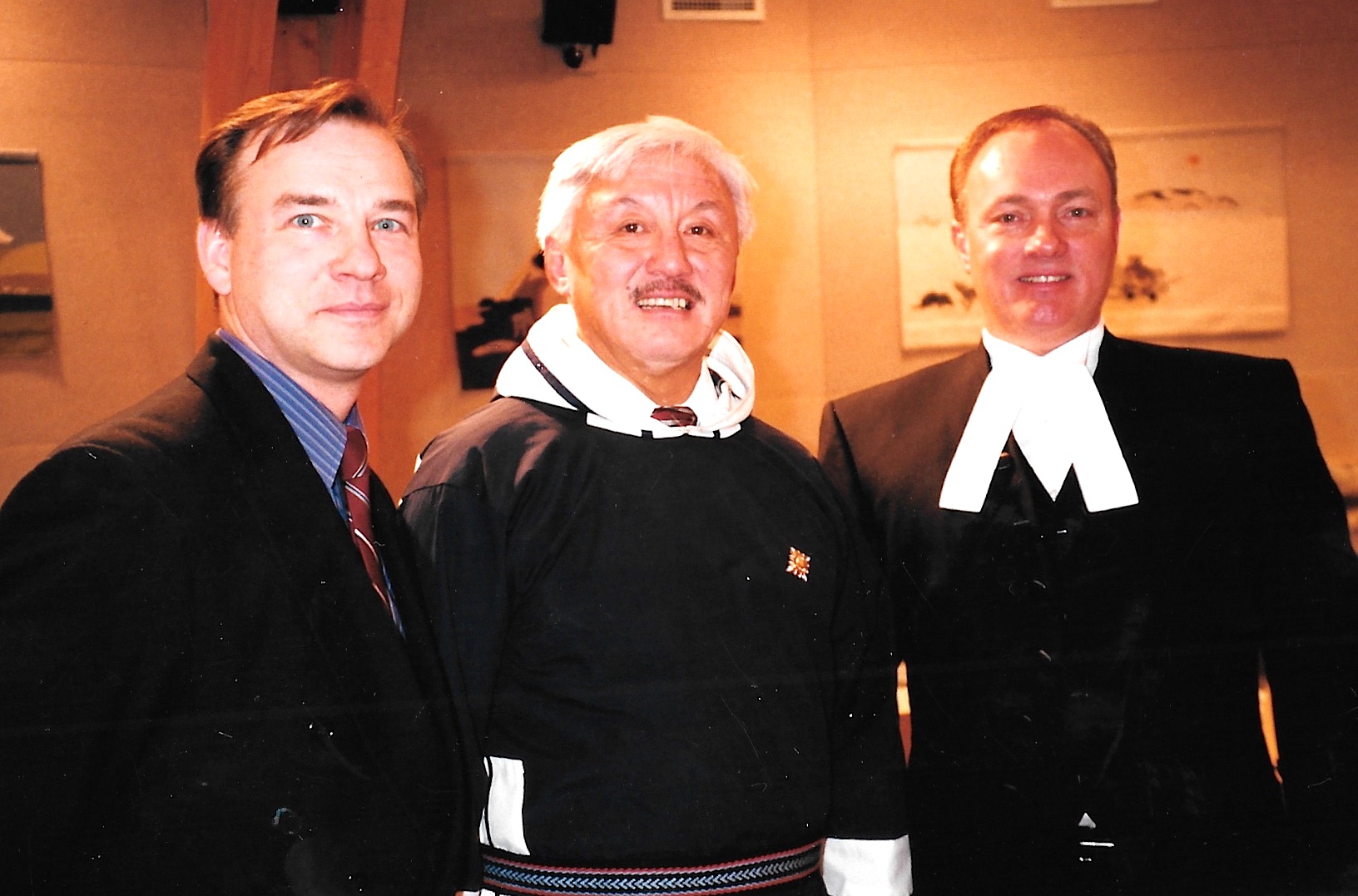
Nunavut health minister Ed Picco, Commissioner Piita Irniq and Speaker Kevin O'Brien pose in the legislature. (PHOTO BY JANE GEORGE)

Nunavut health minister Ed Picco, Commissioner Piita Irniq and Speaker Kevin O’Brien pose in the legislature. (PHOTO BY JANE GEORGE)

And diversity was mirrored not just in what people wore, but also in the many languages spoken in the legislature. Nunavut’s Speaker should choose between five different ways to say “thank you,” from nakormik to koana, while business was often conducted in several dialects of Inuktitut as well as in French and English, Canada’s two official languages.

But even this legislature was not immune to the social problems outside. The first speaker, as well as the education minister, were both charged with serious criminal offences — sexual assaults — within months of the new territory’s creation.

But at least this new government wanted to focus on solutions and put these solutions into bite-size pieces that I could handle. As I left the legislature, I stopped and looked at the art exhibits in the foyer, or chatted with friends, before zipping up my parka and heading out to the windy streets of Iqaluit.

Like an iceberg wraps up June 2.

You can read earlier instalments here:

Like an iceberg: on being a journalist in the Arctic

Like an iceberg, 1991…cont.

Like an iceberg, 1991…more

Like an iceberg, 1992, “Shots in the dark” 

Like an iceberg, 1992, “Sad stories”

Like an iceberg, 1993, “Learning the language of the snows”

Like an iceberg, 1993 cont., “Spring”

Like an iceberg, 1993 cont., “Chesterfield Inlet”

Like an iceberg, 1993 cont., more “Chesterfield Inlet”

Like an iceberg, 1994: “Seals and more”

Like an iceberg, 1994, cont., “No news is good news”

Like an iceberg, 1994 cont., more “No news is good news”

Like an iceberg, 1994 cont., “A place with four names”

Like an iceberg, 1995, “More sad stories”

Like an iceberg, 1995 cont., “No place like Nome”

Like an iceberg, 1995 cont., “Greenland”

Like an iceberg, 1995, cont. “Secrets”

Like an iceberg, 1996, “Hard Lessons”

Like an iceberg, 1996 cont., “Working together”

Like an iceberg, 1996 cont., “At the edge of the world”

Like an iceberg, 1996, more “At the edge of the world”

Like an iceberg, 1996, cont. “Choices” 

Like an iceberg, 1997, “Qaggiq”

Like an iceberg, 1997, more “Qaggiq”

Like an iceberg, 1997, “Qaggiq” cont.

Like an iceberg, 1997 cont., “Qaggiq and hockey”

Like an iceberg, 1997 cont., “Brain surgery in POV”

Like an iceberg, 1997 cont.: “Masks on an island”

Like an iceberg, 1997 cont., “Abusers on the pulpit”

Like an iceberg, 1998, “Bearing gifts”

Like an iceberg, 1998 cont., “At the top of the world”

Like an iceberg, 1998 cont., “A bad week” 

Like an iceberg, 1998 cont.: more from “A bad week”

Like an iceberg, 1998 cont., “Memories”

Like an iceberg, 1999, “The avalanche”

Like an iceberg, 1999 cont., “An exorcism, followed by a penis cutting”

Like an iceberg, 1999 cont., more on “the Avalanche”

Like an iceberg, 1999 cont., “Robins in the Arctic”

Like an iceberg, 1999 cont., “Fossil hunting”

Like an iceberg, 1999 cont., “Where forests grew”