Like an iceberg, 1999 cont., more on “the Avalanche”
In May 1999, I was back in the Nunavik community of Kangiqsualujjuaq — this time to cover a three-week-long coroner’s inquest into the avalanche that took place there on Jan. 1.
The inquest, which took place in a small hall, the only community space left after the avalanche destroyed the school gym, ran all day long before a judge, lawyers representing some of parties, community members and me, the only journalist present.

Maggie Emudluk, mayor of Kangiqsualujjuaq, with coroner Jacques Bérubé at the May, 1999 inquest. (PHOTO BY JANGE GEORGE)
At night, after the daily inquest proceedings wind down, while writing my articles about what people said, I felt sad.
The weekends — two of them — were long, and, while the weather is perfect for heading out on the land and I squeezed in a snowmobile ride or two with a friend, I had to catch up on my work while the sun is shining.
One evening, when I watch a film made about Maori in New Zealand, called “Once Were Warriors,” about the devastation suffered by indigenous people on the other side of the world, I couldn’t stop sobbing in the apartment of a teacher that I had rented for the duration of the inquest.
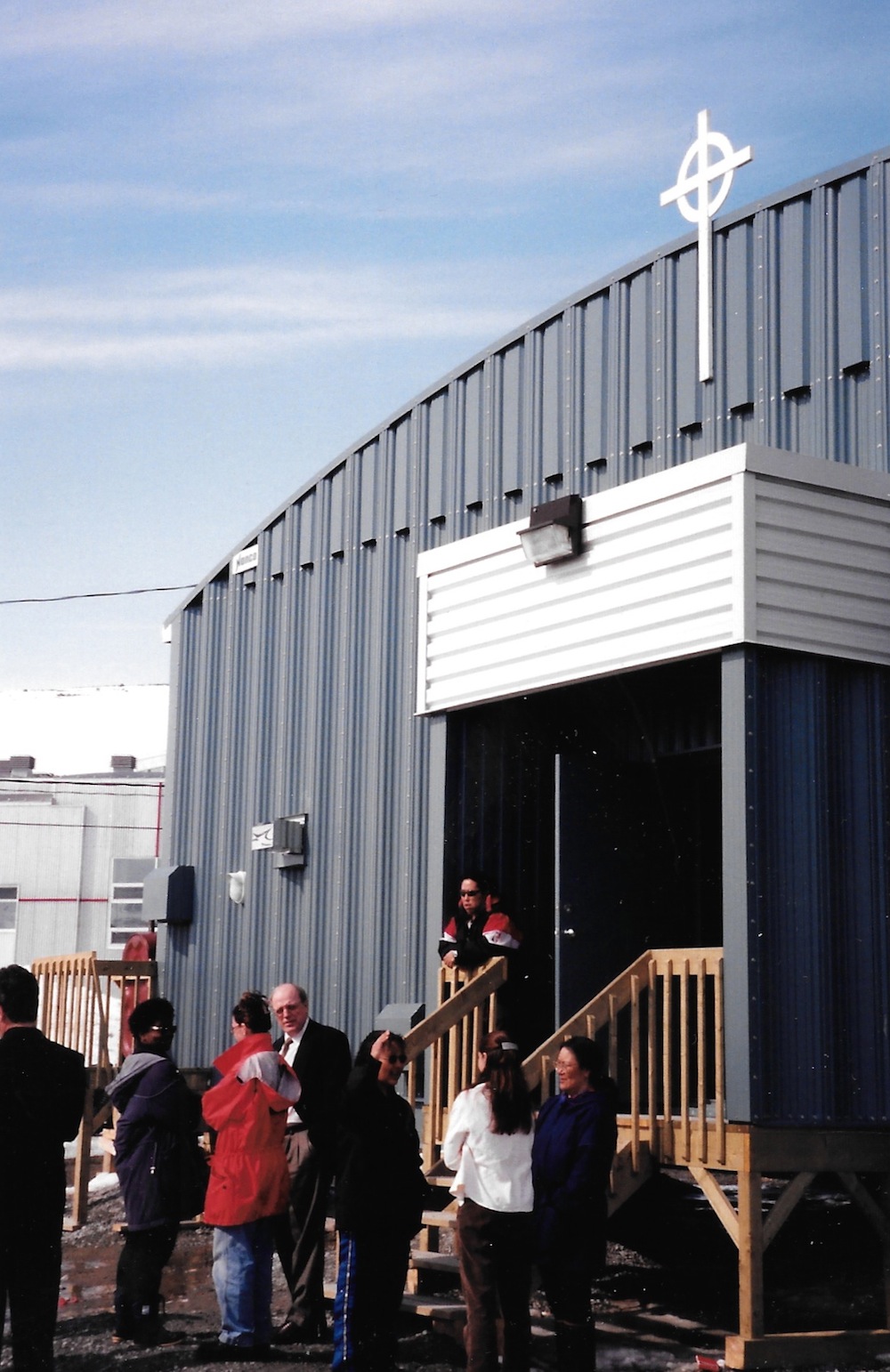
A break during the coroner’s inquest in Kangiqsualujjuaq held in May 1999. (PHOTO BY JANE GEORGE)
I was immersed in human tragedy, while my editors at the Nunatsiaq News in Iqaluit were still buoyed from the celebrations around the creation of Nunavut on April 1, 1999, which I ended up covering from Ottawa.
Even so, hearing the testimonies at the inquest left me uplifted by the bravery of those who survived or who helped others to survive.
That’s because after the Jan. 1 avalanche, panic quickly gave way to action. At the coroner’s inquest, we learned that the electrical system was still functioning, and those who weren’t buried in snow stood in a brightly lit space that was suddenly a place of horror instead of a party.
Two of Sophie Keelan’s daughters were buried when the avalanche hit the gym at 1:40 a.m. Snow smashed her seven-year-old daughter on to the floor of the gym where she lay trapped until an elder dug her out. Her daughter was weak when she finally emerged, wet and cold, from the snow.
As Keelan rushed back home from the gym with the chilled young girl on her snowmobile, she tried to blow warm air towards her small face. After her daughter was safe and warm at home, Keelan returned to the gym to help.
There, she would end up performing cardio-pulmonary resuscitation on other avalanche victims, some of whom were not as lucky as her daughter.
“I worked for 19 and a half hours,” she told the inquest. “All night, all day.”

Here you can see how close the school (far right) was located to the avalanche-prone slope in Kangiqsualujjuaq. (PHOTO BY JANE GEORGE)
After freeing herself from the snow, Christina Baron began to dig with her hands to help get others out, but the powdery stuff quickly congealed into a concrete-hard layer. She couldn’t find a shovel, so she grabbed a piece of wood and started digging. Baron had last seen her older daughter as she was walking across the gym to take her baby home.
“She started walking towards the door, and just as they went away from where I was sitting, the avalanche occurred,” Baron said.
The two were buried in snow. Before they were rescued, the baby had died in the amautik hood. Baron later took her granddaughter back to her house, away from the chaotic gym, in a truck.
“Holding that dead baby was very hard for me,” she said.
Ken Jararuse was under the snow for about 30 minutes. A piece of wood behind some climbing bars in the gym saved his life, because it kept snow from smothering him. When Jararuse was finally released from the snow, he tried to make sense of what he saw around him.
“It was scary,” Jararuse said. “It was terrible. We didn’t know what to do. It was very cold. I wasn’t dressed for the situation. I was dressed for a New Year’s Eve party.”

The gymnasium at Satuumavik School in Kangiqsualujjuaq has already been torn down three months after the avalanche. (PHOTO BY JANE GEORGE)
He learned that his niece had been killed by the force of the snow-slide. Although he was weak and could barely lift his arms, Jararuse later pitched in by digging behind the school, to look for those who were still buried there.
“Anybody and everybody who was able to help did,” he said.
When the avalanche buried Adamie Annanack in the snow, shortly after he stepped into the gym that night, he could feel people walking on top on him. He couldn’t see or move, but he could hear noises.
“Some of the people under the snow never stopped yelling,” Annanack said at the inquest.
As soon as he was rescued, by someone who his hand sticking up toward the surface, he began to dig, too.
“Everyone was helping each other,” he said.

Many buildings in the avalanche zone in Kangiqsualujjuaq, seen here in May 1999, would be removed. (PHOTO BY JANE GEORGE)
For many, just surviving the avalanche took all their force. David Emudluk was outside the back of the school, helping a friend repair a snowmobile when the avalanche hit. He was thrown through a window of the school where he ended up half buried in snow and pinned under a snowmobile.
Emudluk was also injured, but he managed somehow to crawl out and over the snow that filled the classroom. Unable to walk due to an ankle wound, he dragged himself down the corridor, where finally he found help.
For three hours after avalanche half buried her in snow, Harriet Etok had no idea whether or not all her children were safe. At around 4:30 a.m. she finally learned that searchers had located her last missing child, daughter Betty, four.
Betty was dead. She had been instantly killed when the avalanche rammed a metal door into her small body. Earlier that evening, as she stood at the back entrance of the school’s gym to have a smoke, Harriet had heard the avalanche coming down the slope.
“I heard a big noise and I didn’t know what it was. I heard Louisa [next to her] say, “What’s that?”, and once I had heard her say it, when I was still outside, I saw a big cloud of snow coming down. It didn’t take a second to come to us,” Harriet told the inquest.
The next thing Harriet knew, she was almost buried in snow. She immediately began digging with her free hands, to clear snow around herself and the others beside her who were completely covered.
After a man freed Harriet, her thoughts immediately turned to her children who had been in the gym. She was scared when she saw that the gym was still full of snow. There were few children in sight.
“All my children are lost!” she cried.
Harriet and her sister began to look near the spot where they had last seen their children, stopping to help dig out other buried youngsters. At one point, Harriet, still dressed in wet and frozen pants, ran home to get her husband, so that he could go back to the gym with a shovel and help dig.
It took them three hours to learn the whereabouts of their four children who had been at the gym. Betty was the last to be found.
The inquest went on forever, story after story. I get to know the inquest team and celebrate the end of the inquest with them over a supper one evening — a perk after cooking for myself.

The new school in Kangiqsualujjaq is open by May, 1999. (PHOTO BY JANE GEORGE)
Over the coming year, I followed the rebuilding of Kangiqsualujjuaq: the construction of its new school, the moving of houses away from the avalanche zone and finally the demolition of the ravaged school. Improved emergency services are put into place, according to the inquest’s recommendations.
If a similar disaster happens, people in Nunavik might be better prepared to cope— but would I?
That terrible avalanche and following inquest turned out to be only one of many hard stories which I would cover in the future, including the inquest into the suicide of Julian Tologanak, who leapt out of a plane, the crash of First Air flight 6560 in Resolute Bay, the fire in minus 50 C temperatures which destroyed the White Row housing in Iqaluit, the shoot-out and death of Nunavik cop Steve Déry, and a triple murder in Kimmirut on Easter Sunday in 2013.
Everything I heard and felt always stayed with me, but I refused on many occasions to share information or photos with other journalists who called me at the office when some catastrophe unfolds — why should I let them know what I learned from being in the North and suffering along with so many victims?
Or why should I help them for free when the Nunatsiaq News invested in the North, supported me and paid my salary?
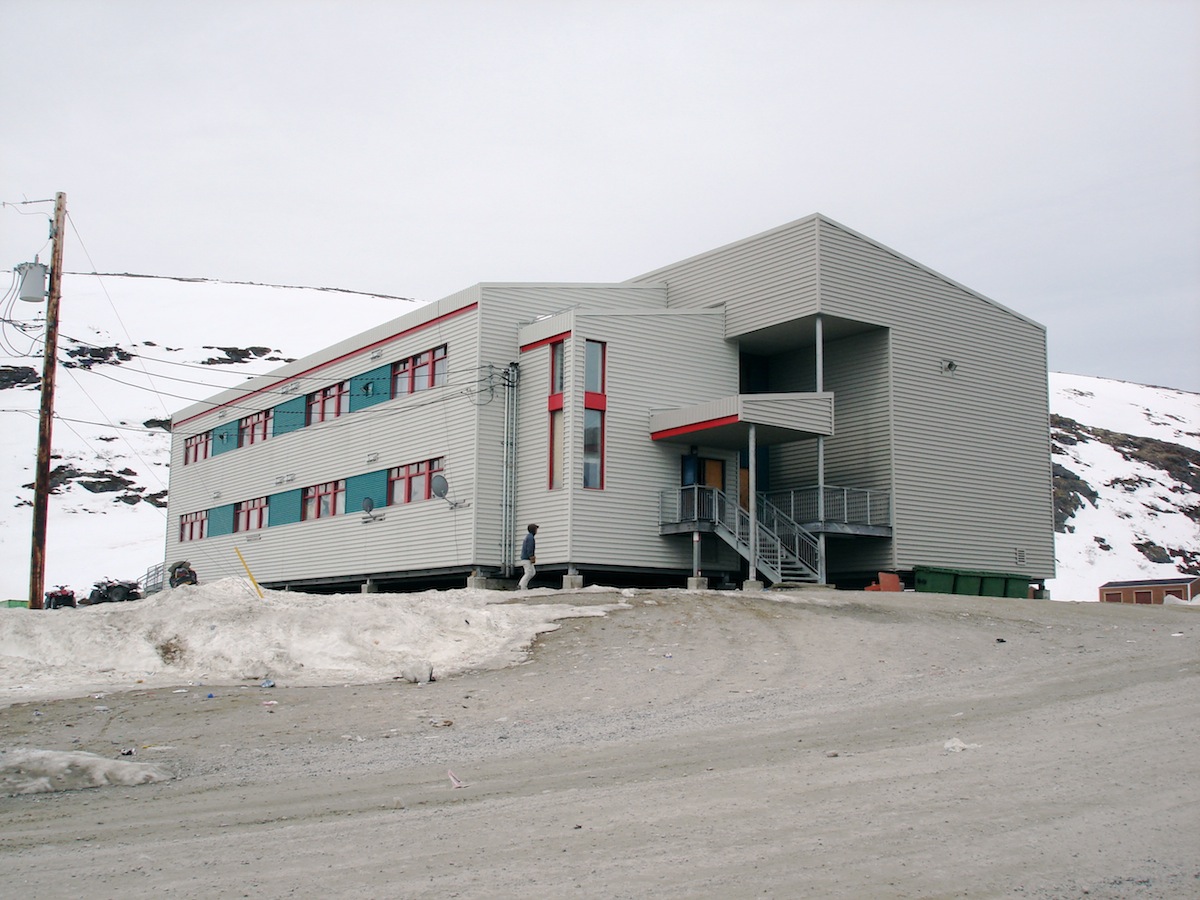
The addition to Satuumavik School — the only part left undamaged by the avalanche — is an apartment complex in 2007. (PHOTO BY JANE GEORGE)
Like an iceberg continues May 28.
You can read earlier instalments here:
Like an iceberg: on being a journalist in the Arctic
Like an iceberg, 1991…cont.
Like an iceberg, 1991…more
Like an iceberg, 1992, “Shots in the dark”
Like an iceberg, 1992, “Sad stories”
Like an iceberg, 1993, “Learning the language of the snows”
Like an iceberg, 1993 cont., “Spring”
Like an iceberg, 1993 cont., “Chesterfield Inlet”
Like an iceberg, 1993 cont., more “Chesterfield Inlet”
Like an iceberg, 1994: “Seals and more”
Like an iceberg, 1994, cont., “No news is good news”
Like an iceberg, 1994 cont., more “No news is good news”
Like an iceberg, 1994 cont., “A place with four names”
Like an iceberg, 1995, “More sad stories”
Like an iceberg, 1995 cont., “No place like Nome”
Like an iceberg, 1995 cont., “Greenland”
Like an iceberg, 1995, cont. “Secrets”
Like an iceberg, 1996, “Hard Lessons”
Like an iceberg, 1996 cont., “Working together”
Like an iceberg, 1996 cont., “At the edge of the world”
Like an iceberg, 1996, more “At the edge of the world”
Like an iceberg, 1996, cont. “Choices”
Like an iceberg, 1997, “Qaggiq”
Like an iceberg, 1997, more “Qaggiq”
Like an iceberg, 1997, “Qaggiq” cont.
Like an iceberg, 1997 cont., “Qaggiq and hockey”
Like an iceberg, 1997 cont., “Brain surgery in POV”
Like an iceberg, 1997 cont.: “Masks on an island”
Like an iceberg, 1997 cont., “Abusers on the pulpit”
Like an iceberg, 1998, “Bearing gifts”
Like an iceberg, 1998 cont., “At the top of the world”
Like an iceberg, 1998 cont., “A bad week”
Like an iceberg, 1998 cont.: more from “A bad week”
Like an iceberg, 1998 cont., “Memories”
Like an iceberg, 1999, “The avalanche”
Like an iceberg, 1999 cont., “An exorcism, followed by a penis cutting”


 A date with Siku girl