Like an iceberg, 1999, “The avalanche”

Like an iceberg, 1999, “The avalanche”

I wasn’t there when the wall of snow came tumbling down the slope into Satuumavik school in the Nunavik community of Kangiqsualujjuaq on Jan. 1, 1999. I was fast asleep in my bed in the South, and it wasn’t until early the next morning that I heard about the disaster in a call from a friend in Kuujjuaq.

I later learned that not long after midnight, the cornice of snow that had formed on the slope above the school came rumbling down. And, when it came down, it broke the school’s walls, burying many who were celebrating New Year’s Eve together in the gymnasium, killing nine of them.

Searchers look for survivors after the avalanche, Kangiqsualujjaq, Jan. 1, 1999 in this attributed photo.

Searchers look for survivors after the avalanche, Kangiqsualujjaq, Jan. 1, 1999 in this unattributed photo.

Afterwards, I would learn more than enough about those moments right after the snow crashed into the gym.

But there in the South on that New Year’s day in 1999, 1,500 kilometres from Kangiqsualujjuaq, I was shaken by the avalanche news. I called people I knew in the community. The school principal told me he has just walked into his house after hours spent digging people out inside the gym.

Another man I was able to reach has lost his baby daughter, I learned. I’m devastated that I’ve even called him. What could I say? I felt tears rolling down my cheeks.

This community’s grief became my grief, too. How could I stay here? The weather was terrible where I was, ice pellets were falling, and I couldn’t possibly leave to make the drive to Montreal, although I attempted to drive in anyway. But I couldn’t see anything and turned around.

So I missed that day’s scheduled airline departure to Kuujjuaq.

One of my editors at the Nunatsiaq News, who was also in southern Quebec for the holiday, said we didn’t need to cover this event: “Let the big boys cover it.” CBC had already chartered a plane from Montreal to Kangiqsualujjuaq with some other media, which I missed out on.

In this attributed photo someone takes a photo of a snowmobile caught in Jan. 1, 1999 avalanche in Kangiqsualujjaq

In this attributed photo someone takes a photo of a snowmobile caught in Jan. 1, 1999 avalanche in Kangiqsualujjaq

However, I knew I have to go, or it wasn’t not worth working as a journalist in Nunavik. And this was one of the biggest stories in the world as 1999 started. I roused the Nunatsiaq News publisher, Steven Roberts, who said it was okay for me to fly up on First Air — my one-way ticket to Kuujjuaq is a pricey (for then), full-fare ticket of $835.

On Jan. 3 I finally arrived in Kuujjuaq. At the Kuujjuaq Inn I found the entire Quebec government cabinet, including Premier Lucien Bouchard, sitting in the lounge.

Quebec Premier Lucien Bouchard vows to help Kangiqsualujjuaq recover when he visits Kuujjuaq and then Kangiqsualujjuaq in January, 1999. (PHOTO BY JANE GEORGE)

Quebec Premier Lucien Bouchard vows to help Kangiqsualujjuaq recover when he visits Kuujjuaq and then Kangiqsualujjuaq in January, 1999. (PHOTO BY JANE GEORGE)

Apart from a reporter from the Globe and Mail, all other journalists have run to Kangiqsualujjuaq to record that community’s trauma. But people in Kangiqsualujjuaq were already overburdened with supplying services to people from Nunavik who were there to help out or to comfort relatives: They didn’t need more mouths to feed.

It occurred to me that I could be a lot more helpful finding out what government plans were in store to help them recover and rebuild after this disaster.

The next day, Prime Minister Jean Chrétien arrived in Kuujjuaq. We were all kept in town by the bad weather, but I knew the situation in Kangiqsualujjuaq was even more bleak: too much pain, too many reporters badgering residents for painful details, not enough trucked water to go around, and it was freezing cold.

Chrétien, Quebec’s Liberal Party leader Jean Charest and the then-deputy premier Bernard Landry all stayed at the Kuujjuaq Inn, where I was also staying, too, and they dined together — a rare common move among politicians who didn’t agree on much in 1999. The politicians also took the time to tour Kuujjuaq, visiting patients at the local hospital and stopping at the Kuujjuaq Forum.

Prime Minister Jean Chrétien, Makivik Corp. president Pita Aatami, Mayor Michael Gordon in Kangisualujjuaq. (PHOTO BY JANE GEORGE)

Prime Minister Jean Chrétien and Makivik Corp. President Pita Aatami listen to Kuujjuaq Mayor Michael Gordon talk about what he saw in Kangisualujjuaq after the avalanche. (PHOTO BY JANE GEORGE)

In its gym, Kuujjuaq mayor Michael Gordon, who had gone to Kangiqsualujjuaq, some 30 minutes by air from Kuujjuaq, after the avalanche, told Chrétien what the snow-filled gym in Kangiqsualujjuaq looked like, buried in snow.

Finally, the next day, we flew to Kangiqsualujjuaq, a short plane trip from Kuujjuaq. I stopped off at the wrecked shell of a school that was cordoned off and guarded by Canadian Rangers.

It was numbingly cold that day, despite my heaviest Arctic winter clothing. Tired and traumatized mourners were set to bury the nine victims of the avalanche in the community’s municipal garage, the only safe large space available for such a gathering.
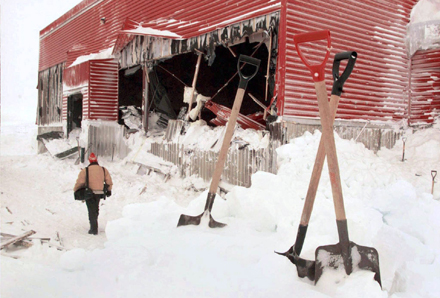
This unattributed photo shows the damage caused by the Jan. 1, 1999 avalanche.

This unattributed photo shows the damage caused by the Jan. 1, 1999 avalanche.

The funeral scene was simple: on the wall a cross fashioned from two metal pipes; handmade crosses and bouquets of flowers placed on each coffin; and a hockey shirt draped on a 34-year-old hockey player’s coffin.

More than 700 people attended the funeral service, conducted by Bishop Joseph Idlout of the Anglican Eastern Arctic Diocese and Kuujjuaq’s Anglican minister, Benjamin Arreak. They read messages of condolences from the religious leaders and an expression of sympathy from Queen Elizabeth.

“I was shocked to hear of the horrific New Year’s tragedy in northern Quebec,” wrote the Queen.

Willie Etok, the father of two avalanche victims, also addressed the funeral, thanking all those who worked during the hours following the avalanche to keep the number of deaths down.

“On behalf of the people of Kangiqsualujjuaq, I would like to pass on thanks for the many people who have come to assist in our grieving, many people from all parts of the country, and the world, who have come to be with us, to help us, in this horrible situation,” said Etok. “To the families who have lost their loved one, we are the same, all in one.”

One young girl’s face was covered in tears. Another held a small white flower and a tissue. A couple who lost their young son struggled to comfort their other children. Many in attendance still showed physical injuries from the avalanche — bandages and slings.

Idlout’s words about love and hope comforted the mourners, although many were unable to sing the chosen hymn, “Nearer my God to thee,” without breaking down. There was a moment of silence for the victims.

After the religious service, coffins were opened for the final farewell to the victims from friends and family. The burial followed in minus 30 C temperatures.
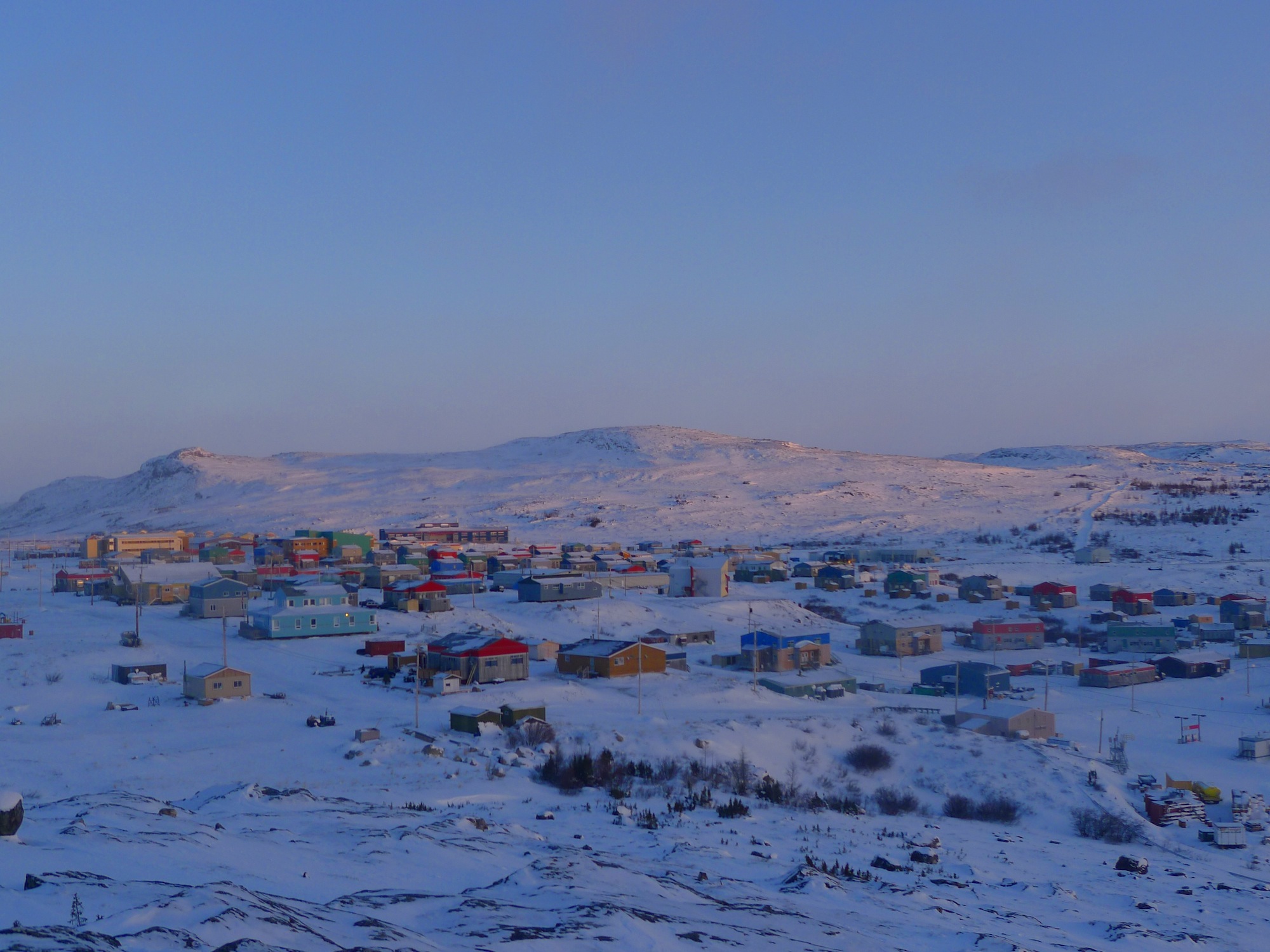
A view over Kangiqsualujjuaq. (PHOTO/ WIKIPEDIA COMMONS)

A view over Kangiqsualujjuaq. (PHOTO/ WIKIPEDIA COMMONS)

“It was quite an experience to be here and see the closeness of the families,” said Chrétien afterwards while he and I waited for the charter  back to Kuujjuaq in Kangiqsualujjuaq’s small airport terminal — it was the kind of informal encounter that journalists can sometimes experience  in the North with high-level politicians.

“It’s a moment that I will remember for a long time. I’m happy that I was able to be here because it was an absolutely exceptional occasion and it’s very moving to see the solidarity. It’s a large family, the village. They’re all here to support each other.”

Chrétien also made me laugh as he retold stories from his time as federal Indian affairs minister — but I didn’t take notes at that point. I just felt an enormous relief after living through that day.

After the funeral service, Chrétien, who seemed not to feel the cold, gave his gloves to a grieving family member. But my hands were frozen as I took photos. It felt like the coldest day of the winter — and one that I would relive later in 1999 at the coroner’s inquest into the avalanche.

Like an iceberg continues May 26.

You can read earlier instalments here:

Like an iceberg: on being a journalist in the Arctic

Like an iceberg, 1991…cont.

Like an iceberg, 1991…more

Like an iceberg, 1992, “Shots in the dark” 

Like an iceberg, 1992, “Sad stories”

Like an iceberg, 1993, “Learning the language of the snows”

Like an iceberg, 1993 cont., “Spring”

Like an iceberg, 1993 cont., “Chesterfield Inlet”

Like an iceberg, 1993 cont., more “Chesterfield Inlet”

Like an iceberg, 1994: “Seals and more”

Like an iceberg, 1994, cont., “No news is good news”

Like an iceberg, 1994 cont., more “No news is good news”

Like an iceberg, 1994 cont., “A place with four names”

Like an iceberg, 1995, “More sad stories”

Like an iceberg, 1995 cont., “No place like Nome”

Like an iceberg, 1995 cont., “Greenland”

Like an iceberg, 1995, cont. “Secrets”

Like an iceberg, 1996, “Hard Lessons”

Like an iceberg, 1996 cont., “Working together”

Like an iceberg, 1996 cont., “At the edge of the world”

Like an iceberg, 1996, more “At the edge of the world”

Like an iceberg, 1996, cont. “Choices” 

Like an iceberg, 1997, “Qaggiq”

Like an iceberg, 1997, more “Qaggiq”

Like an iceberg, 1997, “Qaggiq” cont.

Like an iceberg, 1997 cont., “Qaggiq and hockey”

Like an iceberg, 1997 cont., “Brain surgery in POV”

Like an iceberg, 1997 cont.: “Masks on an island”

Like an iceberg, 1997 cont., “Abusers on the pulpit”

Like an iceberg, 1998, “Bearing gifts”

Like an iceberg, 1998 cont., “At the top of the world”

Like an iceberg, 1998 cont., “A bad week” 

Like an iceberg, 1998 cont.: more from “A bad week”

Like an iceberg, 1998 cont., “Memories”
 

Like an iceberg, 1998 cont., “At the top of the world”

Like an iceberg, 1998 cont., “At the top of the world” 

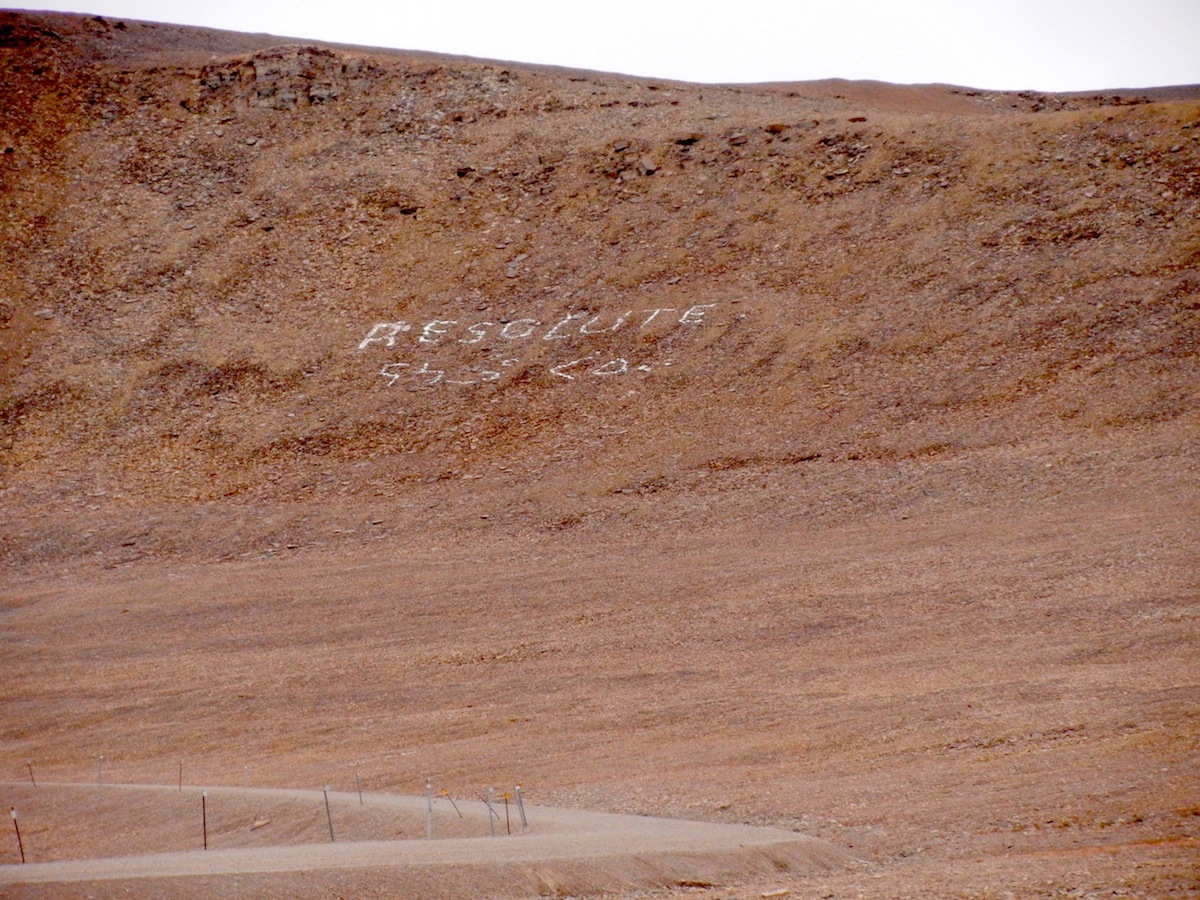
White stones spell out Resolute Bay in English and Inuktitut. (PHOTO BY JANE GEORGE)

White stones spell out the name of  Resolute in English and Inuktitut. (PHOTO BY JANE GEORGE)

Resolute Bay, Nunavut,  the staging point for travel to the High Arctic islands, was by far the bleakest place that I ever visited in the Canadian Arctic. Covered with small round stones, the land was devoid of vegetation.

Qausuittuq: place of gravel — that’s what Inuit relocated here in the 1950s in an effort to bolster Canadian sovereignty called the place. The airport was surrounded with barracks dating from the Cold War era of the 1950s when Resolute was a thriving military base. But, since the bar closed there in the early 1980s, it’s never been the same, I was told.

Military buildings are still standing in Resolute Bay, but growing more dilapidated with the years. (PHOTO BY JANE GEORGE)

Military buildings are still standing in Resolute Bay, but growing more dilapidated with the years. (PHOTO BY JANE GEORGE)

But, for three years in a row, starting in the summer of 1998, I was still happy to arrive in Resolute. I was determined to get to know the High Arctic after I saw a television documentary on Ellesmere Island and spent months during the winter setting up a trip there for July.

Overwhelmed by writing stories that made me wince, I arrived in a place with few people and social problems.

It was a four-and-a-half-hour trip north by air from Resolute to Ellesmere, flying in a Twin Otter with no bathroom. I drank little before the trip and concentrate on the glaciers and mountains stretching out on every side: the scenery is what I imagined the world looked like before there were people.

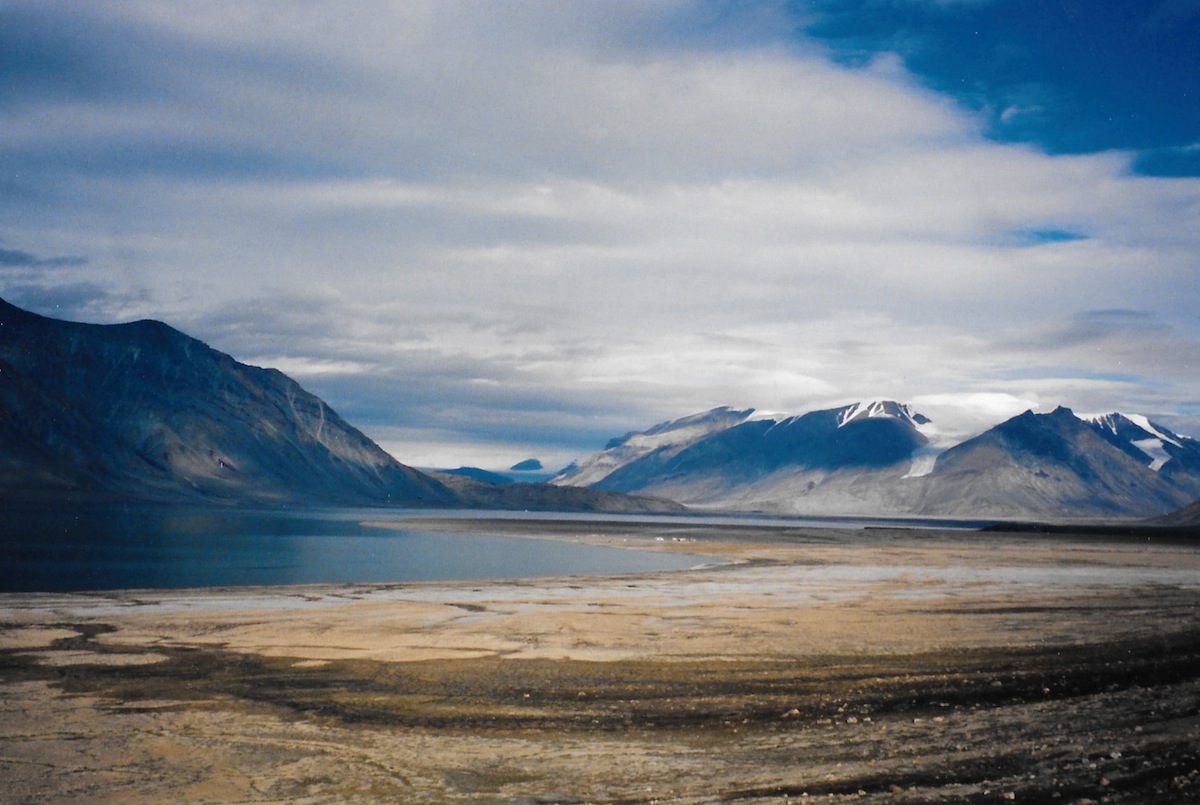
View down Tanquary Fiord, Ellesmere Island. (PHOTO BY JANE GEORGE)

A view down Tanquary Fiord, Ellesmere Island. (PHOTO BY JANE GEORGE)

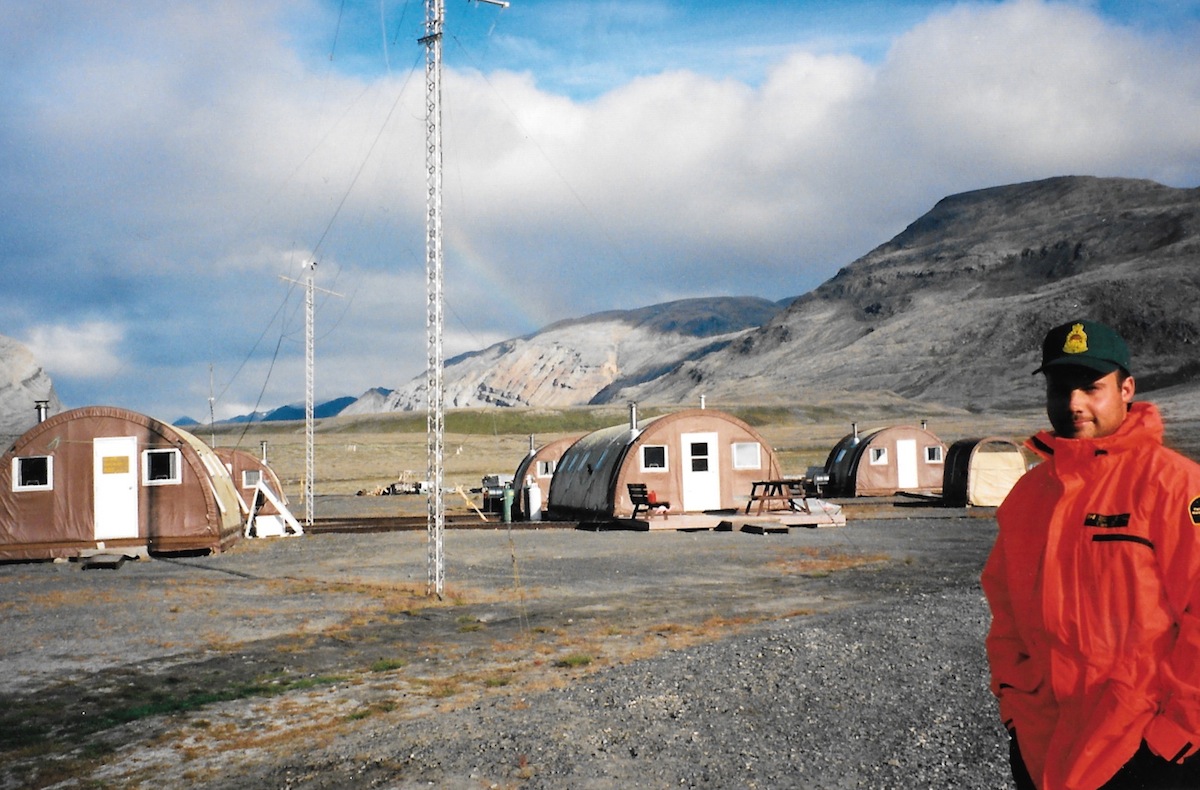
The first time I visited the High Arctic, I stayed at Ellesmere National Park Reserve headquarters at Tanquary Fiord. I was glad to sleep in its heated winterhavens and have access to a heated living area in another structure. My hikes around the park headquarters showed me I needed better hiking boots and that I was not made to be a trekker with a heavy pack who hikes long days.

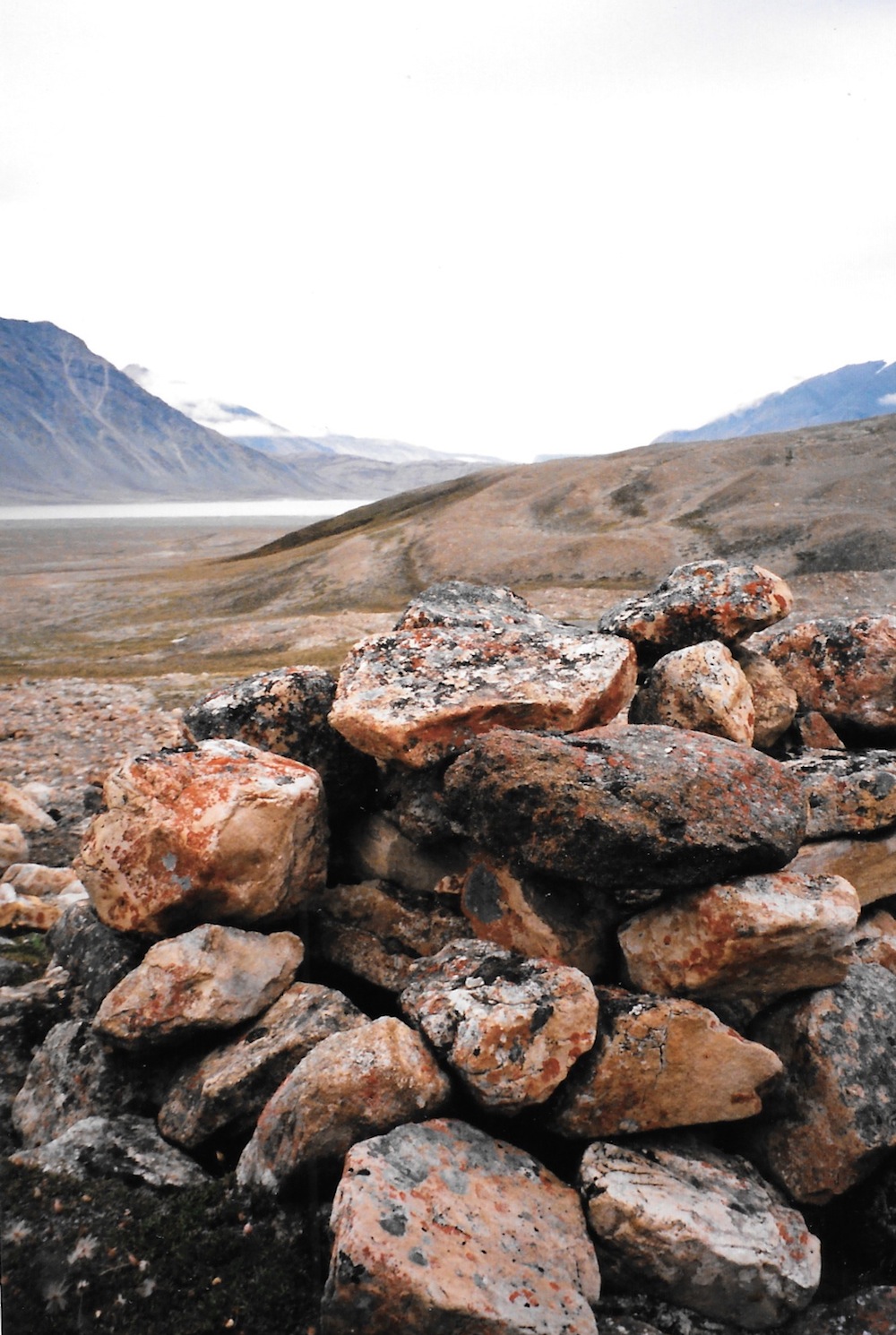
Still, I hiked for hours to climb a hill nearby, sinking into the melting permafrost and jumping over small streams that seemed to flow everywhere. I finally reached my objective, a muskox blind, built hundreds of years ago — or even longer — by early Inuit hunters.

Muskox blind, Tanquary Fiord, Ellesmere Island. (PHOTO BY JANE GEORGE)

Muskox blind, Tanquary Fiord, Ellesmere Island. (PHOTO BY JANE GEORGE)

From this vantage point, they had been able to drive the muskoxen into the crevasse below me. I sat there for a while, gathering my energy and looking at a glacier that looked like a giant hand reaching down the mountain across the fiord. The park headquarters’ buildings looked like tiny dots.

No one knew I was here. I could stay here forever, or continue climbing. If I walked across the ledge I’d be able to see the valley beyond, but I was worried about my wet boots: It seemed easier to walk down instead of up, so that’s what I did.

The park, then a park reserve — it would become a full-fledged national park with a new name, Quttirnipaaq, in 2002 — was huge, nearly half the size of the province of New Brunswick, with terrain ranging from lakes to permanent ice shelves.

There was little government presence there — apart from the buzz of planes heading back and forth from the base at Alert to the north. But maintaining Canadian sovereignty wasn’t part of this park’s mission. Its wardens were much more worried about park management than politics.

I helped park warden Geoff Walker as he spent part of the day on his hands and knees, checking out 25 small plots for changes in vegetation. He counted flowers, noting if they were in bloom or going to seed. That was part of the park’s monitoring of Ellesmere for climate change, to see how the flowers change from year to year.

An ancient tent ring not far from Tanquary Fiord/ (PHOTO BY JANE GEORGE)

An ancient tent ring not far from Tanquary Fiord. (PHOTO BY JANE GEORGE)

Walker also checked out nearby archeological sites for any damage. The park contained more early Inuit sites, some from 4,000 years ago, than any other place in Canada. Most sites remained unexcavated, and included half-buried dwellings or stone caches, fox traps and muskox blinds.

Hikers were supposed to keep a distance from sites because any disturbance to the soil could last for years. Bulldozer tracks from the 1950s were still visible around the park headquarters, so motorized vehicles were no longer allowed. A long row of equipment, including old sleds and snowmobiles, was neatly lined up alongside the park buildings. Inside a nearby Quonset hut, stacks of unused supplies, more than 40 years old. That’s where we got our cans of food, some of which had vintage labels.

Geoff Walker, Tanquary Fiord park headquarters, July, 1997. (PHOTO BY JANE GEORGE)

Geoff Walker, Tanquary Fiord park headquarters, July, 1997. (PHOTO BY JANE GEORGE)

Walker wondered what to do with these relics from the modern era, but throwing away anything there was out of the question. Everything that came in was used, burned or sent back south at great expense. At least, less fuel was then being brought up in barrels to Tanquary because a  wind and solar power system furnished almost all the electricity needed by the park’s staff.

“It’s cost-efficient,” Walker said. “For a generator, we’d have to use hundreds of barrels of fuel.”

Along the airstrip, though, there were still many fuel barrels, for the Twin Otters that flew in and out of the park every day. About 500 people visited in the summer. To supplement its budget, the park collected minimal user fees from all visitors.

Although they were closer to the North Pole than to the nearest store or phone, many used to ask Walker what credit cards he accepted. Others wanted more facilities, and asked, for example, if showers were provided. That summer, some groups camped around the airstrips at Lake Hazen and Tanquary Fiord, overloading their meagre facilities.

A pair of Arctic hares by a weather station at the Tanquary Fiord. (PHOTO BY JANE GEORGE)

A pair of Arctic hares by a weather station at the Tanquary Fiord. (PHOTO BY JANE GEORGE)

Walker felt uneasy babysitting hikers who found that they aren’t up to the rigorous demands of trekking in the park, and he was unhappy about the extra quantity of human waste and garbage they produced: He was the one who had to clean out the outhouses later.

One evening he and I joined a group of French trekkers who had been holed up at Tanquary for a few days. Their tarte-tatin dessert was great, but it turned out this group hadn’t even paid their park entry fee.

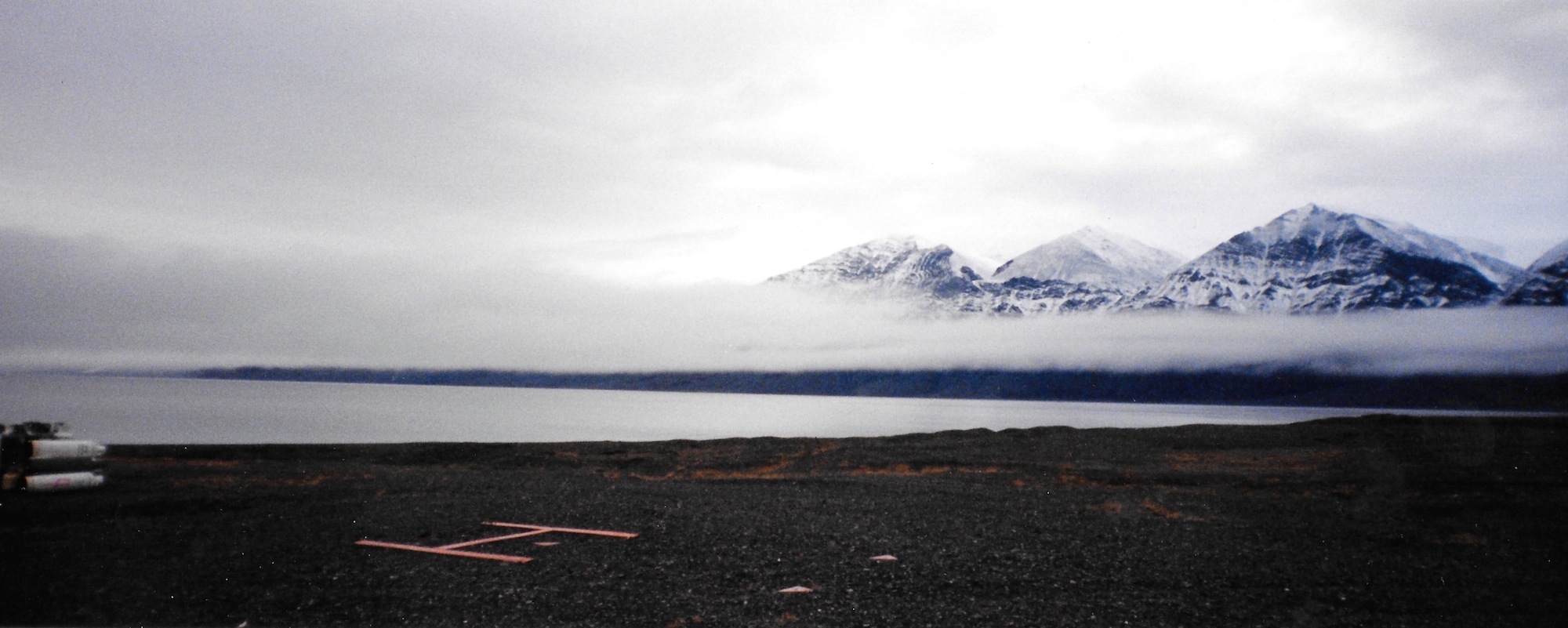
While I was in Tanquary the sun never set, but the season abruptly changed. One day the snow started falling, and our departure to Resolute was postponed.

A couple of other park employees, Monty Yank and Vicki Sahanatien, also hiked in. We sat in the weather haven that served as a kitchen and made elaborate meals from the ageing canned goods, keeping in touch with the dispatchers at the Polar Continental Shelf Project in Resolute to see when an airplane would come.

When we finally headed back to Resolute, we made a stop at the other park centre at Lake Hazen to pick up some other passengers. I ran to the bathroom. While I was out of the plane, my backpack with my computer and money was offloaded and I didn’t notice this until I landed in Resolute with an hour to make my flight south. I had no ticket and no money.

Even without a ticket, however, I was let on the jet in that pre-9/11 situation. I saw my backpack again the following week when it was brought down from Lake Hazen to Iqaluit. I would never leave my bag alone again, but the following summer I return to Ellesmere.

Poor weather means no airplanes fly into Tanquary in the end of July, 1997. (PHOTO BY JANE GEORGE)

Poor weather means no airplanes fly into Tanquary in the end of July, 1997. (PHOTO BY JANE GEORGE)

Then, I wanted to visit science camps. I’d been intrigued by what researchers had told me about the work they did and the dismal state of science in Canada’s North. During the 1980s, more than 200 research teams would fan out from Cornwallis Island every spring and summer to carry out projects on the land.

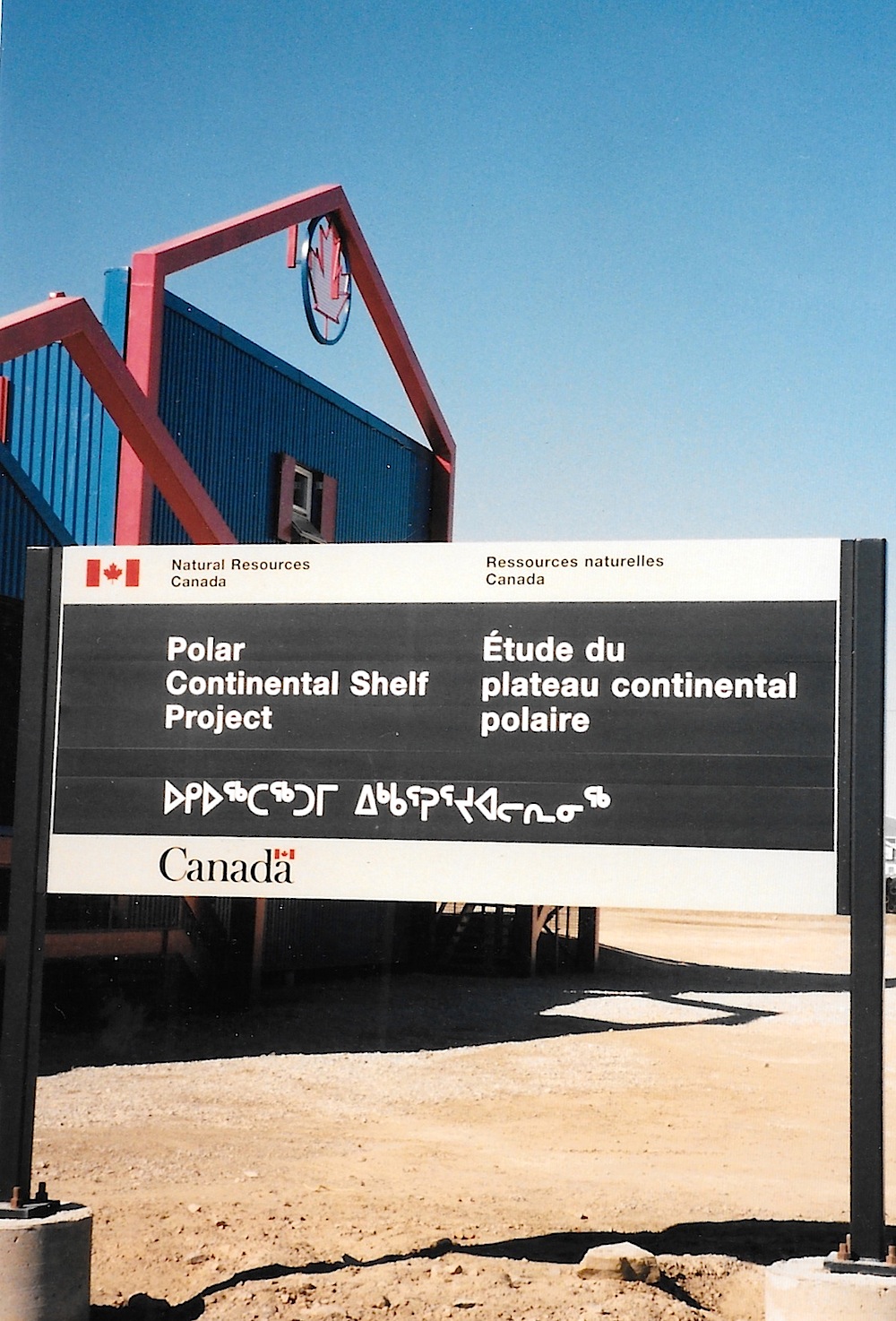
Polar Continental Shelf Project in Resolute Bay, 1997. (PHOTO BY JANE GEORGE)

Polar Continental Shelf Project in Resolute Bay, 1997. (PHOTO BY JANE GEORGE)fewer than 100 field parties use Resolute as a staging point for research in the field. Few are Canadian. xthe Polar Continental Shelf Project was founded in 1958 to provide Canadian and international scientists with the logistical support needed for research in the High Arctic.

I learned that, since the 1980s, the Polar Continental Shelf Project’s budget had been slashed by half. That meant it now tried to move hundreds of people and aircraft in and out with fewer personnel. It was a bare-bones operation, pared back to the minimum.

At the same time, the numbers of American researchers who contracted the Polar Shelf for services were steadily increasing. They could draw from the millions of dollars set aside for Arctic research by their government’s 1984 Arctic Research and Policy Act. But, in 1997, Canada had no similar legislation, policy or budget to encourage Arctic research.

The Polar Shelf had a tidy little building beside the airport, with rooms for researchers and a cafeteria, which I visited on my way back from Ellesmere.

“I’m here from Nunatsiaq News. Does anybody want to talk me about their research?” I said as I entered the residence’s sitting area.

A few scientists responded: Others looked at me as if I’m the last person in the world they’d speak to.

Fossilized dinosaur droppings from Melville Island. (PHOTO BY JANE GEORGE)

Fossilized dinosaur droppings from Melville Island. (PHOTO BY JANE GEORGE)

However, a few took advantage of the change to talk with me and, through the newspaper, with people in the North — public outreach that will soon become an obligation.

Two keen fossil hunters with the Museum of Nature showed me a fossilized dinosaur dropping from Melville Island.  Greg Henry from the University of British Columbia told me more about his climate change project and why I was counting flowers with Walker in Tanquary.

Jim Basinger, a paleo-botanist from the University of Saskatchewan, piqued my interest about an ancient fossil forest on Axel Heiberg Island. The following summer he invited me to go to Axel Heiberg — but instead of escaping controversy on that journey to the High Arctic in 1999, I head directly into it.

The next instalment of Like an iceberg goes live May 20.

You can read earlier instalments here:

Like an iceberg: on being a journalist in the Arctic

Like an iceberg, 1991…cont.

Like an iceberg, 1991…more

Like an iceberg, 1992, “Shots in the dark” 

Like an iceberg, 1992, “Sad stories”

Like an iceberg, 1993, “Learning the language of the snows”

Like an iceberg, 1993 cont., “Spring”

Like an iceberg, 1993 cont., “Chesterfield Inlet”

Like an iceberg, 1993 cont., more “Chesterfield Inlet”

Like an iceberg, 1994: “Seals and more”

Like an iceberg, 1994, cont., “No news is good news”

Like an iceberg, 1994 cont., more “No news is good news”

Like an iceberg, 1994 cont., “A place with four names”

Like an iceberg, 1995, “More sad stories”

Like an iceberg, 1995 cont., “No place like Nome”

Like an iceberg, 1995 cont., “Greenland”

Like an iceberg, 1995, cont. “Secrets”

Like an iceberg, 1996, “Hard Lessons”

Like an iceberg, 1996 cont., “Working together”

Like an iceberg, 1996 cont., “At the edge of the world”

Like an iceberg, 1996, more “At the edge of the world”

Like an iceberg, 1996, cont. “Choices” 

Like an iceberg, 1997, “Qaggiq”

Like an iceberg, 1997, more “Qaggiq”

Like an iceberg, 1997, “Qaggiq” cont.

Like an iceberg, 1997 cont., “Qaggiq and hockey”

Like an iceberg, 1997 cont., “Brain surgery in POV”

Like an iceberg, 1997 cont.: “Masks on an island”

Like an iceberg, 1997 cont., “Abusers on the pulpit”

Like an iceberg, 1998, “Bearing gifts”