Like an iceberg, 1998 cont., “Memories”

Like an iceberg, 1998 cont., “Memories”

Despite the stories about violence and abuse that I often had to report on from northern Quebec, I liked Nunavik and its people. I liked their warmth and the way they joked and teased.

They were generous with their time and energy. When I landed in communities, people took me into their homes. I was invited over for meals. I went berry-picking with friends in the autumn.

Like Inuit, I was rarely lonely or even alone no matter where I was. I walked along the streets and people aome up to me and shook my hand, smiling. “Here you are,” they would say, even if they hadn’t seen me in months.

My northern environment might not have been the one that Peter Murdoch first encountered in the 1950s, but the people I met still  displayed many of the same qualities that drew him there.
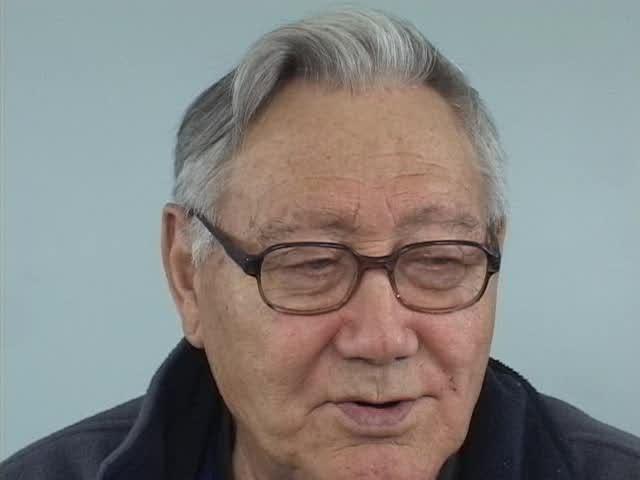
George Koneak from an interview with Isuma TV.

George Koneak from an interview with Isuma TV.

In 1998, elder George Aqqiqiq Koneak of Kuujjuaq (now deceased,) one of the first political spokespersons for Inuit in northern Quebec, shared with me stories about the Christmas in the old days.

Aqqiqiq or “Ptarmigan,” as everyone called him, told me about how he missed his first Christmas by a few days because he hadn’t been born yet.

George Koneak was often in the middle of negotiations with the federal government in the 1950s and 1960s. Left to right: Koneak, Fort Chimo, QC.; Shinuktuk, Rankin Inlet, NWT.; John Georege Diefenbaker, Prince Rupert, Sask.; Jean Ayaruark, Rankin Inlet, NWT.; Abraham Ogpik, Aklavik, NWT. In Ottawa, Ontario, Canada, May 1959 Title / Titre : Left to right: George Koneak, Fort Chimo, Quebec.; Shinuktuk, Rankin Inlet, Northwest Territories.; John Georege Diefenbaker, Prince Rupert, Saskatchewan.; Jean Ayaruark, Rankin Inlet, NWT; Abraham Ogpik, Aklavik, NWT. In Ottawa, Ontario, May 1959 (PHOTO/ ARCHIVES OF CANADA/ Ref. No. MIKAN 3217847

George Koneak was often involved negotiations with the federal government in the 1950s and 1960s. Left to right: Koneak, Fort Chimo, QC.; Shinuktuk, Rankin Inlet, NWT.; John George Diefenbaker, Prince Rupert, Sask.; Jean Ayaruark, Rankin Inlet, NWT.; Abraham Okpik, Aklavik, NWT. In Ottawa, Ontario, Canada, May 1959. (PHOTO/ ARCHIVES OF CANADA/ Ref. No. MIKAN 3217847)

On Jan. 3, 1931, his parents were traveling back to their inland camp by dog team after holiday celebrations at the Hudson Bay Co.’s trading post near today’s community of Quaqtaq, when his mother suddenly felt the onset of labour. They stopped and hurriedly put up a snow house.

“I was born maybe a half hour after the igloo was built,” Aqqiqiq said.

When he was a child, his family always traveled at Christmas time back to the post from their camp near Diana Bay, an inlet on Ungava Bay, he said.

More than 200 Inuit from the nearby camps would gather there, building temporary snow houses for their holiday celebrations. These began in earnest on Christmas Eve, when the Hudson Bay factors treated everyone to a feast, then dancing to accordion music.

“The feast, it was pork and beans,” Aqqiqiq said. “They would make a big batch of pork and beans, lots of bannock, with lots of raisins in the bannock. When the dance would come around in the evening, everyone would fart!”

At midnight the festivities paused for a church service. Gift-giving, Aqqiqiq remembered, was also part of the holiday, but not as formal as today.

“People were giving something, but nothing new,” he said. “Older people would make sealskin lines [for use in dog teams] and packs. Some people would trade jackets and parkas. [There was] Nothing new, coming from the store, and wrapped up in fancy paper. There was nothing to wrap it up with.”

When Aqqiqiq moved with his family to Old Fort Chimo — now Kuujjuaq — in 1958, he was introduced to another way of celebrating the holiday, with lights, decorations, trees and wrapped gifts.

“When I wrapped my first present, I was really proud of myself!” he said. “You had to sleep first, then get up at one o’clock and do the wrapping on Christmas Eve.”

In 1998, Aqqiqiq usually received socks and mittens and other articles of warm clothing for gifts.

“My wife, she was able to make parkas, eider down parkas,” he said. “We collected it in the summertime, and she kept it in bags and cleaned it, taking out the dirt and grass and feathers.”

There was a church in Old Chimo where religious services were held on Christmas Eve and Christmas Day. This church was later moved to Kuujjuaq, where it still stands.

Back in Old Chimo, as in today’s community of Kuujjuaq, games were an important part of Christmas, with indoor and outdoor games as well as dog team races. Aqqiqiq said he found the prolonged Christmas celebrations and exchange of gifts, standard these days, a bit overwhelming.

“Christmas presents today are fantastic. There are expensive ones, could be a ski-doo, could be an outboard motor.” he said. “We’re spoiling our kids now, and that’s not our tradition.”

He also said he regretted that alcohol had become a part of the community’s celebrations.

“I’ve been reluctantly abusing alcohol myself. It’s too much. It’s gone too far right now,” he said. “It’s okay to take a little bit, but not every night. Sometimes booze doesn’t make you happy. My parents drank only very seldom. Sometimes they were given a bottle of home brew. They’re celebrating every day now!”

In 1998, the best part of Christmas was being with his family of 11 grown children, more than 40 grandchildren and numerous great-grandchildren. But a night or two of Christmas was enough for George Aqqiqiq Koneak. Then, he headed out of Kuujjuaq to go hunting.

“There’s a lot of differences,” he said. “I’ve touched the beginning and [how it is] right now. I’ve felt the difference between those sealskin lines and a skidoo at Christmas.”

 Christmas candy drop in Quaqtaq, 1963. (PHOTO. AVATAQ ARCHIVES, IND-DIO-930)

Christmas candy drop in Quaqtaq, 1963. (PHOTO. AVATAQ ARCHIVES, IND-DIO-930)

Like an iceberg continues May 23.

You can read earlier instalments here:

Like an iceberg: on being a journalist in the Arctic

Like an iceberg, 1991…cont.

Like an iceberg, 1991…more

Like an iceberg, 1992, “Shots in the dark” 

Like an iceberg, 1992, “Sad stories”

Like an iceberg, 1993, “Learning the language of the snows”

Like an iceberg, 1993 cont., “Spring”

Like an iceberg, 1993 cont., “Chesterfield Inlet”

Like an iceberg, 1993 cont., more “Chesterfield Inlet”

Like an iceberg, 1994: “Seals and more”

Like an iceberg, 1994, cont., “No news is good news”

Like an iceberg, 1994 cont., more “No news is good news”

Like an iceberg, 1994 cont., “A place with four names”

Like an iceberg, 1995, “More sad stories”

Like an iceberg, 1995 cont., “No place like Nome”

Like an iceberg, 1995 cont., “Greenland”

Like an iceberg, 1995, cont. “Secrets”

Like an iceberg, 1996, “Hard Lessons”

Like an iceberg, 1996 cont., “Working together”

Like an iceberg, 1996 cont., “At the edge of the world”

Like an iceberg, 1996, more “At the edge of the world”

Like an iceberg, 1996, cont. “Choices” 

Like an iceberg, 1997, “Qaggiq”

Like an iceberg, 1997, more “Qaggiq”

Like an iceberg, 1997, “Qaggiq” cont.

Like an iceberg, 1997 cont., “Qaggiq and hockey”

Like an iceberg, 1997 cont., “Brain surgery in POV”

Like an iceberg, 1997 cont.: “Masks on an island”

Like an iceberg, 1997 cont., “Abusers on the pulpit”

Like an iceberg, 1998, “Bearing gifts”

Like an iceberg, 1998 cont., “At the top of the world”

Like an iceberg, 1998 cont., “A bad week” 

Like an iceberg, 1998 cont.: more from “A bad week”

Like an iceberg, 1998 cont., “A bad week”

Like an iceberg, 1998 cont.: “A bad week”

In August, 1998, I travelled again to Inukjuak, that community of about 1,200 on Quebec’s Hudson Bay coast, to observe a week of traveling court proceedings. As it turned out, I arrived luggage-less on Air Inuit, my bag having gone somewhere else — and no one knew where.

View of Inukjuak. (PHOTO/ NRBHSS)

View of Inukjuak. (PHOTO/ NRBHSS)

In August, it was still warm. The dust came off the streets and hung over the village in a cloud. In the 1950s, Inukjuak, which was then known as Port Harrison, was mainly meadowland — in summer, at least — and there were just a few buildings — a school, a Hudson Bay Co. trading post and a church. In summer, it was a lush place, with a beautiful beach.

But in 1998, all-terrain vehicles raced up and down the streets, all day and night. There were scores of houses, two new schools and two stores, the Northern and the co-op, where I tried to buy what I needed for the week: a hairbrush, toothbrush, toiletries and a couple of shirts, socks and underpants.

My days were simple, too: court in the morning, court in the afternoon and sometimes even during the evening. Court took place in a stuffy upstairs meeting room at the local vocational school.

The cases heard that week were typical of those I reported on: terrible tales of child sexual abuse in this close-knit community where children should have felt safe, but often weren’t.

Every morning Inukjuak’s school bus driver would pick up a little girl. She was the first to get on the bus and the last to get off, but, for her, going to school wasn’t a comforting routine, but a recurrent nightmare.

That’s because her school bus driver was also an abuser who sometimes even fondled her on the bus. From the time she was eight years old, he started to molest her, touching her breasts or genitals, even reaching full sexual intercourse on several occasions.

“He used his position as a bus driver to have uninterrupted time with her,” said Judge Donald Bissonnette of Quebec’s travelling court before sentencing Jobie Ohaituk, then 51, also a well-known soapstone carver, to two years and three months in jail.

“There are no words to describe the shame, loss and pain that this child suffered. It is difficult for me to imagine that she will find peace and solace in this life.”

An untitled carving by Jobie Ohaituk. (PHOTO/ AVATAQ)

An untitled carving by Jobie Ohaituk from 1997. (PHOTO/ IAF)

In May, 1998, nearly a year after his arrest, Ohaituk, who lost his job as bus driver with the Kativik School Board, had pleaded guilty to three charges. One charge involved assault with a weapon. The police report said Ohaituk was leaving church in May 1996, when a woman called him a “womanizer” or, according to other witnesses, a “child molester.”

Ohaituk responded by hitting the woman with a Bible that was wrapped in plastic.

He also pleaded guilty to two charges of sexual assault against minors. The offences took place over a five-year period and involved the little girl who took his bus as well as another victim.

The other girl was also about eight years old when her molestation began at Ohaituk’s home where she had gone to visit his daughter. This victim said Ohaituk stole her childhood away, and started a pattern of abuse by other men later on.

“The facts are almost sickening,” the Crown prosecutor said to the court. “To see what was done to these girls, and particularly at their young age.”

Yet, according to Ohaituk’s pre-sentencing report, he was “surprised” that the girls had disclosed the abuse.

Ohaituk dismissed the content of the report that found him to be self-centered. He said the girls had never defended themselves against his advances. He also admitted to being sexually attracted to his young victims.

The report concluded he was a sexual deviant who should be sentenced to a jail where a program for sexual offenders is available and mandatory.

But, speaking in Inuktitut in his own defence in Inukjuak, Ohaituk said he had written to the victims to apologize. He added that his family suffered intensely when he was removed from the community for six months after his arrest in April 1997. He said he would accept the court’s judgment, but that he didn’t know how his family would manage.

Woman fishing, Jobie Ohaituk, 2008. (PHOTO/IAF)

Woman fishing by Jobie Ohaituk, 2008. (PHOTO/IAF)

“He wants to forget the past,” said the interpreter, paraphrasing Ohaituk’s words.

“I am sorry for the things I have done,” he said. “I have told myself that I would never do this again.”

Ohaituk, dressed in work clothes, listened as Bissonnette hands down his judgment. Bissonnette first tried to explain the purpose of sentencing.

He said it was both a punishment for the offender and a deterrent to those who might act similarly. It could also assist healing.

“A sentence should help an offender change his ways and return to the community as a full member,” Bissonnette said.

Often, the offender’s absence could also help the community’s healing.

Bissonnette added that it would take a long time for Inukjuak to heal from the damage caused by Ohaituk’s actions, although he did acknowledge that Ohaituk had experienced a difficult upbringing — his father died and his mother was hospitalized in the South for five years when he was growing up, leaving him with an aunt who had many extramarital affairs.

But Bissonnette said in such cases of child abuse, a jail term was appropriate, as a clear warning and an example to others.

On his return to Inukjuak, Ohaituk would also have to observe a three-year probation. He would also be prohibited from going to any daycare, school or playground, unless accompanied by another adult.

Ohaituk, who had just smoked a casual cigarette with his wife outside, was led off to jail.

Many years later, we got a call at the Nunatsiaq News from an art dealer asking that my story about Ohaituk’s court appearance in 1998 be removed from our website because it could discourage art buyers.

That wasn’t done.

Although many stories from that period have disappeared, you can still read this one here.

More Like an iceberg, 1998, “A bad week” on May 21.

You can read earlier instalments here:

Like an iceberg: on being a journalist in the Arctic

Like an iceberg, 1991…cont.

Like an iceberg, 1991…more

Like an iceberg, 1992, “Shots in the dark” 

Like an iceberg, 1992, “Sad stories”

Like an iceberg, 1993, “Learning the language of the snows”

Like an iceberg, 1993 cont., “Spring”

Like an iceberg, 1993 cont., “Chesterfield Inlet”

Like an iceberg, 1993 cont., more “Chesterfield Inlet”

Like an iceberg, 1994: “Seals and more”

Like an iceberg, 1994, cont., “No news is good news”

Like an iceberg, 1994 cont., more “No news is good news”

Like an iceberg, 1994 cont., “A place with four names”

Like an iceberg, 1995, “More sad stories”

Like an iceberg, 1995 cont., “No place like Nome”

Like an iceberg, 1995 cont., “Greenland”

Like an iceberg, 1995, cont. “Secrets”

Like an iceberg, 1996, “Hard Lessons”

Like an iceberg, 1996 cont., “Working together”

Like an iceberg, 1996 cont., “At the edge of the world”

Like an iceberg, 1996, more “At the edge of the world”

Like an iceberg, 1996, cont. “Choices” 

Like an iceberg, 1997, “Qaggiq”

Like an iceberg, 1997, more “Qaggiq”

Like an iceberg, 1997, “Qaggiq” cont.

Like an iceberg, 1997 cont., “Qaggiq and hockey”

Like an iceberg, 1997 cont., “Brain surgery in POV”

Like an iceberg, 1997 cont.: “Masks on an island”

Like an iceberg, 1997 cont., “Abusers on the pulpit”

Like an iceberg, 1998, “Bearing gifts”

Like an iceberg, 1998 cont., “At the top of the world”