The federal election, Nunavut-style

No one looks to Nunavut’s sprawling federal riding for a bellwether community to predict voter tendencies during an election — but if there were such a Nunavut community to look at during this past federal election, it would have been Cambridge Bay.

It was in this western Nunavut town that former Nunavut MP and Conservative cabinet minister Leona Aglukkaq started her political career as a hamlet councillor In 2011, she easily carried the community — and Nunavut —  in the same way that the Tories won the national vote.
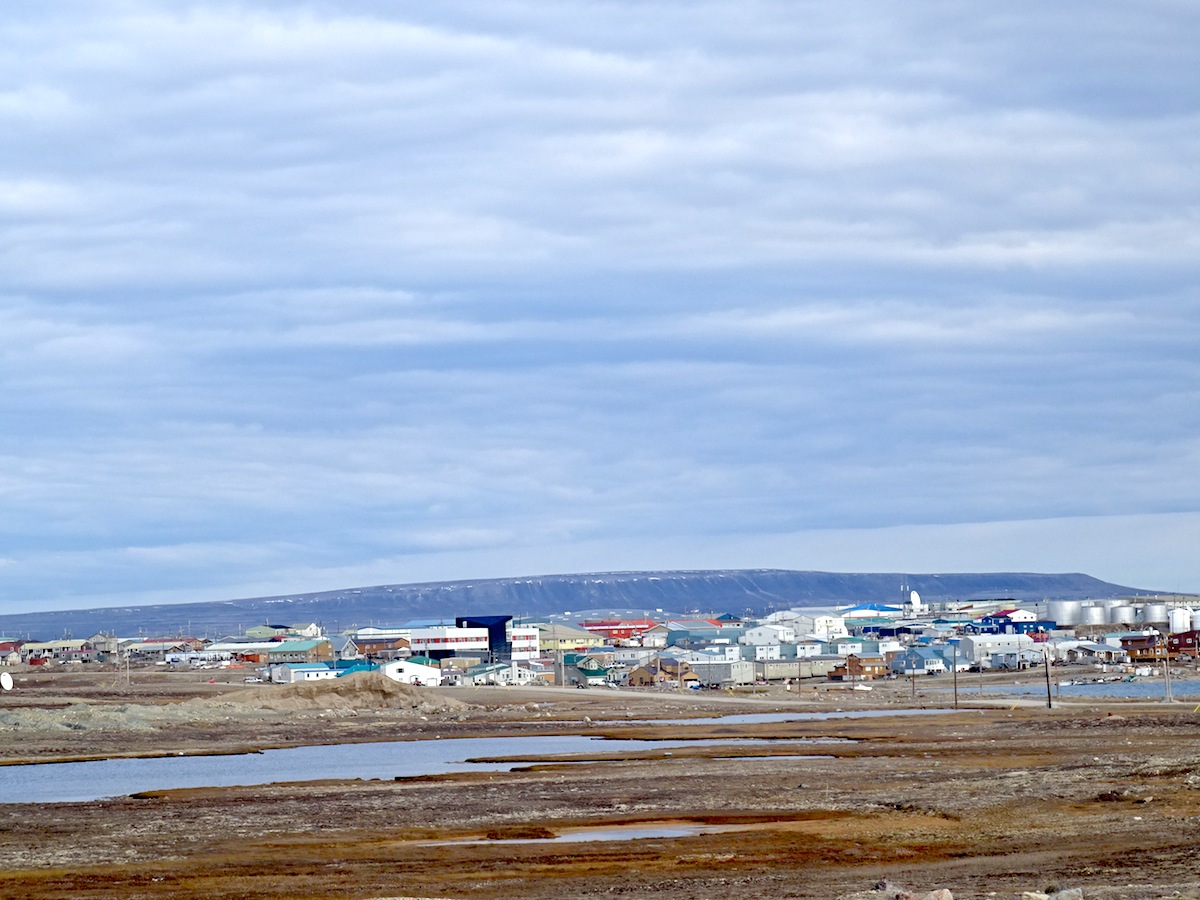
This is how Cambridge Bay, population 2,000, looked in mid-September, with Mt. Pelly, 20 kilometres away, peering from behind. (PHOTO BY JANE GEORGE)

This is how Cambridge Bay, population 2,000, looked in mid-September, with Mt. Pelly, 20 kilometres away, peering from behind. (PHOTO BY JANE GEORGE)

Cambridge Bay, which is never short of news (and previous blog post inspiration) and where I have many friends, seemed like a good place to sit out this federal election.

So I arrived in Cambridge Bay on Sept. 13 and left Oct. 20, the day after the votes were counted.

In Cambridge Bay on Oct. 19, voters decided to support Liberal candidate Hunter Tootoo and the New Democratic Party’s Jack Anawak, leaving the Tories and Aglukkaq in third place in Cambridge Bay (361 for Tootoo, 170 for Anawak, 164 for Aglukkaq and 10 for the Green party.)

How the Oct. 19 vote would shape up in Cambridge Bay became clear to me over the weeks as I watched the scenery change and the ice solidify — like opinions among voters.

When I arrived, Cambridge Bay was still in the last days of its longer-than-usual summer. Then, the days became colder.

Sunset in October by the shore. (PHOTO BY JANE GEORGE)

Sunset in October by the shore. (PHOTO BY JANE GEORGE)

One afternoon I spotted a field of frost flowers, spreading over the thin ice.
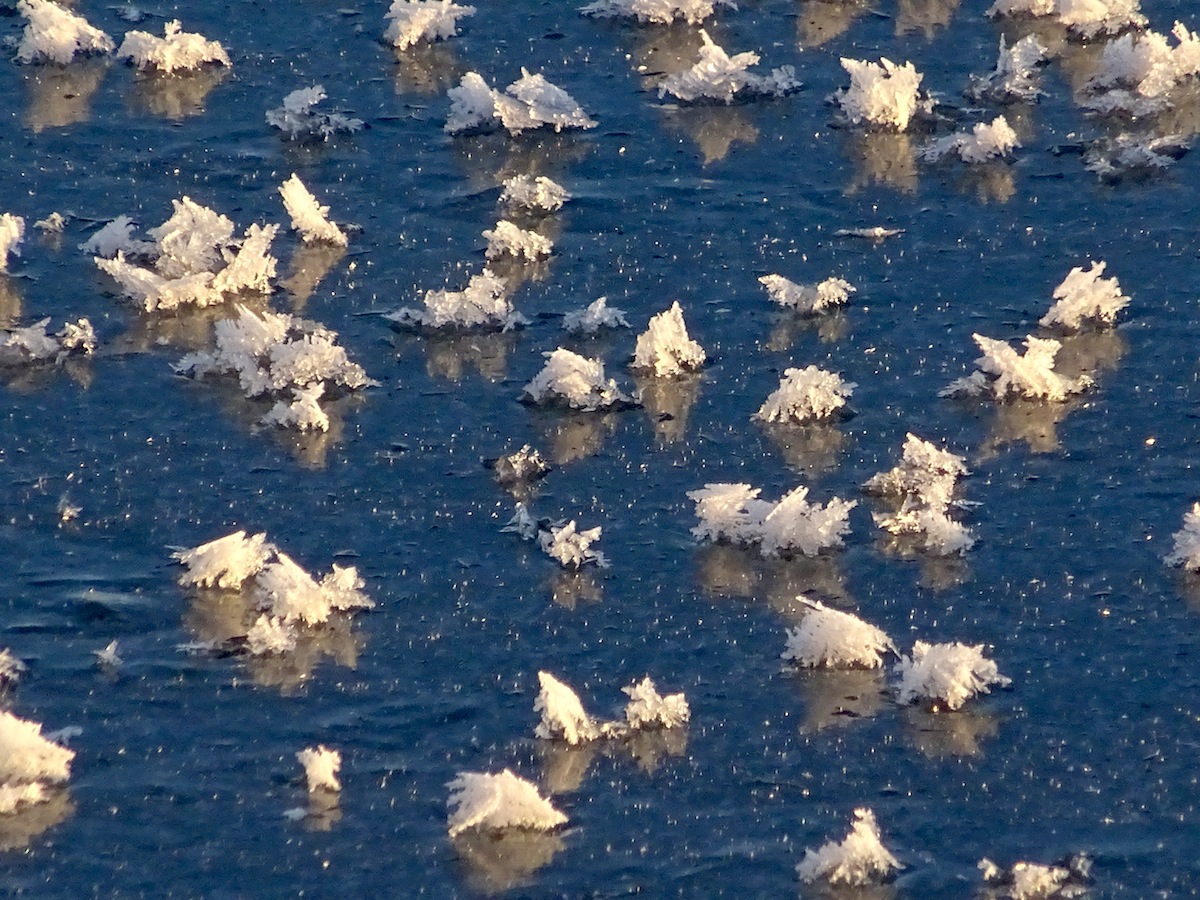
I spotted this frost flowers — formed when conditions are calm and there's a 15 C temperature difference between the air and the water. (PHOTO BY JANE GEORGE)

I spotted these frost flowers — formed when conditions are calm and there’s a 15 C temperature difference between the air and the water. You can see the field in the top of this post. (PHOTO BY JANE GEORGE)

A view to Mt. Pelly in October at sunset. (photo by JANE GEORGE)

A view to Mt. Pelly in October at sunset. (photo by JANE GEORGE)

The sunsets began to turn unreal shades, with a layer of bright pink mist over a darker blue sky.

In mid-October, the weather turned even colder, just around the time when Liberal leader (and now Prime Minister) Justin Trudeau visited Iqaluit.

There, among other things, he served up stew to hungry people at a community feast.

In Cambridge Bay, everything iced up and the foxes started to turn white.

A fox scampers across the ice in mid-October. (PHOTO BY JANE GEORGE)

A fox scampers across the ice in mid-October. (PHOTO BY JANE GEORGE)

Meanwhile, the three main party candidates also visited Cambridge Bay to campaign — Aglukkaq keeping a low profile, but the Liberals’ Tootoo and the NDP’s Anawak getting out and meeting people.

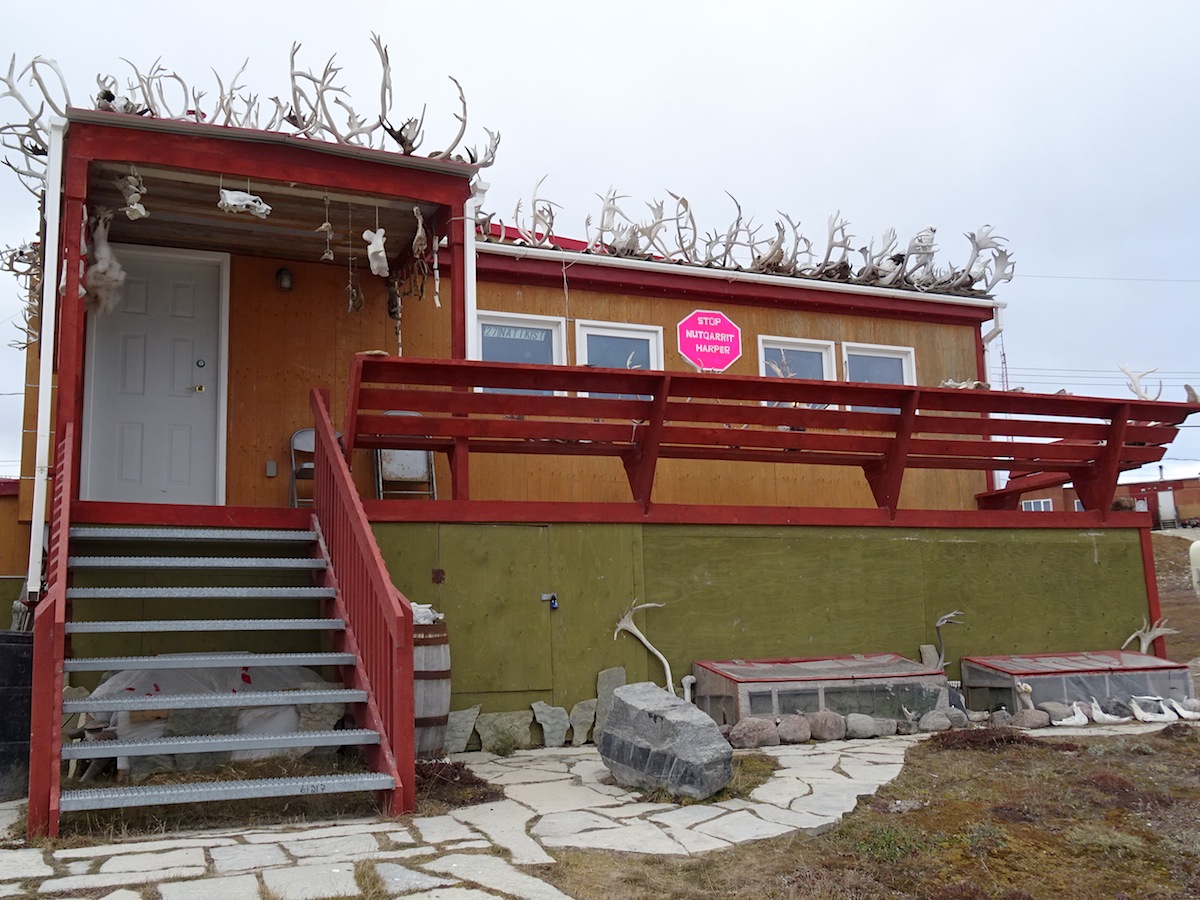
Signs for Tootoo cropped up over town. A homeowner kept a “Stop Harper/ Nutqarrit” sign posted on his house.
The

The “Stop Harper” sign is bilingual, with “Nutqarrit” meaning “stop” in Inuinnaqtun. (PHOTO BY JANE GEORGE)

Students at the local high school voted for the NDP in mock election. And many people talked to me about wanting change.

I decided to write a story for the Nunatsiaq News Oct. 18 about the the mood in Cambridge Bay, and that this Tory stronghold was leaning to the Liberals and NDP,  as story which you can read here.

And on election day I went to the community hall to speak to voters after they cast ballots. I took a photo of elders after they came to vote, a photo that circulated among thousands of people on Twitter.

A

A “This is how we vote in Canada” tweet, along with this photo, from Nunatsiaq News’ managing editor Lisa Gregoire saw my photo of elders circulate among thousands of people. (PHOTO BY JANE GEORGE)

I was careful to tell everyone I spoke to who I was (if they didn’t know me) and ask them only why they felt it was important to vote — not who they voted for.

A couple with a small child told me “we need help.” The North is crying out for help, they said, because they can’t survive on the $1,300 they receive every month from social assistance. “There’s nowhere to turn for help,” they said.

And the cost of food is so high that why said they couldn’t afford even a pound of hamburger, so they and others turn to the dump to scavenge for food.

I didn’t have to ask which party they voted for.

Throughout the day a steady stream of voters came to vote — and the numbers would show later that, while Aglukkaq held on to her vote from 2011, turnout increased, and three times as many voters in Cambridge Bay came out to support the Liberals and the NDP than the Tories.
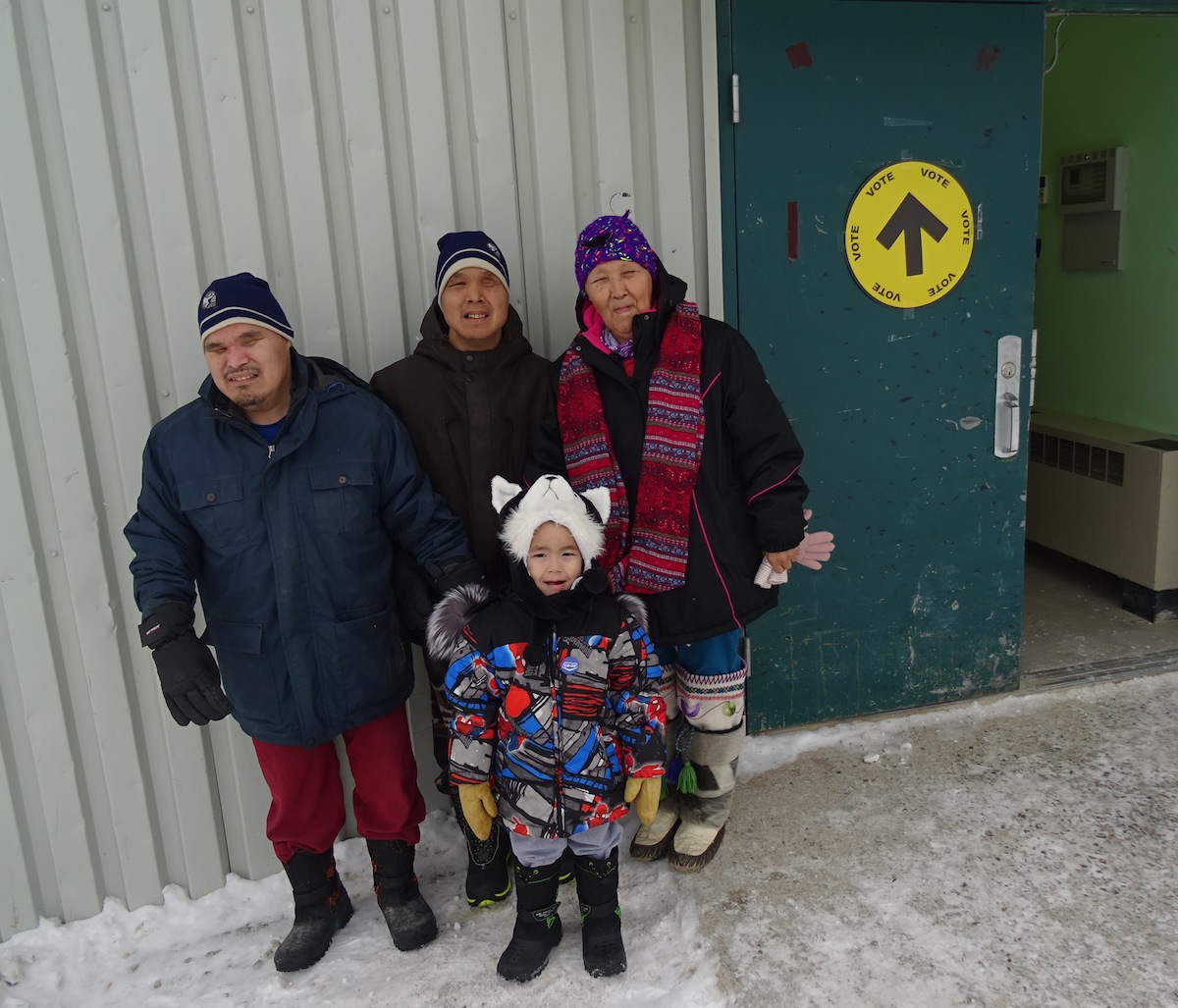
I helped my friend Eva Kakolak Avadluk bring her two sons, Anthony and Ashlee, who are blind to the polling station so they could vote, using Braille ballots. (PHOTO BY JANE GEORGE)

I helped my friend Eva Kakolak Avadluk bring her two sons, Anthony and Ashlee, who are blind, to the polling station so they could vote using Braille ballots. (PHOTO BY JANE GEORGE)

So, more than 500 voters were happy Oct. 20 — but not Aglukkaq’s friends and supporters. One woman wrote me a couple of unpleasant messages and then a comment on Facebook — that made me think again how it’s much harder to report the news in Canada’s North than not.

After I posted the photo of my friends on my Facebook feed, I received this comment Oct. 20 from a friend and supporter of the former Nunavut MP Leona Aglukkaq.

After I posted the photo of my friends voting on my Facebook feed, I received this comment Oct. 20 from a friend and supporter of the former Nunavut MP Leona Aglukkaq.

I was able to delete the comment and block the woman on Facebook: sort of a solution.

But I was reminded again that, in a small Arctic community, you live beside people who may dislike you and bully you into being quiet — a tough situation for people who can’t leave (but one I saw in the 1990s and you can read about here or in a recent two-part series by Nunatsiaq News reporter Thomas Rohner).

The seven natural wonders of the Arctic world

The ancient Greeks had their list of the seven wonders of the world: This one is is entirely my own subjective list of the seven natural wonders of the Arctic, because I haven’t seen everything in the circumpolar world.

But I challenge readers of a Date with Siku Girl to suggest other places that belong on the following list:

1) The Fossil Forest on Nunavut’s Axel Heiberg Island: the Geodetic Hills are pinkish and rounded, streaked with darker lines that mark the remnants of forests that grew 45 million years ago. A tall, lush forest flourished there when the average mean temperature on Axel Heiberg ranged from seven to 15 Celsius. Worried about life? Climate change? You can contemplate eternity here while you look at those ancient stumps.

An ancient stump on the Geodetic Hills of Axel Heiberg. (PHOTO BY JANE GEORGE)

An ancient stump on the Geodetic Hills of Axel Heiberg. (PHOTO BY JANE GEORGE)

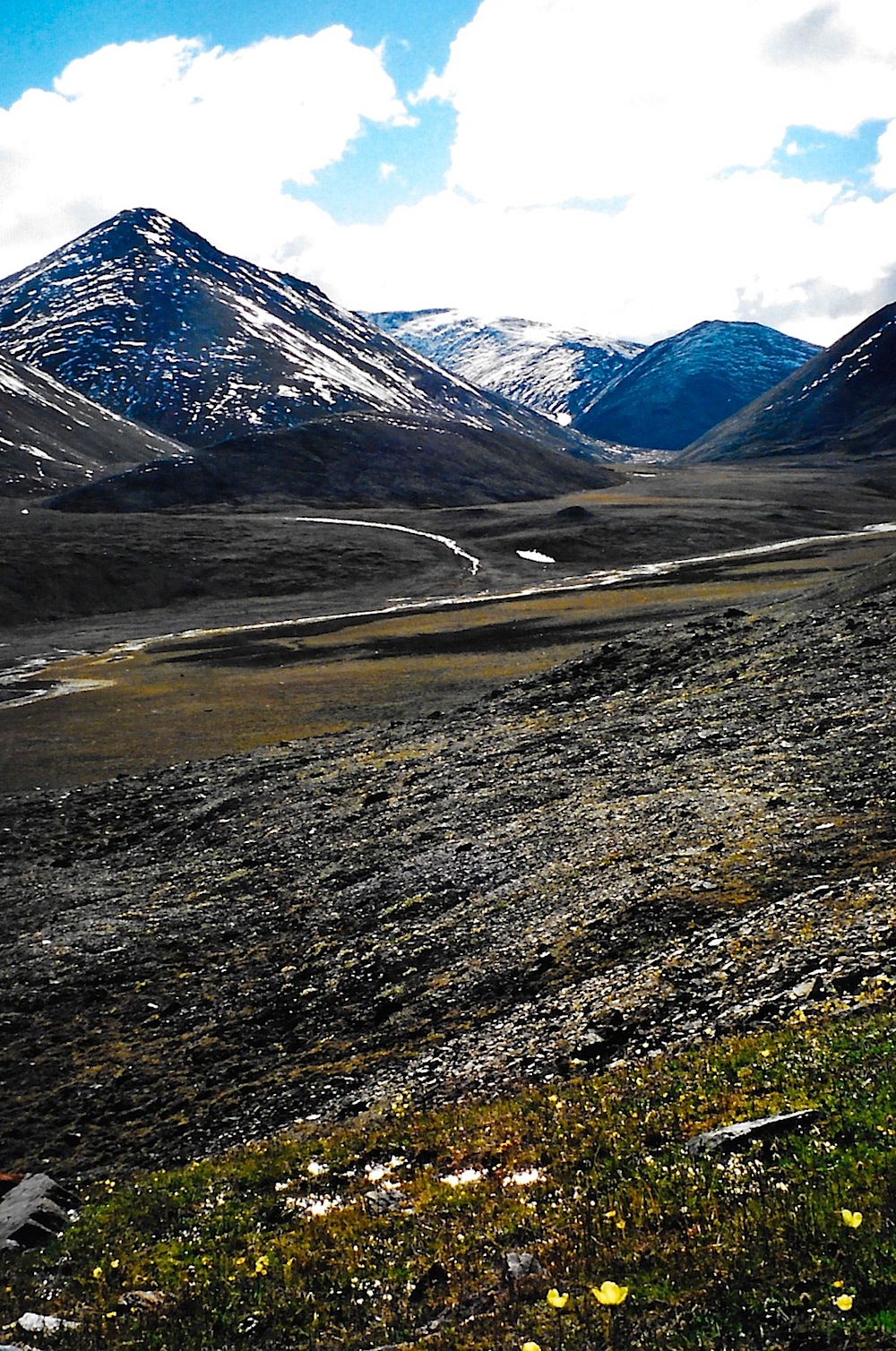
2) Northern Ellesmere Island in Nunavut’s High Arctic: best to visit this beautiful place in the summer, when you can see something. Then the hills come alive with wildflowers, but maybe only for a couple of weeks or perhaps a few days. There is a valley north of Carl Ritter Bay that I would like to return to some July to once again see this view extend before me.

This valley in northern Ellesmere is the most beautiful place I ever see. (PHOTO BY JANE GEORGE)

This valley in northern Ellesmere is the most beautiful place I have ever seen. (PHOTO BY JANE GEORGE)

3) Sunset over Mt. Pelly near Cambridge Bay, Nunavut: from every angle, and particularly at sunset, when it catches the last rays, this flat 200-metre-high esker looks great.  And its an esker with a backstory: Inuit lore says Ovayuk and two smaller hills are a family of starving giants who were crossing Victoria Island looking for food. The father, Ovayok, died first. His bladder burst, creating the lakes left below.

You can see Mt. Belly at sunset behind the town of Cambridge Bay, Nunavut. (PHOTO BY JANE GEORGE)

You can see Mt. Pelly at sunset behind the town of Cambridge Bay, Nunavut. (PHOTO BY JANE GEORGE)

4) Northern Norway’s fiords: why take a cruise? Drive: A surprise awaits you around every twist in the road as you travel from Kirkenes south to Tromsø. It’s hard to focus on the road because the scenery — mountains, fiords, fields, sheep and reindeer — is so awesome. Luckily, there are lots of places to stop, including the World Heritage Site for the Alta rock drawings and the Riddu Riddu indigenous arts festival north of Tromsø. So there’s no hurry at all.

Mountains, fields and fiords, all above the Arctic Circle. (PHOTO BY JANE GEORGE)

Mountains, fields and fiords, all above the Arctic Circle. (PHOTO BY JANE GEORGE)

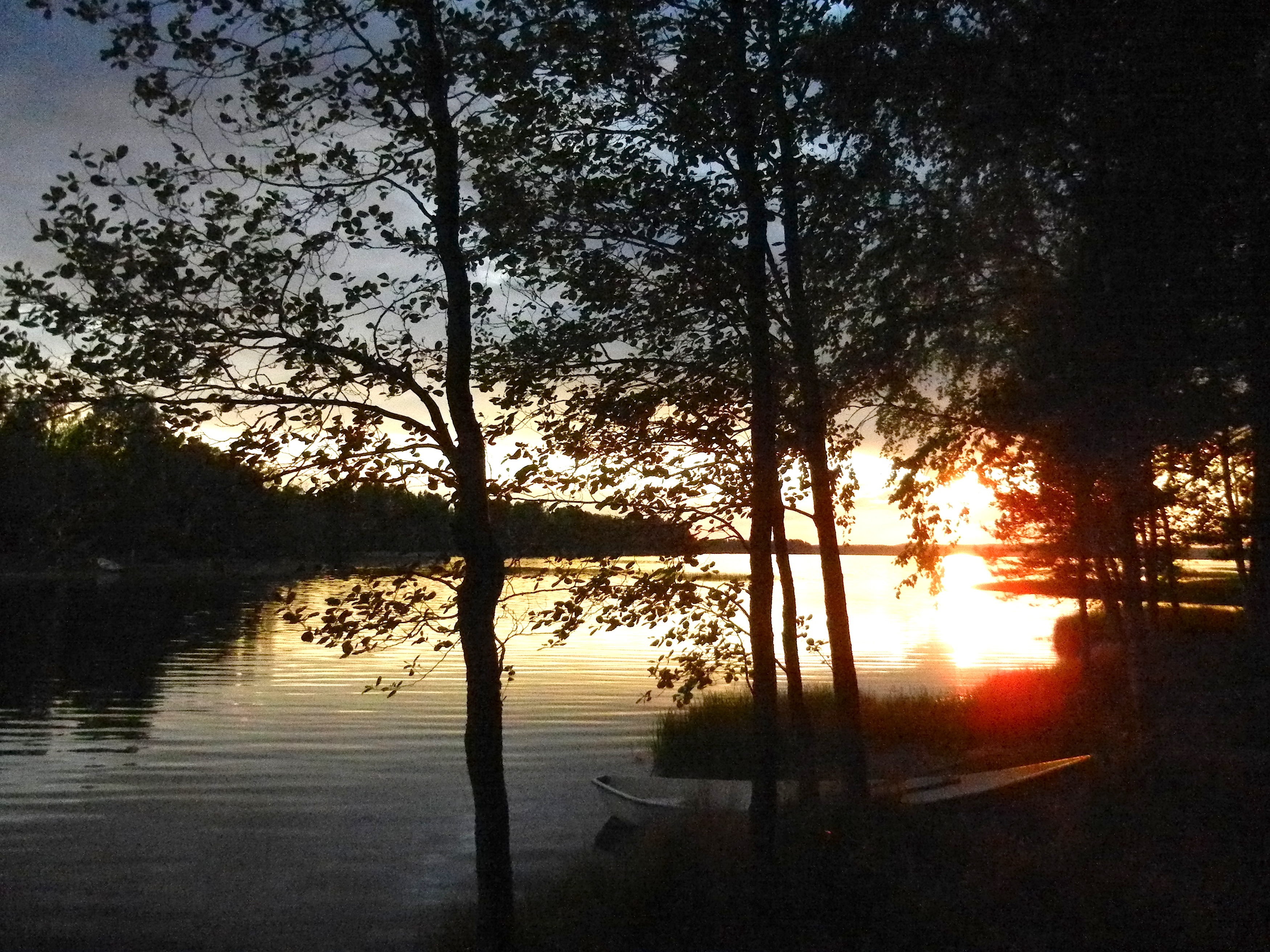
5) Finnish lakes at sidsummer: Okay I’m biased because the Finnish language and summer in Finland is part of my life, but there’s nothing more heart-warming to me than to see the sun dipping down and staying on the horizon for hours, while the sunlight seems to make everything glow. I just want to stay there forever.

Midsummer in Finland. (PHOTO BY JANE GEORGE)

Midsummer in Finland. (PHOTO BY JANE GEORGE)

6) Iceland’s geysers and algae balls: take your pick, they’re both wonderful in a weird way.

I hold a jar with an algae ball from Myvatn, Iceland. (PHOTO BY JANE GEORGE)

I hold a jar with an algae ball from Myvatn in northern Iceland during a 2003 visit. (PHOTO BY JANE GEORGE)

The “lake balls,” the strange, ball-shaped algae called “kúluskítur,” or “balls of shit” in Icelandic, or “Cladophora aegagropila” in Latin, only exist in two lakes: Lake Akan on Hokkaido Island in Japan, and Myvatn, which I visited on a Canadian state visit to Iceland in 2003.

Geyser, Iceland. (PHOTO BY JANE GEORGE)

Geyser, Iceland. (PHOTO BY JANE GEORGE)

The geysers seemed to be everywhere, and, during later trips to Iceland, I grew to love their smaller, less explosive relatives, hot springs that keep swimming pools steaming.

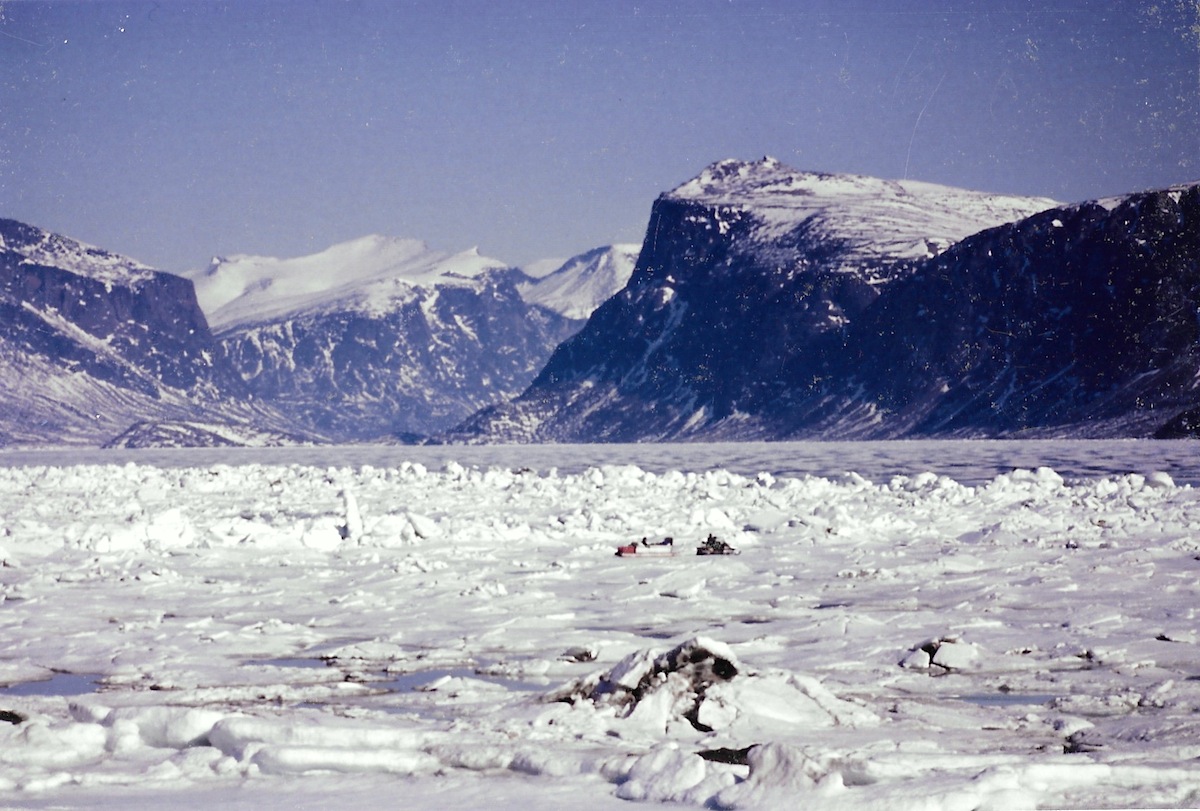
7) Pangnirtung, Nunavut: this fiord can’t look bad in any light… and it’s as beautiful now as it was in 1993 when I took this photo.

A snowmobile heads out over the sea ice in Pangnirtung's fiord in May 1993. (PHOTO BY JANE GEORGE)

A snowmobile heads out over the sea ice in Pangnirtung’s fiord in May 1993. (PHOTO BY JANE GEORGE)

(And there are other sights worthy of mention which I have seen, such as Nuuk, Greenland‘s Sermitsiaq mountain or

Sermitsiaq mountain, a landmark in Nuuk. (PHOTO BY JANE GEORGE)

Sermitsiaq mountain, a landmark in Nuuk. (PHOTO BY JANE GEORGE)

Nunavik’s plateaus in spring or fall when there are no mosquitoes or

Koksoak river near Kuujjuaq in early June. (PHOTO BY JANE GEORGE)

Koksoak river near Kuujjuaq in early June. (PHOTO BY JANE GEORGE)


the flowers of Nunavut’s Bathurst Inlet in July or

A carpet of flowers covers the land around Bathurst Inlet in July. (PHOTO BY JANE GEORGE)

A carpet of flowers covers the land around Bathurst Inlet in July. (PHOTO BY JANE GEORGE)

the floe edge in north Baffin or

At the floe edge, ice churns constantly. (PHOTO BY JANE GEORGE)

At the floe edge, ice churns constantly. (PHOTO BY JANE GEORGE)

the hoodoos of Bylot island.

In the valley of the hoodoos on Bylot Island, 1996. (PHOTO BY JANE GEORGE)

In the valley of the hoodoos on Bylot Island, 1996. (PHOTO BY JANE GEORGE)

As well, there are places I have not seen that I am sure would rival these sights, such as Little Diomede off Alaska or lush southern Greenland in the summer.

Have you read my “Like an iceberg” series? Check them out here:

Like an iceberg: on being a journalist in the Arctic

Like an iceberg, 1991…cont.

Like an iceberg, 1991…more

Like an iceberg, 1992, “Shots in the dark” 

Like an iceberg, 1992, “Sad stories”

Like an iceberg, 1993, “Learning the language of the snows”

Like an iceberg, 1993 cont., “Spring”

Like an iceberg, 1993 cont., “Chesterfield Inlet”

Like an iceberg, 1993 cont., more “Chesterfield Inlet”

Like an iceberg, 1994: “Seals and more”

Like an iceberg, 1994, cont., “No news is good news”

Like an iceberg, 1994 cont., more “No news is good news”

Like an iceberg, 1994 cont., “A place with four names”

Like an iceberg, 1995, “More sad stories”

Like an iceberg, 1995 cont., “No place like Nome”

Like an iceberg, 1995 cont., “Greenland”

Like an iceberg, 1995, cont. “Secrets”

Like an iceberg, 1996, “Hard Lessons”

Like an iceberg, 1996 cont., “Working together”

Like an iceberg, 1996 cont., “At the edge of the world”

Like an iceberg, 1996, more “At the edge of the world”

Like an iceberg, 1996, cont. “Choices” 

Like an iceberg, 1997, “Qaggiq”

Like an iceberg, 1997, more “Qaggiq”

Like an iceberg, 1997, “Qaggiq” cont.

Like an iceberg, 1997 cont., “Qaggiq and hockey”

Like an iceberg, 1997 cont., “Brain surgery in POV”

Like an iceberg, 1997 cont.: “Masks on an island”

Like an iceberg, 1997 cont., “Abusers on the pulpit”

Like an iceberg, 1998, “Bearing gifts”

Like an iceberg, 1998 cont., “At the top of the world”

Like an iceberg, 1998 cont., “A bad week” 

Like an iceberg, 1998 cont.: more from “A bad week”

Like an iceberg, 1998 cont., “Memories”

Like an iceberg, 1999, “The avalanche”

Like an iceberg, 1999 cont., “An exorcism, followed by a penis cutting”

Like an iceberg, 1999 cont., more on “the Avalanche”

Like an iceberg, 1999 cont., “Robins in the Arctic”

Like an iceberg, 1999 cont., “Fossil hunting”

Like an iceberg, 1999 cont., “Where forests grew” 

Like an iceberg, 1999 cont.,”And then there was Nunavut”

Like an iceberg … the end