Saami, Finnish, Inuktitut: ancient cousins, once removed

Wouldn’t it be great if everyone in the circumpolar region could understand each other without translators or interpreters? At least one linguist thinks that may have been the case about 20,000 years ago.

Michael Fortescue, a linguist and expert in Eskimo–Aleut and Chukotko-Kamchatkan, believes that a group of people, all speaking a common language that he’s dubbed “Uralo-Siberian,” then lived by hunting, fishing and gathering in south-central Siberia (an area located roughly between the upper Yenisei river and Lake Baikal in today’s Russia, as shown in the map).
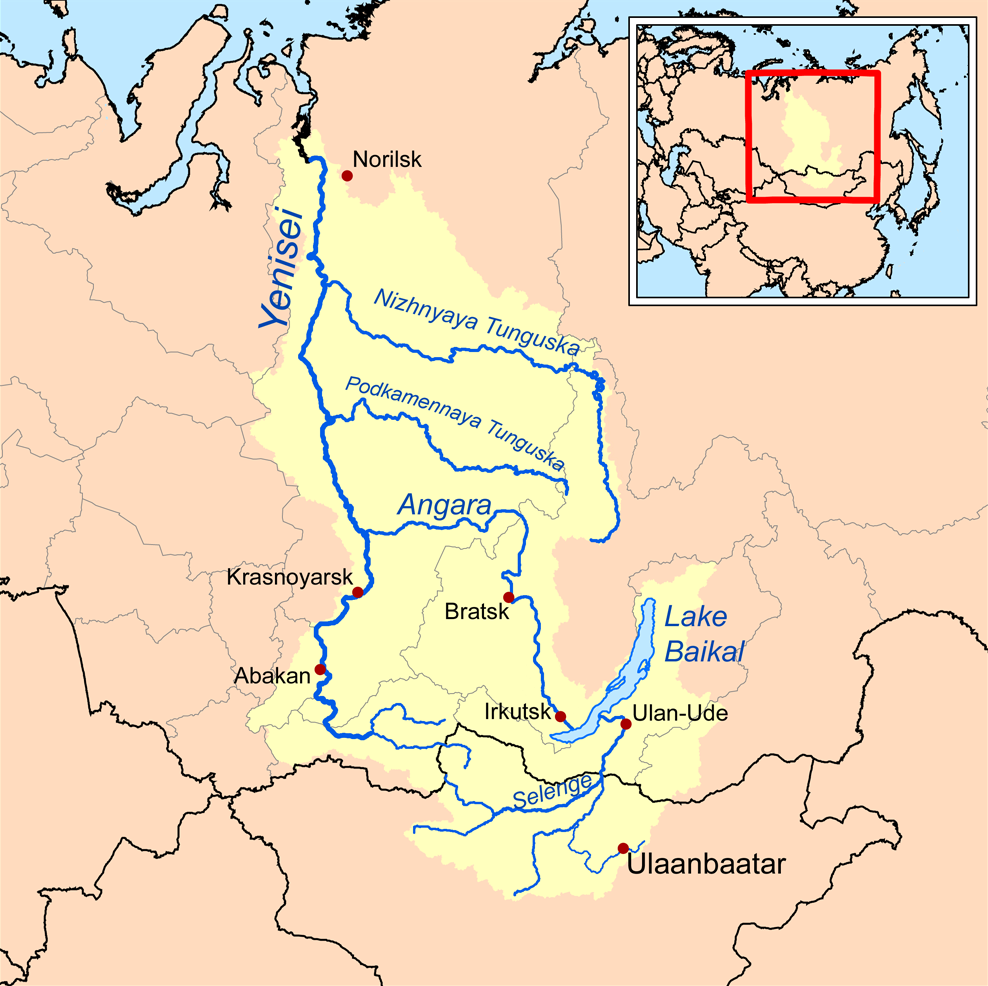
The area between the Yenisei River and Lake Baikal in central Siberia where early residents are thought to have spoken a common language that gave rise to Saami, Finnish and Inuit languages.

The area between the Yenisei River and Lake Baikal in central Siberia where early residents are thought to have spoken a common language called Uralo-Siberian that gave rise to Saami, Finnish and Inuit languages.

There, families whose migrations were ruled by the coming and going of glaciers during the Ice Age moved northward out of this area in successive waves until about 4,000 BC.

Some headed west along the northern coasts and others went east, eventually crossing the Bering Strait to North America.

They would end up living across the circumpolar region, with Inuit living from Alaska through to Canada and Greenland, Saami in Sápmi (northern Norway, Sweden, Finland and northern Russia) and Finns in Finland (or Suomi in Finnish.)

During those long-ago migrations, travelers took their common language, Uralo-Siberian, Fortescue suggests.

You can still hear today’s version of that language in Nunavut — where Uralo-Siberian developed into Inuktitut — and in Finland — where that language survived as Saami and as Finnish.

To me, someone who has lived in both regions and speaks Finnish (fairly fluently) and Inuktitut (not nearly as well) and can understand when people speak Saami (usually), the idea that there was once a united Uralo-Siberian family of languages makes sense.

That’s because the grammars of the three languages feel so similar (not to mention many shared cultural elements).

Map of the Uralo-Siberian languages.

A family tree of the Uralo-Siberian and related languages which shows the various Inuit languages as well as Saami and Finnish and how they are related.

Indeed, on this family tree of Uralo-Siberian languages, Inuktitut and Finnish look like fairly close cousins.
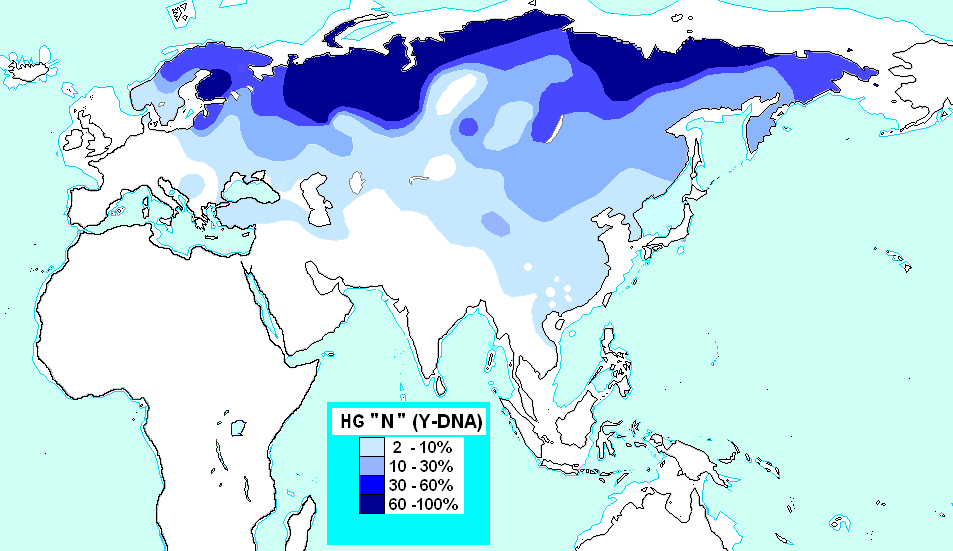
This map shows the spread of the genetic marker Haplo group N "Y", which goes from the northern coast of Scandinavia through Siberia towards North America.

This map shows the spread of the genetic marker Haplogroup N “Y”, which goes from the northern coast of Scandinavia through Siberia towards North America.

This language family was first proposed in 1998 by Fortescue in his book Language Relations across Bering Strait . But some linguists still don’t embrace his proposal, because it looks at the spread of languages and people in a new way.

More recent genetic tests do show Saami and Finns share more genetic markers linked with Asian populations in the Bering Strait and beyond than do any other European populations.

As for this early language, Uralo-Siberian, Fortescue argues that some common grammatical marker features are recognizable in the Inuit languages, Saami and Finnish, namely:

*-t   — plural

*-k  — dual

*m — 1st person

*t  —  2nd person

*ka  —interrogative pronoun

*-n —  genitive case

And you can still find verb roots in the Inuit languages of Canada and in Saami or Finnish as well as words in all three that appear to stem from that ancient common language:

Proto-Uralo-Siberianaj (aɣ) — ‘push forward’

Proto-Eskimo–Aleut ajaɣ —‘push, thrust at with pole’

In today’s Finnish —  ajaa, ‘drive’

Or you can hear similarities in other words used today, such as:

• kina (who) in Inuktitut, ken in Finnish;

• mannik (egg) in Inukitut, monne in Saami, muna in Finnish; and,

• kamek (boot) in Inuktitut, gama in Saami, kenka in Finnish.

The spoken languages also sound similar because they’re spoken with a word-initial stress (that is with the first syllable being emphasized — i.e. Nu-navut, Su-omi.)

As well, words (both nouns and verbs) get their meaning from many added-on chunks that tell you, among other things, who did what and when and to whom. This allows for a precision that  you don’t find in English.

For example, in Inuktitut and Finnish, even the notion of saying “there” must be precise — you need to say exactly where something is, whether it’s at a certain point nearby, here or there or further away.

For some experts, the enduring similarities in these languages, spoken by a majority of people who live within the jurisdictions of Nunavut, Greenland and Finland, reflect the amazing survival of that early  Uralo-Siberian grammar and lexicon of words.

But its isolation in the North in may also have had something to do with the Uralo-Siberian language’s endurance.

The Origin and Genetic Background of the Sámi suggests that Saami and, to a lesser extent, Finns were able to maintain their separate language identities over the centuries due to their geographic isolation in the Arctic while other peoples were losing their languages to Indo-European speakers from the South.

We now see different situations between the Inuit languages, Saami and Finnish — the largest of the three languages, which is spoken by more than five million people in Finland.

In Like an iceberg. I talk about learning Inuktitut.

In a future post in A Date with Siku girl, I will talk about what it was like for me to learn Finnish as a young girl and what this experience reveals — at least to me — about language learning and preservation.
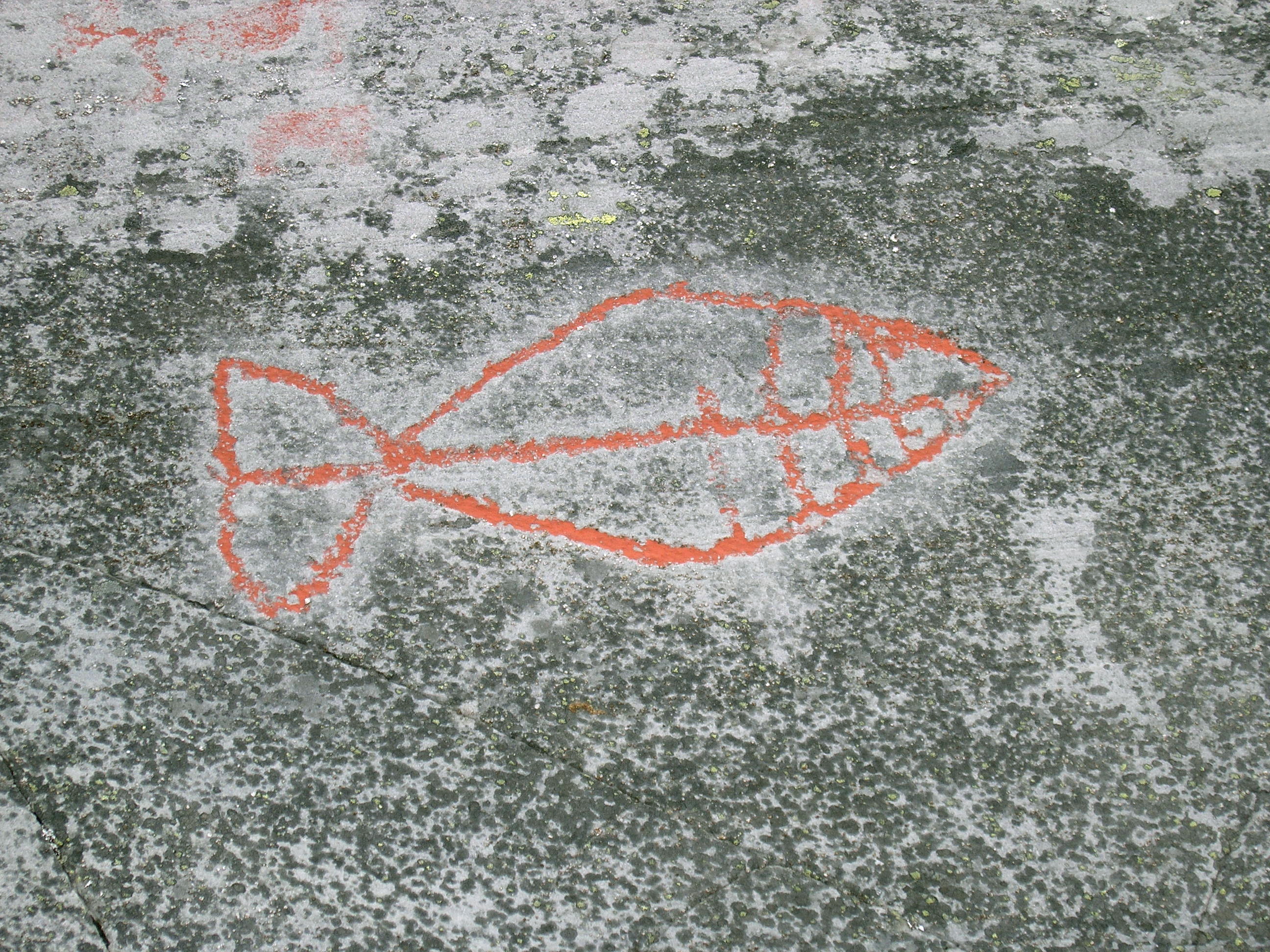
Rock art in northern Norway from the earliest inhabitants of the region. (PHOTO BY JANE GEORGE)

Rock art in northern Norway from the earliest inhabitants of the region. (PHOTO BY JANE GEORGE)

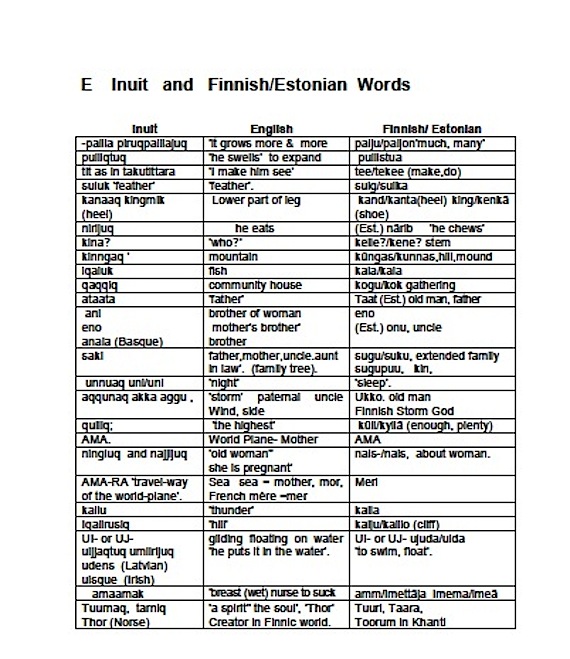
(For this post, I consulted so many sources online that I have not provided links to them all, but if you’re curious about the relationships between the ancient Uralo-Siberian languages, I urge you to do your own online searches and see what turns up. There appears to be many disputes over all the genetics and linguistics about which I could write a book, not simply a blog post. As for me, I’d be interested in receiving feedback from those more knowledgeable than I am in this area. Since publishing this blog in 2014, I received this very interesting list of words in Inuktitut, Finnish and Estonian:
 

Like an iceberg, 1995 cont., “No place like Nome”

Like an iceberg, 1995 cont.: “No place like Nome”

In July 1995 in Nome, Alaska, the Kingikmiut Dancers of Alaska took to the stage, moving to the beat of drums. This group from King Island, or Ukivok, had revived Inupiat songs, dances and drumming not seen or heard for more than 50 years since the United States Bureau of Indian Affairs closed the school on Ukivok, leaving the children to attend classes on mainland Alaska.

By 1970, all King Island people had moved to mainland Alaska to live year round.

Occasionally the Kingikmiut drummers stopped the catch the beat of songs they were relearning and the dancing stopped.

But the Inuit audience in Nome cheered wildly, rising to join in with the dance. So did I.

The main street in Nome, Alaska, 1995. (PHOTO BY JANE GEORGE)

The main street in Nome, Alaska, 1995. (PHOTO BY JANE GEORGE)

I’d come to Nome because Inuit from Canada, Alaska, Greenland and Russia were there to discuss the Inuit way of life at the general assembly of the Inuit Circumpolar Conference (now Council,) representing the 150,000 or so Inuit living within four nation-states.

Long white banners stretched above the main street in Inuktitut, Yupik, Inupiat, Greenlandic, French, English, Danish and Russian — the languages spoken by Inuit across the Arctic region.

“We must continue to reach out to each other,” said Alaskan speaker George Ahmoagak to the assembly delegates. “We are all northern peoples who have survived quantum leaps into the future by holding on to the past.”

Inuit Circumpolar Conference meeting takes place in the high school gymnasium in Nome, Alaska, in July, 1995. (PHOTO BY JANE GEORGE)

Inuit Circumpolar Conference meeting takes place in the high school gymnasium in Nome, Alaska, in July, 1995. (PHOTO BY JANE GEORGE)

At the meeting, held in a local school gymnasium, he shards his vision of how Inuit from Russia to Greenland could be strong in their own backyards by working with private enterprise, not through community-based efforts. Ahmoagak’s speech, spoken in his all-American English accent, struck a positive note among delegates — but the view outside sent a different message to me.

Nome’s wide main street, lined with flat wooden buildings, looked more like a frontier Gold Rush outpost than a modern town of 4,000. In Nome, unpaved roads, deep in mud, led through a maze of aging houses. “Nome is a great junkyard, perhaps the world’s greatest dump heap per capita,” a traveler wrote in the 1930s.

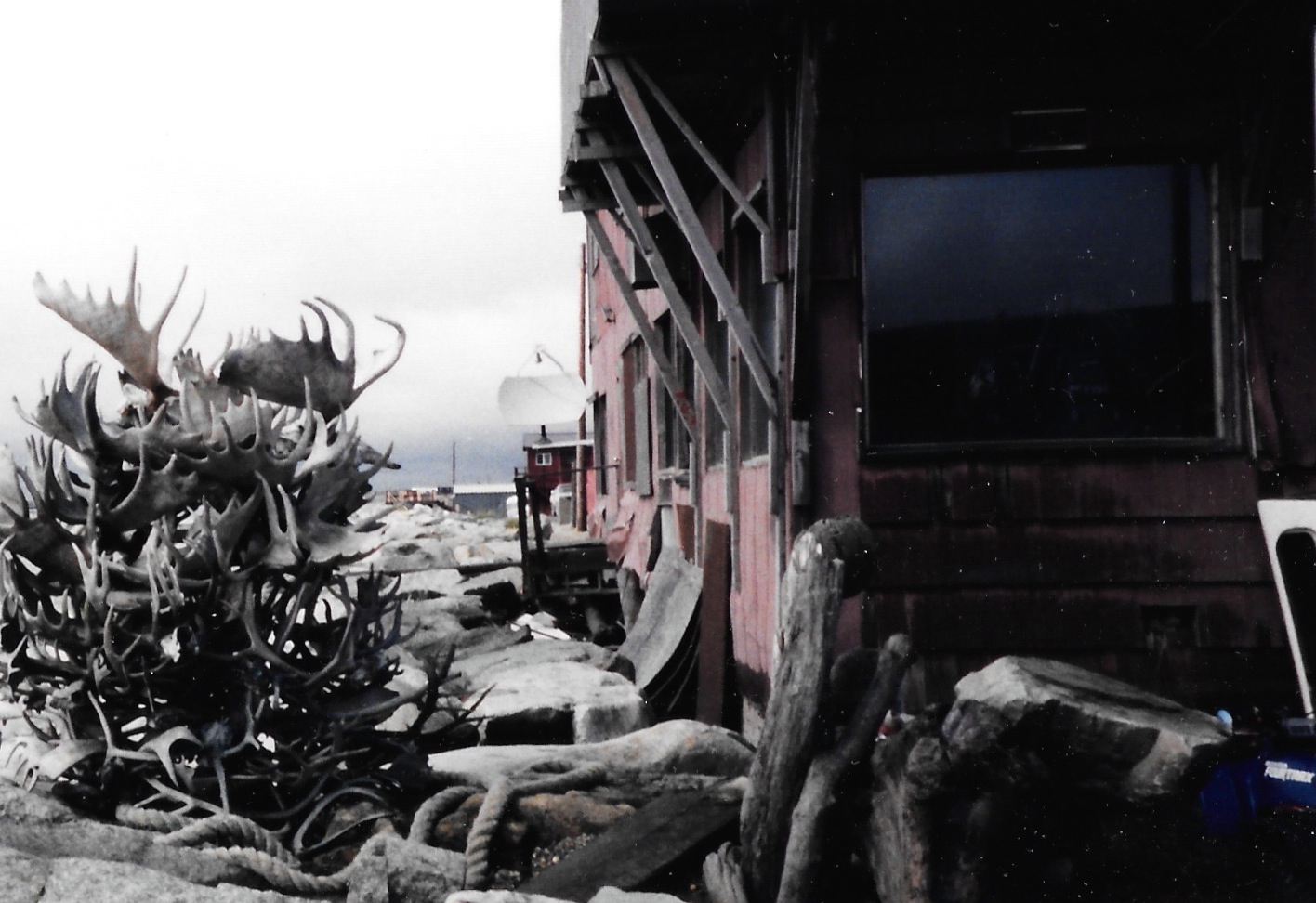
Antlers are stacked up by the shore of the Bering Sea in Nome, Alaska. (PHOTO BY JANE GEORGE)

Antlers are stacked up by the shore of the Bering Sea in Nome, Alaska. (PHOTO BY JANE GEORGE)

Things were still pretty much the same more than 50 years later. As I walked around the rusting trucks, snowmobiles, pieces of mining equipment and whalebones strewn between the houses, I couldn’t help thinking that history can be hard to change.

The Russian Inuit visiting Nome cried out for help: No one was paying salaries anymore, people had no money for hunting equipment and even small children were drinking.

“It is a catastrophe. If we share our problems, maybe we can find our solutions,” said the deputy mayor of the Chukotka community of Provideniya to ICC delegates.

Meanwhile, every evening the Polaris, which Nomites had dubbed “the hotel from hell,” offered a distraction from my own problems. In those pre-email days, work was driving me crazy because the four-hour time zone difference between Alaska and eastern Canada made it hard to meet deadlines or communicate with editors.

Every day I went to the Polaris late in the evening when I couldn’t work any longer, usually sitting with members of the Canadian delegation and the Greenlandic cultural delegation.

At the Polaris, a three-piece band always played country music under flashing Christmas lights. It was a lively place, with lots of beer flowing: A delegate from Labrador even passed out under the table one night.

On another evening, a tall Greenlander dressed in black gave me an appraising look as I settled at the table with a beer. I suddenly feel embarrassed to be a journalist, at a bar, but Kuupik Kleist  — who later became the premier of Greenland  from 2009 to 2013 — said only that “it’s good to see journalists out.”

The Polaris Bar in Nome, Alaska, as shown on the website of the Polaris Hotel

The Polaris Bar in Nome, Alaska, as shown on the website of the Polaris Hotel.

When I stepped outside the Polaris, it was way past midnight, but the sun was shining brightly. I had more fun at the Polaris than back where I was staying, crammed into a corner on the floor with four other journalists: The contacts I make at the Polaris were lasting.

As for the assembly, that was a roller-coaster, even more for me because I knew only a few of the players in 1995. Aqqaluk Lynge of Greenland, a poet and politician, described by some ICC delegates as a man of strong contrasts and convictions, and by others as a “desperate and bitter” man, was set to become the international president of the ICC.

Aqqaluk Lynge makes his pitch to ICC delegates in Nome in July, 1995. (PHOTO BY JANE GEORGE)

Aqqaluk Lynge makes his pitch to ICC delegates in Nome in July, 1995. (PHOTO BY JANE GEORGE)

But the Alaskans and Russians were uneasy about his socialist politics and reputation as a hard drinker.  The Canadian Inuit promoted Rosemarie Kuptana as a compromise president —a Canadian who would promote unity among Inuit, they said.

But Kuptana, who comes from the Inuvialuit region of Canada’s western Arctic, didn’t speak Inuktitut and Lynge, who spoke several languages fluently, played on that — “I will not be taken by the English language to adopt resolutions with ICC,” he told the ICC delegates in his pitch for votes.

Lynge also urged delegates not to worry about the personal lives of candidates, as he suggested they vote with their hearts for the best future president.

“The kissing time is over,” Lynge said before the voting started. “We’ve been married [since the ICC was founded in the 1980s] for over 15 years, and you know what kind of problem that is.”

On the third ballot, Kuptana won. Later, in 1996, citing personal and health reasons, Kuptana resigned, and Lynge, then the ICC vice-president, assumed the position of ICC president that he was denied in Nome, remaining there until 2006. And in 2010 Lynge once again was chosen as ICC president.

On the 13-hour charter flight back to Iqaluit in July 1995, I was sitting next to Lynge, whom I would get to know well only later. However, we didn’t speak at all. Lynge looked exhausted, muttered something I couldn’t understand, and crawled under a blanket to sleep for the entire flight.

Outside Nome, Alaska in July, 1995. (PHOTO BY JANE GEORGE)

Outside Nome, Alaska in July, 1995. (PHOTO BY JANE GEORGE)

The next instalment of “Like an iceberg” goes live April 23.

Did you miss the first blog post of “Like an iceberg”? You can find it here.

You can read other instalments here:

Like an iceberg, 1991…cont.

Like an iceberg, 1991…more

Like an iceberg, 1992, “Shots in the dark” 

Like an iceberg, 1992, “Sad stories”

Like an iceberg, 1993, “Learning the language of the snows”

Like an iceberg, 1993 cont., “Spring”

Like an iceberg, 1993 cont., “Chesterfield Inlet”

Like an iceberg, 1993 cont., more “Chesterfield Inlet”

Like an iceberg, 1994: “Seals and more”

Like an iceberg, 1994, cont., “No news is good news”

Like an iceberg, 1994 cont., more “No news is good news”

Like an iceberg, 1994 cont., “A place with four names”

Like an iceberg, 1995, “More sad stories”